Best Shade Trees for Backyard: 7 Species That Actually Work
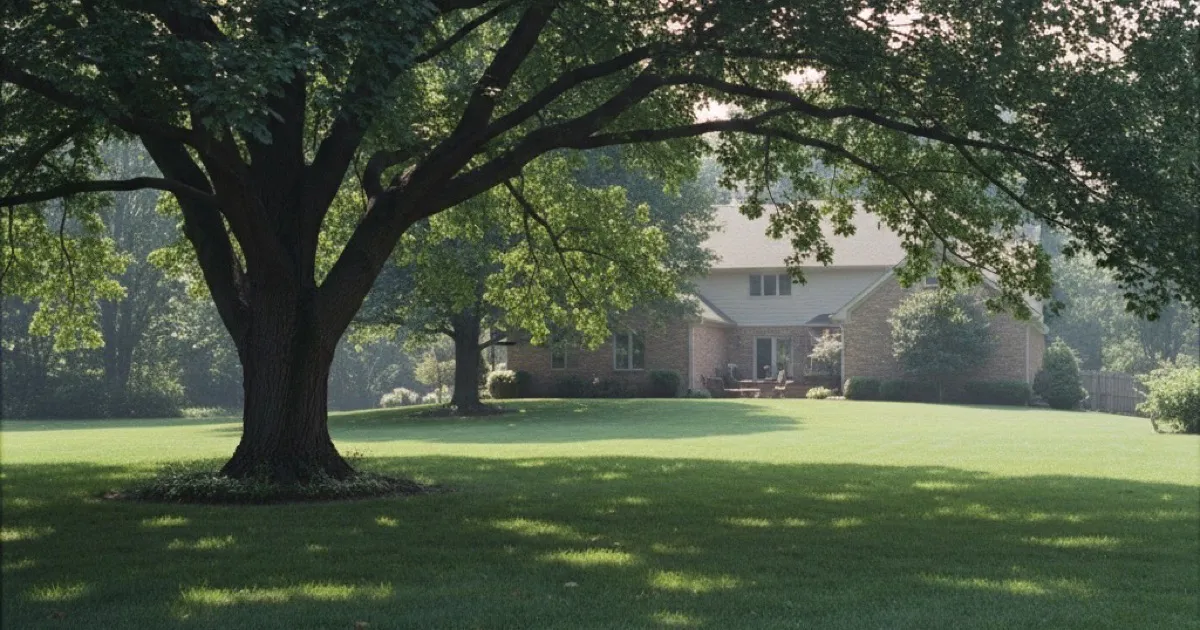
If you’re looking for a shade tree for your backyard, you want something that grows a wide canopy, tolerates your climate, and doesn’t cause more problems than it solves. The wrong shade tree drops limbs on your roof, sends roots into your foundation, or dies after five years because it can’t handle your soil. The right one cools your house, cuts your energy bill, and looks good doing it for decades.
This guide covers the best shade trees for backyards across different climates, with honest notes on each tree’s drawbacks so you know what you’re getting into before you plant.
The best shade trees for a backyard are red oak, red maple, tulip tree, white oak, bald cypress, hackberry, and London plane. Red oak and red maple are the most reliable all-around picks for most yards, tulip tree grows the fastest, bald cypress handles wet soil, and white oak lives the longest. Match the species to your climate, soil, and lot size.
- Red oak — fast-growing, broad crown; best all-around choice for the eastern U.S.
- Red maple — adaptable to wet or dry soil; reliable fall color; shade in 8–10 years
- Tulip tree — fastest grower here; shades a patio in 6–8 years
- White oak — longest-lived and cleanest structure; slow but permanent
- Bald cypress — thrives in wet or poorly drained ground where others fail
- Hackberry — tough, drought- and wind-tolerant, low mess
- London plane — massive canopy for large lots (but messier)
What Makes a Good Backyard Shade Tree
Not every big tree belongs in a backyard. A good shade tree needs several qualities working together:
- Wide, dense canopy that blocks meaningful sunlight. A tree that grows tall but narrow won’t shade much.
- Reasonable growth rate. Too slow and you’ll wait 20 years for shade. Too fast and the wood is weak, meaning broken branches in every storm.
- Non-invasive roots. Some trees send roots into sewer lines, crack sidewalks, or strangle nearby plants. These are fine in a park but miserable in a yard.
- Low maintenance. Trees that drop massive seed pods, sticky sap, or thousands of small fruits create ongoing cleanup work.
- Appropriate mature size. A tree that reaches 100 feet tall and 80 feet wide is too much for most suburban lots.
The trees below balance these factors. None of them is perfect — every tree has trade-offs — but these are the species that arborists and landscapers most often recommend for residential shade.
Red Oak (Quercus rubra)
Red oak is one of the best all-around shade trees for the eastern half of North America. It grows faster than most oaks (about 2 feet per year when young), develops a broad rounded crown, and provides dense shade by midsummer.
Why it works for backyards:
- Mature spread of 45 to 55 feet — enough to shade a house and a good portion of the yard
- Grows 60 to 75 feet tall with a straight trunk and symmetrical crown
- Fall color is reliable deep red to russet-brown
- Tolerates a range of soils including slightly acidic and clay
What to know:
- Acorns drop in fall and attract squirrels (some people consider this a plus, others don’t)
- Susceptible to oak wilt in some regions — check local conditions before planting
- Needs space. Don’t plant closer than 20 feet from structures
Red oaks live 200+ years. You’re planting this for your grandchildren. For help identifying oak species already in your yard, start with the leaf shape and bark.
Red Maple (Acer rubrum)
Red maple is the most widely distributed native tree in eastern North America, and it’s popular as a shade tree for good reason. It grows moderately fast, develops a rounded to oval canopy, and puts on a show in fall.
Why it works for backyards:
- Mature height of 40 to 60 feet with a 30 to 50 foot spread
- Adaptable to wet or dry soil, sun or partial shade
- Fall color ranges from yellow to brilliant scarlet depending on cultivar
- Named cultivars like ‘October Glory’ and ‘Red Sunset’ give predictable form and color
What to know:
- Surface roots can make mowing difficult near the trunk as the tree matures
- Seeds (samaras) sprout prolifically — you’ll pull seedlings from garden beds
- Some cultivars are prone to included bark in branch crotches, which can lead to splitting. Choose cultivars with good branch structure
Red maple is a safe, well-tested choice. It won’t surprise you with unusual problems, and it delivers shade within 8 to 10 years of planting.
Tulip Tree (Liriodendron tulipifera)
Tulip trees grow fast and tall. Really tall. This is the tree for people who want significant shade and aren’t afraid of size. In forest settings it reaches 120 feet, though 70 to 90 feet is more typical in yards.
Why it works for backyards:
- One of the fastest-growing hardwoods — 3 feet per year is common when young
- Straight trunk with an oval crown that provides shade over a large area
- Distinctive tulip-shaped flowers in late spring (greenish-yellow with orange at the base)
- Fall color is a clear, bright yellow
- Clean tree — no messy fruit or sticky sap
What to know:
- Gets very large. Only suitable for bigger yards with room to spread
- Shallow roots can be a problem near patios and walkways
- Drops leaves early in fall, sometimes by mid-October
- Aphids sometimes colonize the leaves and drip honeydew onto cars and furniture below — this varies by year and region
If you have the space, tulip tree delivers shade faster than almost any other quality hardwood.
White Oak (Quercus alba)
White oak is the classic American shade tree. It grows slower than red oak but lives longer, gets bigger, and has a more majestic spreading crown at maturity. This is a tree you plant with the long view in mind.
Why it works for backyards:
- Massive spread at maturity — 60 to 80 feet, sometimes more
- Dense canopy provides heavy shade
- Fall color is a warm wine-red to brown, lasting longer than most oaks
- Extremely long-lived (300 to 600 years)
- Wood is strong, so branch failure in storms is less common than with faster-growing trees
What to know:
- Slow growth — about 1 foot per year. You’ll wait 15 to 20 years for meaningful shade
- Acorns are large and abundant in good years
- Doesn’t transplant as easily as red oak due to a deep taproot — plant it young and leave it alone
- Needs acidic to neutral soil. Struggles in highly alkaline conditions
White oak is a commitment. But 50 years from now, it’ll be the most impressive tree on the block.
Bald Cypress (Taxodium distichum)
Bald cypress surprises people. It’s a deciduous conifer — it drops its needles in fall, which means it provides shade in summer and lets light through in winter. It’s also tougher and more adaptable than most people realize.
Why it works for backyards:
- Grows 50 to 70 feet tall with a pyramidal to oval crown
- Tolerates wet soil, dry soil, clay, and even occasional flooding — one of the most site-tolerant trees available
- Soft, feathery foliage turns copper-orange in fall before dropping
- Almost no pest or disease problems
- Long-lived (hundreds of years)
What to know:
- “Knees” (woody projections from roots) can appear in consistently wet soil, but this rarely happens in typical yard conditions
- Growth rate is moderate — about 1 to 2 feet per year
- Not a broadleaf, so shade is lighter and more dappled than oak or maple shade
Bald cypress works in places where other shade trees struggle — heavy clay, periodic flooding, poor drainage. If your yard has wet spots, this might be your best option.
Hackberry (Celtis occidentalis)
Hackberry is underrated. It’s not flashy, but it grows almost anywhere, tolerates drought, wind, pollution, and poor soil, and provides reliable shade with minimal maintenance.
Why it works for backyards:
- 40 to 60 feet tall with a similar spread
- Adapts to almost any soil type, pH, and moisture level
- Drought-tolerant once established
- Rounded, spreading canopy provides good shade coverage
- Provides food for birds (small berries in fall and winter)
What to know:
- Leaves are not ornamental — fall color is a plain yellow
- Nipple gall (caused by tiny insects) creates bumps on leaves that look concerning but are cosmetic and harmless
- The small berries can be messy on patios and driveways
- Bark has a distinctive warty texture that some people find attractive and others don’t
Hackberry thrives where fussier trees fail. If previous trees in your yard have died from drought, poor soil, or neglect, hackberry will likely survive.
London Plane (Platanus × acerifolia)
London plane is the hybrid offspring of American sycamore and Oriental plane tree. It’s one of the most planted urban trees worldwide because it handles pollution, compacted soil, and heat better than almost anything else.
Why it works for backyards:
- Large, broad canopy — 60 to 80 feet tall and 40 to 60 feet wide
- Grows moderately fast (2 feet per year)
- Distinctive mottled bark that peels to reveal cream, olive, and tan patches
- Tough. Tolerates urban conditions, drought, poor soil
What to know:
- Drops bark, leaves, and seed balls continuously — this is a messy tree
- Seed balls (spiky, round clusters) can be a nuisance on lawns and walkways
- The large leaves don’t decompose quickly and can smother grass if not raked
- Can develop anthracnose (a fungal disease) in cool, wet springs, causing leaf browning and drop
London plane is best for larger properties where the mess falls on lawn rather than a patio. The shade is excellent and the peeling bark is genuinely beautiful.
Choosing the Right Shade Tree for Your Yard
The best shade tree depends on your specific conditions. Here’s a quick decision framework:
Small yard (under 1/4 acre): Red maple cultivars with compact forms, or hackberry. Avoid tulip tree and white oak — they’ll outgrow the space.
Large yard (1/2 acre+): Red oak, white oak, tulip tree, or London plane. These need room but reward you with canopy coverage that smaller trees can’t match.
Wet or poorly drained soil: Bald cypress, red maple, or London plane. These tolerate wet feet better than oaks.
Dry, poor soil: Hackberry or bald cypress. Both handle drought and poor conditions.
Fast shade needed: Tulip tree or red oak. Both grow 2 to 3 feet per year and provide meaningful shade within 8 to 12 years.
Planting for the long term: White oak. Slower to establish but unmatched at maturity.
Trees to Think Twice About
Some popular shade trees come with significant problems that aren’t always mentioned at the nursery:
- Silver maple: Grows fast but has weak wood that breaks in storms. Surface roots are aggressive. Short-lived for a tree.
- Bradford pear: Weak branch structure leads to splitting in storms. Invasive in the eastern U.S. Many cities are banning new plantings.
- Weeping willow: Beautiful but roots invade sewer lines and septic systems. Drops branches constantly. Needs constant moisture.
- Sweetgum: Excellent fall color but the spiky gumballs are painful underfoot and a constant cleanup chore. Fruitless cultivars (‘Rotundiloba’) solve this but are harder to find.
- Black walnut: The roots produce juglone, a chemical that kills many garden plants including tomatoes, peppers, and azaleas. Only plant if you’re not gardening near it.
These aren’t bad trees. They’re bad backyard trees for most situations.
Identifying Trees in Your Yard With Tree Identifier
Before you plant a new shade tree, it helps to know what’s already growing in your yard. Existing trees affect light, soil chemistry, and root competition for any new planting. The Tree Identifier app can identify trees from photos of their leaves, bark, flowers, or fruit. Snap a photo, and the AI tells you the species. It works offline too, which is useful if you’re tree shopping at a rural nursery without cell signal. You get 2 free identifications per day.
Frequently Asked Questions
What is the fastest growing shade tree?
Tulip tree and red oak are among the fastest quality shade trees, growing 2 to 3 feet per year. Silver maple and hybrid poplars grow faster but have weak wood and shorter lifespans, making them poor long-term choices. Fast growth usually means weaker wood — the best balance is a tree that grows 2 feet per year with strong structure.
How far from my house should I plant a shade tree?
Plant at least 20 feet from your foundation for medium trees and 30 feet or more for large trees like oaks and tulip trees. This gives roots room to spread without threatening the foundation and keeps branches away from the roof. Check the mature canopy spread for the specific species and plant so the canopy edge reaches your house, not the trunk.
How long does it take for a shade tree to provide meaningful shade?
Most shade trees provide noticeable cooling within 5 to 8 years and full shade within 10 to 15 years. Fast growers like tulip tree can shade a patio in 6 to 8 years. Slow growers like white oak take 15 to 20 years. Buying a larger nursery tree (2 to 3 inch caliper) gives you a head start of 3 to 5 years compared to a small whip.
Do shade trees increase home value?
Yes. Studies consistently show that mature shade trees increase property values by 7 to 15 percent. A single large shade tree can reduce summer cooling costs by 25 percent or more by blocking direct sunlight from hitting the house. The value increase depends on the tree’s health, species, and placement.
What shade tree has the least mess?
Red oak and bald cypress are among the cleanest large shade trees. Red oak drops acorns in fall but otherwise is tidy. Bald cypress drops fine needles that decompose quickly and blend into lawns. Hackberry is also relatively clean aside from its small berries. The messiest common shade trees are London plane (bark, leaves, seed balls), sweetgum (gumballs), and silver maple (seeds, branches).
Looking to identify shade trees in your neighborhood before you choose one for your yard? Try Tree Identifier — snap a photo of any leaf, bark, or branch and find out the species in seconds.
Rachel Nguyen
Tree Identifier Team