Best Trees for Small Backyards: 9 Species That Fit
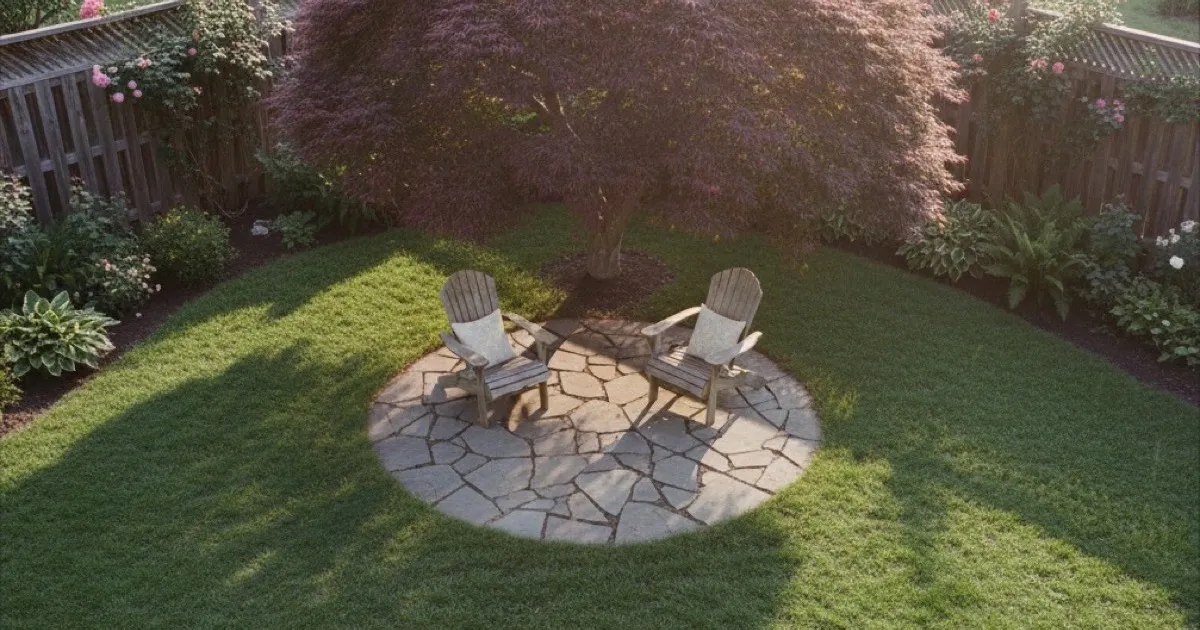
Small yards don’t mean small ambitions. A single well-chosen tree can turn a cramped lot into a shaded retreat, add thousands to your home’s value, and give you something worth looking at from every window. The trick is picking a species that stays proportional. Too many homeowners plant a tree that looks perfect at the nursery, then spend the next 15 years pruning, cursing, and eventually removing it. The best trees for small yards max out between 15 and 25 feet tall, keep a narrow or compact canopy, and offer at least two seasons of visual interest.
The best trees for small backyards are compact species that stay under 25 feet tall and won’t crowd foundations or fences. Top picks include Japanese maple for four-season color, eastern redbud for spring blooms, flowering cherry for dramatic spring display, crabapple for four-season wildlife value, and columnar varieties like ‘Slender Silhouette’ sweetgum. Choose based on your hardiness zone, sun exposure, and whether you want flowers, fall color, or year-round structure.
How to Choose the Right Tree for a Small Yard
Size matters most, but it’s not just about height. A 20-foot tree with a 25-foot canopy spread will swallow a small yard. You need to check mature width, root spread, and growth rate before buying anything.
Here’s what to evaluate:
- Mature height and spread: Look at the tag’s “mature size,” not the pot size. A tree listed at 15 by 12 feet (height by spread) fits most small yards. Anything over 20 feet wide gets aggressive in tight spaces
- Root behavior: Some trees send shallow roots across the yard that crack patios and invade planter beds. Avoid silver maple, willows, and any poplar variety near structures
- Growth rate: Fast growers like hybrid poplars seem appealing, but they’re often weak-wooded and short-lived. Moderate growers (1 to 2 feet per year) give you structure without the maintenance headaches
- Multi-season interest: In a small yard, every plant has to earn its keep. A tree that blooms in spring, has good summer foliage, turns color in fall, and shows interesting bark in winter gives you four reasons to keep it
Choosing the right tree for a small yard requires balancing mature size against visual impact. The ideal small-yard tree tops out at 15 to 25 feet with a canopy spread under 15 feet, keeping proportional to lots under 5,000 square feet. Species like Japanese maple (Acer palmatum) reach 15 to 20 feet and spread 12 to 15 feet, fitting comfortably within 8 feet of a fence line. Eastern redbud (Cercis canadensis) stays similarly compact while delivering spring blooms that last 2 to 3 weeks. The key metric most buyers overlook is root spread: a tree’s roots typically extend 2 to 3 times beyond its canopy drip line, so a 12-foot-wide canopy means roots reaching 24 to 36 feet outward. Selecting species with non-invasive root systems (like dogwood or stewartia) prevents foundation and hardscape damage that costs homeowners an average of $4,000 to repair.
9 Best Trees for Small Backyards
1. Japanese Maple (Acer palmatum)
Height: 10 to 25 feet (varies by cultivar). Spread: 10 to 15 feet. Zones: 5 to 8.
Japanese maples are the go-to small yard tree, and for good reason. The laceleaf varieties (‘Crimson Queen,’ ‘Viridis’) stay under 10 feet and work as focal points near patios. Upright varieties like ‘Bloodgood’ and ‘Emperor I’ reach 15 to 20 feet with a vase-shaped canopy.
Best for: Partial shade, protected spots, year-round color (red, green, or variegated leaves depending on cultivar).
2. Eastern Redbud (Cercis canadensis)
Height: 20 to 30 feet. Spread: 25 to 35 feet. Zones: 4 to 9.
Redbuds bloom before their leaves emerge in early spring, covering bare branches in magenta-pink flowers. The heart-shaped leaves follow, turning yellow in fall. For smaller spaces, look for ‘Forest Pansy’ (purple foliage, 20 feet max) or ‘Ruby Falls’ (weeping form, 6 feet).
Best for: Spring impact, native plantings, understory spots with dappled light.
3. Crape Myrtle (Lagerstroemia indica)
Height: 10 to 25 feet. Spread: 10 to 15 feet. Zones: 6 to 10.
Crape myrtles bloom from July through September when most trees are just sitting there being green. Colors range from white to deep red. The peeling bark looks great in winter. Pick varieties bred for disease resistance (‘Natchez,’ ‘Tuscarora,’ ‘Sioux’) to avoid powdery mildew problems.
Best for: Long summer bloom period, Southern and transitional climates, streetside planting strips.
4. Flowering Dogwood (Cornus florida)
Height: 15 to 25 feet. Spread: 15 to 20 feet. Zones: 5 to 9.
Dogwoods give you white or pink bracts in spring, glossy red berries in fall, and a graceful horizontal branching pattern that looks sculptural in winter. They prefer partial shade and acidic soil.
Best for: Woodland-edge gardens, partial shade, wildlife (birds eat the berries).
5. Serviceberry (Amelanchier spp.)
Height: 15 to 25 feet. Spread: 10 to 15 feet. Zones: 3 to 8.
Serviceberries hit every season: white flowers in early spring, edible purple berries in June, orange-red fall color, and smooth gray bark in winter. Multi-stem forms work well as specimen trees or screens. ‘Autumn Brilliance’ is the most reliable cultivar.
Best for: Cold climates, edible landscaping, four-season interest.
6. ‘Slender Silhouette’ Sweetgum (Liquidambar styraciflua)
Height: 50 feet. Spread: just 5 feet. Zones: 5 to 9.
Most sweetgums are too wide for small yards. This columnar cultivar bucks the trend with a spread of only 5 feet, making it one of the narrowest shade trees available. It still produces the signature star-shaped leaves and brilliant fall color, but fewer of the annoying spiky gumballs.
Best for: Narrow side yards, vertical accents, fall color in tight spaces.
7. Star Magnolia (Magnolia stellata)
Height: 15 to 20 feet. Spread: 10 to 15 feet. Zones: 4 to 8.
Star magnolias bloom earlier than their larger southern cousins, with fragrant white star-shaped flowers appearing in March or April. They grow slowly (about 1 foot per year) and maintain a rounded, dense form without heavy pruning.
Best for: Front yard focal points, early spring bloom, fragrance near patios and walkways.
8. Flowering Cherry (Prunus spp.)
Height: 15 to 25 feet (varies by cultivar). Spread: 15 to 25 feet. Zones: 5 to 8.
Flowering cherry trees give small backyards one of the most dramatic spring displays in the plant world. ‘Kwanzan’ (double pink, 25 feet) and ‘Okame’ (rose-pink, 20 feet) suit yards with a bit more room. For tight spots, ‘Amanogawa’ is the one to know: it grows in a columnar form just 4 to 6 feet wide and 20 feet tall, fitting easily in narrow side yards or between driveways. All flowering cherries bloom for 1 to 2 weeks in early spring, then settle into clean green summer foliage. They’re short-lived compared to oaks and maples (30 to 40 years), but the display justifies the commitment.
Best for: Spring focal points, Japanese-inspired gardens, narrow columnar accents. See our guide to ornamental trees for more flowering species that work in residential settings.
9. Crabapple (Malus spp.)
Height: 8 to 25 feet. Spread: 8 to 20 feet. Zones: 3 to 8.
Crabapples deliver four seasons of interest in a compact footprint. Spring brings flowers (white, pink, or red depending on cultivar), summer gives clean foliage, fall shifts to colored leaves, and the ornamental fruit clings on into winter and feeds birds through the cold months. The critical factor is disease resistance: older varieties like ‘Almey’ and ‘Hopa’ get wrecked by apple scab and fire blight. Stick with modern cultivars. ‘Prairifire’ (20 feet, red fruit, excellent resistance) is the most widely available. ‘Camelot’ stays just 8 feet tall, making it the right call for yards under 1,000 square feet. ‘Centurion’ grows columnar at 25 feet tall but only 10 feet wide, which works in narrow backyards where vertical space is all you have.
Best for: Cold climates (zones 3 to 8), four-season interest, wildlife-friendly planting.
Trees to Avoid in Small Yards
Some popular trees look great at the garden center but cause problems in small spaces. (If screening is your goal rather than shade or ornament, check our best trees for privacy guide for columnar species that work in suburban lots without overwhelming them.)
- Silver maple: Grows 50+ feet with aggressive surface roots that crack driveways and invade sewer lines
- Bradford pear: Tops out around 30 feet but splits apart in storms after 15 to 20 years. Many cities have banned new plantings
- Weeping willow: Needs 50 feet of space minimum and seeks out water pipes
- Pin oak: Drops lower branches, holds dead brown leaves through winter, and grows too large (60 to 70 feet)
- Norway spruce: Starts narrow but reaches 40 to 60 feet tall and 25 feet wide. The lower branches die in shade and look ragged
Planting Tips for Small Yard Trees
Getting the right tree is half the battle. Planting it correctly keeps it healthy for decades.
Distance from structures: Plant at least 10 feet from your house foundation and 5 feet from fences. Check your tree’s mature canopy spread and add 3 feet of clearance.
Soil prep: Dig the hole 2 to 3 times wider than the root ball, but no deeper. The root flare (where trunk meets roots) should sit at or slightly above soil level. Burying it causes rot.
Watering: New trees need 1 to 2 inches of water per week for the first 2 growing seasons. A slow-drip bag works better than sprinkler coverage because it concentrates water at the root zone.
Mulching: Spread 2 to 3 inches of mulch in a ring starting 3 inches from the trunk and extending to the drip line. Mulch piled against the trunk (“volcano mulching”) traps moisture and kills bark.
How Tree Identifier Helps You Pick the Right Small Yard Tree
Browsing a nursery is easier when you can identify what you’re looking at. Snap a photo of any tree’s leaves, bark, or flowers with Tree Identifier and get instant species identification. The app tells you the species name, typical mature size, growth habits, and characteristics, so you can check whether that pretty nursery tree will actually fit your yard in 10 years.
It also works when you’re scouting your neighborhood. Spot a tree you like in someone else’s small yard? Take a photo of a leaf or the bark and Tree Identifier will tell you exactly what it is. The app works offline too, so you can identify trees on hikes or at botanical gardens where cell service is spotty.
Frequently Asked Questions
What is the best tree for a very small yard under 500 square feet?
Japanese maple is the safest bet for yards under 500 square feet. Laceleaf varieties like ‘Crimson Queen’ stay under 10 feet tall and 12 feet wide. They work in containers too, which gives you even more control over placement. Serviceberry in multi-stem form is another good option if you want something native.
How close can I plant a tree to my house?
Keep trees at least 10 feet from your foundation. For species with aggressive root systems, increase that to 20 feet. The general rule is to take the tree’s mature canopy spread, divide by 2, and add 5 feet. That gives you enough clearance for both roots and branches.
Do small trees provide enough shade?
A single 20-foot tree with a 15-foot canopy can shade a patio or deck effectively. You won’t shade your entire yard, but strategic placement on the south or west side of outdoor seating areas blocks the harshest afternoon sun. Multiple small trees often provide better coverage than one large tree in a small space.
What small trees grow fastest?
Crape myrtle and eastern redbud are the fastest growers on this list, adding 1 to 2 feet per year when established. ‘Autumn Brilliance’ serviceberry also grows relatively fast. Avoid the temptation of ultra-fast growers like Lombardy poplar, which grow 3 to 4 feet per year but live only 15 to 20 years and have brittle wood.
Looking to identify a tree at your local nursery or in your neighbor’s yard? Download Tree Identifier and snap a photo of any leaf, bark, or flower to get instant species info, including mature size, so you know exactly what you’re planting.
Identify a tree from your photo — free
Upload a leaf, bark, or whole-tree photo and get the species in seconds. No signup.
Confidence:
Unlock the full species profile
Free in the app — with unlimited identifications.


AI result for guidance — the app gives full species details and works offline.
Want unlimited identifications?
Get the full species profile, photos and details — free in the app, with unlimited scans.
- Unlimited identifications
- Full species profiles & details
- Works offline, anywhere
- Save and revisit your finds
Elena Torres
Tree Identifier Team