Drought Tolerant Trees: 10 Species That Thrive Without Rain
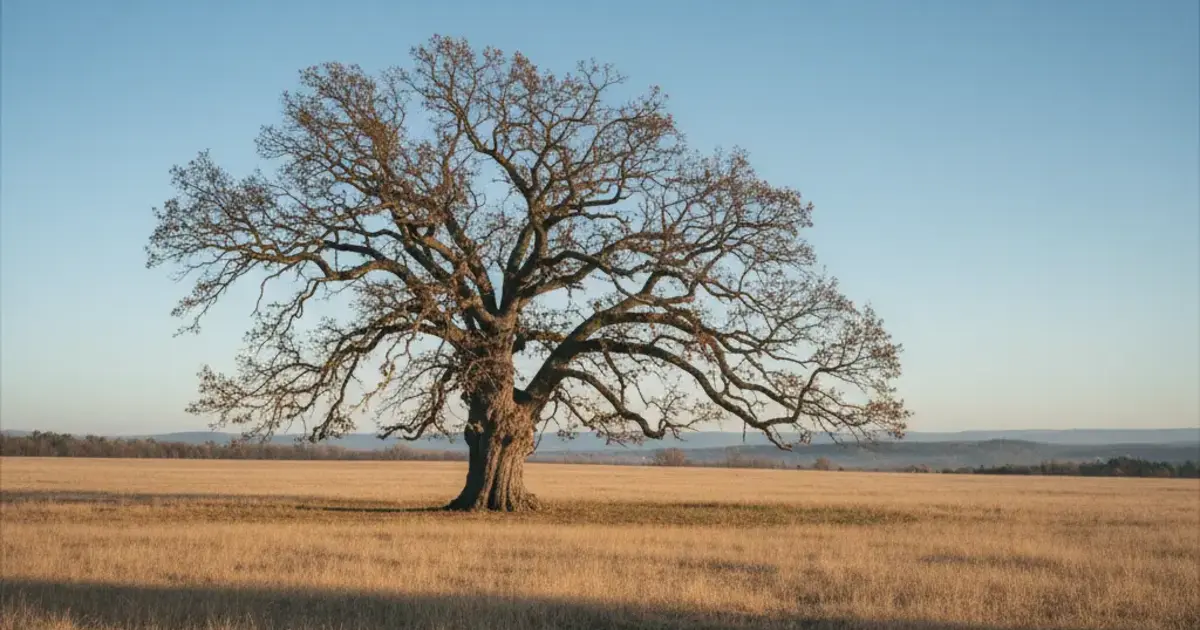
Planting a tree that dies in its second summer is an expensive mistake. The 2023-2024 drought covered over 40% of the continental US at some point, and 2025 saw similar patterns across the South and Midwest. Homeowners watched newly planted silver maples and river birches drop leaves by July.
Choosing drought tolerant trees from the start avoids all of that. Many of the best options are native to North America, long-lived, and genuinely attractive in a yard. You don’t need to import desert species to get a resilient landscape.
Drought tolerant trees survive extended dry periods by adapting their root systems, leaf structure, or bark to limit water loss. The most reliable species include bur oak, live oak, Eastern red cedar, ginkgo, and Kentucky coffeetree. Most need regular watering for the first 1-2 years to establish roots, then can handle 4-6 weeks without rain that would kill a Bradford pear or weeping willow.
What Makes a Tree Drought Tolerant?
Trees handle water stress in a few distinct ways.
Deep taproots reach moisture below the drought zone. Bur oak and hickory push their taproots 6-8 feet down in the first few growing seasons. These trees are harder to transplant when large, but planted small they build root depth fast.
Wide-spreading shallow roots capture rainfall across a large area. Live oak spreads its roots 2-3 times the canopy radius. The trade-off: those roots can heave pavement or damage foundations if planted too close to structures.
Reduced or waxy leaves cut down on transpiration. Trees lose most of their water through leaf surfaces. Eastern red cedar’s tiny scale-like leaves and ginkgo’s thick fan-shaped leaves both limit that loss during dry spells.
Most drought tolerant trees use more than one of these strategies, which is why they hold up so well once established.
Drought tolerance in trees is determined by root architecture and leaf morphology, not geographic origin. A tree native to the American Southwest isn’t automatically more drought tolerant than an Eastern species. It depends on specific adaptations. Deep-rooted trees like bur oak (Quercus macrocarpa) push their taproots 6-8 feet down in the first few growing seasons, accessing groundwater below the drought zone. Wide-spreading, shallow-rooted species like live oak (Quercus virginiana) compensate with massive root surface area, often extending 2-3 times the canopy radius to capture rainfall before it evaporates. A third category reduces transpiration through thick cuticles, resin coatings, or reduced leaf area, as seen in Eastern red cedar and ginkgo (Ginkgo biloba). Newly planted trees from any of these categories still need regular watering for 12-24 months while roots establish. After that, most can handle dry spells of 3-6 weeks without supplemental water, depending on soil type and climate zone.
10 Drought Tolerant Trees Worth Planting
1. Bur Oak (Quercus macrocarpa)
Bur oak is one of the most drought tolerant trees in North America. Its thick, corky bark and deep taproot let it survive conditions that kill other oaks. Growth is slow, about 12-24 inches per year, but it lives 300-400 years once established.
Leaves are deeply lobed with a large rounded top section. Acorns have a fringed, mossy cap that covers more than half the nut. Native to the Midwest and Great Plains.
2. Live Oak (Quercus virginiana)
Live oak stays green year-round, unlike most oaks. Its small, thick leaves and sprawling root system make it one of the Southeast’s most reliable drought tolerant trees. A mature specimen can spread its canopy 60-80 feet wide.
It handles poor, sandy soil that most trees won’t tolerate, which is why it dominates landscapes across Texas, Florida, and the Gulf Coast.
3. Eastern Red Cedar (Juniperus virginiana)
Despite the name, Eastern red cedar is actually a juniper. It’s one of the toughest trees in eastern North America, growing in poor rocky soil, clay, and sand with minimal water.
The blue-green scale-like foliage and reddish, shredding bark make it easy to identify. It provides good nesting habitat for cedar waxwings and American robins, which eat the blue-gray berries.
4. Ginkgo (Ginkgo biloba)
Ginkgo trees have been around for 270 million years. Once established, they handle poor soil, compacted roots, air pollution, and dry summers better than almost any other large shade tree.
The fan-shaped leaves turn bright yellow in fall, then drop all at once over about a week. Plant males only if you want to avoid the smell from female seed fruits.
5. Kentucky Coffeetree (Gymnocladus dioicus)
A native tree that’s planted far less often than it deserves. Kentucky coffeetree tolerates drought, compacted soil, and road salt. Its large, bipinnately compound leaves create filtered shade, and the seed pods persist through winter, making it identifiable even after leaf drop.
Grows 40-60 feet tall with an open, architectural canopy. Good for lawns and large open spaces.
6. Honey Locust (Gleditsia triacanthos)
Thornless honey locust cultivars are among the most widely planted drought tolerant trees in American cities. They grow quickly, about 2-3 feet per year, and tolerate compacted soil, air pollution, and dry conditions once established.
Small leaflets decompose fast in fall, which cuts cleanup. The cultivar ‘Shademaster’ is a reliable thornless option that doesn’t produce messy seed pods.
7. Hackberry (Celtis occidentalis)
Hackberry handles drought, flooding, wind, and poor soil. Its cork-warty bark is unmistakable once you’ve seen it once. Small dark berries attract birds throughout fall and winter, making it a solid choice if you want to attract wildlife to your yard.
Grows 40-60 feet tall with a spreading, graceful crown.
8. Desert Willow (Chilopsis linearis)
Desert willow is related to catalpas, not true willows. It’s native to the American Southwest and produces showy trumpet-shaped flowers in pink, white, or lavender from late spring through fall. Few drought tolerant trees also offer that much seasonal color.
Best suited to Texas, New Mexico, Arizona, and similar dry climates.
9. Blackgum / Black Tupelo (Nyssa sylvatica)
Blackgum handles both drought and wet soils, which is unusual. Its glossy leaves turn brilliant scarlet in early fall, often before any other tree in the landscape.
Slow to establish but long-lived and very low maintenance once settled in. Good for spots where other species keep failing.
10. Osage Orange (Maclura pomifera)
Osage orange is rarely found in nurseries, but it’s one of the toughest drought tolerant trees in North America. Its dense, rot-resistant wood was used by Native Americans for bows. The large, bumpy green fruit drops in fall.
Historically planted as windbreaks across the Great Plains because it thrives in poor, dry soil. Worth planting in tough spots with full sun and limited water.
How to Identify Drought Tolerant Trees in the Field
Many drought tolerant trees share visible adaptation signs you can spot once you know what to look for.
Small or thick leaves are a reliable indicator. Live oak’s leaves are small and leathery. Ginkgo leaves are thick and waxy. Eastern red cedar has scale-like foliage rather than true needles. Larger, thinner leaves (like silver maple or river birch) usually signal less drought tolerance.
Deeply furrowed or corky bark often points to drought adaptation. Bur oak’s thick, corky bark insulates the tree from heat and limits moisture loss through the trunk. Hackberry and Osage orange have similarly distinctive rough bark.
Seed and fruit type can confirm species. Bur oak’s fringed acorn caps, honey locust’s long seed pods, hackberry’s small black berries, and desert willow’s narrow seed pods all help nail down identification.
Start with leaf shape and texture, then check the bark, then look for seeds or fruits present on or under the tree. Our guide to identifying trees by leaf shape covers the leaf details for many of these species in depth.
Drought Tolerant vs Drought Resistant: Is There a Difference?
These terms get used interchangeably, but there’s a useful distinction.
Drought tolerant means the tree survives drought with some stress, possibly dropping leaves early or slowing growth, but recovering when water returns.
Drought resistant (or xeriscape-grade) means the tree thrives in dry conditions with little to no supplemental water once established.
All 10 trees on this list qualify as drought resistant after establishment. Most still need regular watering through their first two growing seasons while the root system builds.
For contrast, silver maple, weeping willow, and river birch all need consistent moisture. They’re fast growers, but they demand reliable water. Our article on fast growing trees covers which fast growers handle dry spells and which ones hit a wall in drought.
How Tree Identifier Can Help
Wondering if a tree already on your property is drought tolerant? Take a photo of the leaf, bark, or whole tree with Tree Identifier and get the species in seconds. The app identifies thousands of species from leaves, bark, flowers, and fruit, and the detailed species info includes habitat notes that tell you how the tree handles drought, soil conditions, and climate.
Free to start with 2 identifications per day. Available on iOS and Android at treeidentifier.app.
Frequently Asked Questions
What is the most drought tolerant tree?
Bur oak and Eastern red cedar are among the most drought tolerant trees in North America. Both thrive in poor, dry soil and can handle extended dry periods once established. Osage orange sits in the same tier. For the Southeast specifically, live oak handles drought better than most large shade trees.
How long does it take for a drought tolerant tree to establish?
Most drought tolerant trees need 1-2 growing seasons of regular watering to build their root systems. After that, they can typically handle dry periods of 3-6 weeks without supplemental water. Deep-rooted species like bur oak may take 2-3 years to fully establish but become more resilient than shallow-rooted alternatives.
Can I plant drought tolerant trees in a wet climate?
Yes. Most drought tolerant trees handle a wide range of moisture conditions. Hackberry and blackgum tolerate both drought and periodic flooding. Eastern red cedar grows across the humid Southeast and the dry Great Plains. Drought tolerance means a tree can survive dry conditions, not that it needs them.
Are native trees more drought tolerant?
Native trees are adapted to local rainfall patterns, which often translates to drought tolerance in regions with variable precipitation. Native oaks (bur oak, live oak, white oak) are excellent choices. Some non-native trees like ginkgo are also highly drought tolerant. Match the tree to your specific climate rather than using native/non-native as the sole indicator.
Which trees should I avoid in drought-prone areas?
Silver maple, river birch, weeping willow, and sweetgum all need consistent moisture and decline quickly in dry summers. Bradford pear is another poor choice in dry climates. These species grow fast but need reliable water, which makes them high-maintenance wherever droughts are common.
Conclusion
Drought tolerant trees are a practical investment in a yard that takes care of itself. Bur oak, live oak, ginkgo, Eastern red cedar, and Kentucky coffeetree are all solid choices for most North American climates. Give them enough water in their first two growing seasons, plant in a spot with good drainage and full sun, and they’ll outlast most other trees in your landscape.
If you want to identify drought tolerant trees already growing near you, Tree Identifier can put a name to what you’re seeing. The app works from photos of leaves, bark, or the whole tree, and gives you species details including habitat and climate preferences. Download it free on iOS and Android at treeidentifier.app.
Identify a tree from your photo — free
Upload a leaf, bark, or whole-tree photo and get the species in seconds. No signup.
Confidence:
Unlock the full species profile
Free in the app — with unlimited identifications.


AI result for guidance — the app gives full species details and works offline.
Want unlimited identifications?
Get the full species profile, photos and details — free in the app, with unlimited scans.
- Unlimited identifications
- Full species profiles & details
- Works offline, anywhere
- Save and revisit your finds
Elena Torres
Tree Identifier Team