Fast Growing Trees: 7 Worth Planting and 5 to Avoid
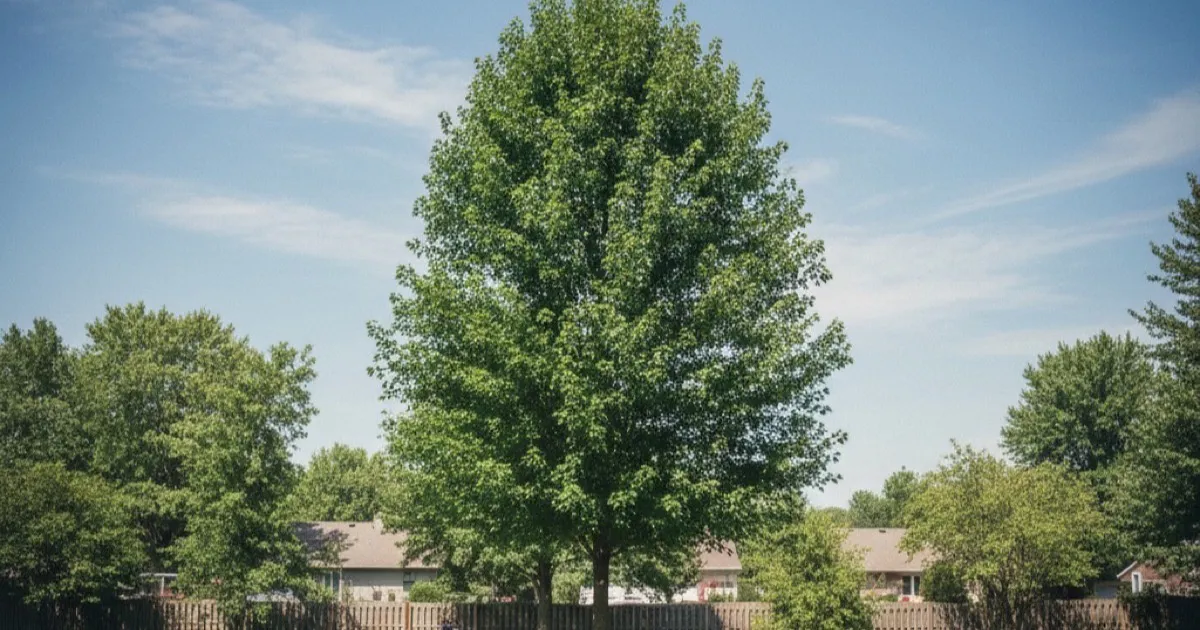
You want shade, privacy, or a windbreak, and you want it before your kids graduate. That’s the appeal of fast growing trees — they fill space and provide benefits within years instead of decades. But speed comes with trade-offs, and the fastest-growing trees are often the ones with the worst problems. Weak wood, invasive roots, short lifespans, and constant maintenance eat up whatever time you saved by planting fast.
The best fast growing trees balance speed with structure. They grow 2 to 3 feet per year and live long enough to be worth planting. The worst grow 5+ feet per year but fall apart in the first ice storm. This guide covers both groups so you know what to plant and what to avoid.
The fastest growing tree is the empress tree (Paulownia tomentosa), which can add 10 to 15 feet per year — but it’s invasive across much of the U.S. For yards, the fastest trees worth planting are Green Giant arborvitae (3 to 5 feet per year), loblolly pine, and tulip tree (2 to 3 feet per year).
What Counts as Fast Growing?
Growth rates for trees fall into rough categories:
- Slow: Under 1 foot per year (white oak, American beech, bristlecone pine)
- Moderate: 1 to 2 feet per year (red maple, Douglas fir, sugar maple)
- Fast: 2 to 3 feet per year (red oak, tulip tree, bald cypress)
- Very fast: 3+ feet per year (hybrid poplar, silver maple, willow, paulownia)
The sweet spot for most yards is 2 to 3 feet per year. Trees in this range grow noticeably every season but produce wood strong enough to handle storms. Trees growing faster than 3 feet per year almost always have weaker wood and shorter lives.
Fast Growing Trees at a Glance
Here’s how the seven trees worth planting compare on speed, size, and where they grow well. Growth rates apply to young, well-watered trees and slow down as the tree matures.
| Tree | Growth rate | Mature height | USDA zones | Where it grows |
|---|---|---|---|---|
| Tulip tree | 2-3 ft/yr | 70-90 ft | 4-9 | Eastern U.S. |
| Red oak | 2 ft/yr | 60-75 ft | 3-8 | Eastern and central U.S. |
| Bald cypress | 1.5-2 ft/yr | 50-70 ft | 4-10 | Southeast, adaptable nationwide |
| Green Giant arborvitae | 3-5 ft/yr (young) | 40-60 ft | 5-8 | Most of the U.S. |
| Dawn redwood | 2-3 ft/yr | 70-100 ft | 4-8 | Most of the U.S. |
| Loblolly pine | 3 ft/yr | 60-90 ft | 6-9 | Southeast |
| River birch | 2-3 ft/yr | 40-70 ft | 4-9 | Eastern U.S., wet soils |
What Is the Fastest Growing Tree?
The empress tree (Paulownia tomentosa) is the fastest growing tree in the world, capable of 10 to 15 feet of growth per year and 30 feet of height within three years. Among trees commonly planted in North America, hybrid poplar grows 5 to 8 feet per year, weeping willow 6 to 8 feet near water, and eastern cottonwood 4 to 5 feet, which makes it the fastest large native tree. Record speed carries structural costs: the empress tree is classified as invasive in more than a dozen eastern states, willows and hybrid poplars have brittle wood and lifespans of 15 to 30 years, and old cottonwoods shed heavy limbs without warning. For planted landscapes, the practical ceiling is about 3 to 5 feet per year — the rate of Green Giant arborvitae and young loblolly pine — before wood strength and lifespan drop off sharply.
That’s why none of the record-holders made the list below. If a huge, fast tree is already towering over your property and you suspect it’s one of these, our cottonwood identification guide covers the most common case. And if you want the fastest hardwood that produces usable wood, that’s the tulip tree — first on the list for a reason.
Best Fast Growing Trees (Worth Planting)
These trees grow quickly without the structural problems that plague the fastest growers.
Tulip Tree (Liriodendron tulipifera)
Tulip tree is one of the fastest-growing quality hardwoods in North America. Young trees routinely add 3 feet per year in good soil, and the wood is strong enough to support the rapid growth without splitting.
- Growth rate: 2 to 3 feet per year
- Mature size: 70 to 90 feet tall, 40 to 50 feet wide
- Best feature: Straight trunk, distinctive tulip-shaped flowers, bright yellow fall color
- Identify it by: 4-lobed leaves with a flat, notched tip (they look like a tulip outline or a cat’s face), greenish-orange cup-shaped flowers in late spring, and upright cone-like seed clusters that hold through winter
- Trade-off: Gets very large. Only for bigger properties. Aphids sometimes drip honeydew
Tulip tree delivers shade faster than almost any other tree you won’t regret planting.
Red Oak (Quercus rubra)
Red oak surprises people with its speed. Most people think oaks are slow, but red oak grows 2 feet per year when young — faster than many trees marketed as “fast growing.” Unlike those trees, red oak lives 200+ years and has strong wood that handles storms.
- Growth rate: 2 feet per year
- Mature size: 60 to 75 feet tall, 45 to 55 feet wide
- Best feature: Dense shade, deep red fall color, long-lived
- Identify it by: leaves with 7 to 11 pointed lobes tipped with tiny bristles, and smooth gray bark with pale stripes running down the ridges (people call them “ski trails”)
- Trade-off: Acorns in fall. Susceptible to oak wilt in some regions
Red oak is the best choice if you want both speed and permanence. For help identifying oak species already in your yard, check the leaf shape and bark.
Bald Cypress (Taxodium distichum)
Bald cypress grows 1.5 to 2 feet per year once established, which is fast for a tree that can live 600+ years. It handles wet soil, dry soil, clay, and flooding — conditions where most fast-growing trees would struggle.
- Growth rate: 1.5 to 2 feet per year
- Mature size: 50 to 70 feet tall, 20 to 30 feet wide
- Best feature: Tolerates almost any soil. Copper-orange fall color. Nearly pest-free
- Identify it by: soft, feather-like needles in flat sprays, a fluted and buttressed trunk base, and woody “knees” poking up from the soil in wet ground
- Trade-off: Deciduous conifer (drops needles in fall). Narrower shade than broadleaf trees
If your yard has wet spots or heavy clay where other trees fail, bald cypress is one of the few fast growers that will actually survive. Our bald cypress identification guide walks through the details.
Green Giant Arborvitae (Thuja ‘Green Giant’)
For privacy screening, Green Giant arborvitae is hard to beat. It’s a hybrid that grows 3 to 5 feet per year when young, forming a dense evergreen column. Unlike many fast-growing evergreens, it keeps its lower branches, so it works as a screen from the ground up.
- Growth rate: 3 to 5 feet per year when young, slowing to 1 to 2 feet at maturity
- Mature size: 40 to 60 feet tall, 12 to 18 feet wide
- Best feature: Dense evergreen screen. Deer-resistant. Few pest problems
- Identify it by: flat sprays of soft, scale-like foliage and a tight pyramidal shape that keeps its branches all the way to the ground
- Trade-off: Gets taller than most people expect. Not ideal for small yards. Needs some moisture
Plant Green Giant 5 to 6 feet apart for a solid privacy screen within 3 to 4 years. For more options, see our roundup of the best trees for privacy.
Dawn Redwood (Metasequoia glyptostroboides)
Dawn redwood is a living fossil — it was known only from the fossil record until live trees were discovered in China in 1944. It grows fast (2 to 3 feet per year), has a beautiful pyramidal form, and turns orange-brown in fall before dropping its needles (like bald cypress, it’s a deciduous conifer).
- Growth rate: 2 to 3 feet per year
- Mature size: 70 to 100 feet tall, 25 to 35 feet wide
- Best feature: Distinctive fluted trunk. Feathery foliage. Interesting conversation piece
- Identify it by: feathery needles arranged in opposite pairs (bald cypress needles alternate, which is the quickest way to tell the two apart) and deep hollows carved under each spot where a branch meets the trunk
- Trade-off: Gets very tall. Deciduous. Buttressed roots near the trunk
Dawn redwood is best for larger properties where its size won’t be a problem. The trunk develops a dramatic fluted, buttressed base that’s worth seeing.
Loblolly Pine (Pinus taeda)
In the southeastern U.S., loblolly pine is the go-to fast-growing evergreen. It grows 3+ feet per year when young and reaches full height in 25 to 30 years. It’s the dominant timber pine of the Southeast for a reason — it grows fast and straight. Loblolly is the defining pine across the Carolinas, Georgia, and Texas.
- Growth rate: 3 feet per year
- Mature size: 60 to 90 feet tall, 25 to 35 feet wide
- Best feature: Evergreen. Fast. Straight growth. Provides year-round screening
- Identify it by: needles in bundles of 3, each 6 to 9 inches long and slightly twisted, plus stiff 3 to 6 inch cones armed with sharp prickles
- Trade-off: Drops needles year-round (messy). Not cold-hardy north of USDA Zone 6
Loblolly is the fastest quality pine for southern yards. For northern climates, eastern white pine grows about 2 feet per year and serves a similar role.
River Birch (Betula nigra)
River birch is a fast-growing native that thrives in wet to moist soil. It grows 2 to 3 feet per year and develops attractive peeling bark that reveals cream, salmon, and cinnamon-brown layers. Most birch species are susceptible to bronze birch borer, but river birch is resistant.
- Growth rate: 2 to 3 feet per year
- Mature size: 40 to 70 feet tall, 25 to 40 feet wide
- Best feature: Peeling, multi-colored bark. Tolerates wet soil. Borer-resistant
- Identify it by: papery bark that curls off in salmon, cream, and cinnamon layers, diamond-shaped double-toothed leaves, and a habit of growing several trunks from one base
- Trade-off: Drops catkins, seeds, and twigs constantly. Surface roots. Yellow fall color is brief
River birch works well in wet areas and along streams where you need fast coverage. Multi-trunk specimens are especially attractive. Compare it to close cousins in our river birch identification guide.
Fast Growing Trees to Avoid
These trees grow fast but cause enough problems that most arborists advise against planting them in yards.
Silver Maple (Acer saccharinum)
Silver maple grows 3 to 5 feet per year, which makes it tempting. But the wood is brittle. Large limbs break in wind, ice, and thunderstorms. Surface roots crack sidewalks and invade sewer lines. The tree seeds aggressively — you’ll pull hundreds of seedlings from your garden every spring.
You can spot silver maple by its deeply cut, 5-lobed leaves that flash silvery-white undersides when the wind turns them over. It was the most-planted yard tree in the mid-20th century, and most of those trees are now problem trees. Plant a red oak instead — it’s nearly as fast and far more durable. Our silver maple identification guide shows how to confirm one.
Bradford Pear (Pyrus calleryana)
Bradford pear grows fast, blooms white in spring, and turns red in fall. You can identify it by glossy oval leaves, dense clusters of white 5-petal blossoms in early spring (with a smell most people find unpleasant), and small brown fruits. It splits in half at 15 to 20 years because its branch structure is fundamentally weak — all major limbs originate from the same point on the trunk. It’s also invasive in the eastern U.S., and many states have banned new sales.
Hybrid Poplar
Hybrid poplars (crosses between cottonwood and other poplar species) are marketed as the fastest shade trees available, growing 5 to 8 feet per year. That speed comes at a cost: they live only 15 to 30 years, drop branches constantly, send root suckers across the yard, and clog drains with aggressive roots. You can recognize poplars by their triangular to heart-shaped leaves on flattened stalks that flutter in the lightest breeze. Our poplar identification guide helps you tell the species apart.
If you need fast screening for a temporary purpose (construction site, event privacy), hybrid poplar works. For permanent landscaping, look elsewhere.
Leyland Cypress (× Cuprocyparis leylandii)
Leyland cypress grows 3 to 4 feet per year and was wildly popular as a privacy screen in the 1990s and 2000s. You can identify it by soft, flat sprays of feathery blue-green foliage on a fast, narrow, columnar form. The problem: it’s susceptible to several canker diseases and bagworms. When one tree in a row dies, it leaves a gap in the screen. They also need regular pruning — if you let them grow naturally, they get too wide for most property lines.
Tree of Heaven (Ailanthus altissima)
Tree of heaven grows faster than almost anything else — 6+ feet per year. It’s also one of the worst invasive trees in North America. You can identify it by large compound leaves with 11 to 41 leaflets, each with one or two gland-tipped teeth near its base, and a strong burnt-peanut smell when you crush a leaf or snap a twig. It produces thousands of seeds, sends up root suckers throughout the yard, and the male trees produce flowers that smell terrible. Never plant this tree deliberately. If you have one, our tree of heaven identification guide can help you confirm it before removal.
How Fast Growth Affects Wood Quality
There’s a direct relationship between growth speed and wood strength. Trees growing 2 feet per year produce wood with tighter grain and higher density than trees growing 5 feet per year. This matters because:
- Storm resistance: Dense wood bends. Soft wood snaps. After an ice storm, the fastest growers are the ones on the ground.
- Lifespan: Slower-growing trees generally live longer. Red oak (2 ft/year, 200+ years) vs. silver maple (3-5 ft/year, 50-80 years) vs. hybrid poplar (5-8 ft/year, 15-30 years).
- Root structure: Fast growers often develop shallow, aggressive root systems that cause foundation and plumbing problems.
The 2 to 3 feet per year range is where speed and quality overlap. Below that, you’re waiting a long time. Above that, you’re likely getting weaker wood.
How to Make Trees Grow Faster
Species sets the ceiling, but site and care decide whether a tree reaches it. A tulip tree capable of 3 feet per year manages barely 1 foot in dry, compacted soil. To grow trees fast:
- Water deeply for the first three summers. 10 to 15 gallons once or twice a week beats a daily sprinkle. Drought stress is the most common reason young trees stall.
- Replace grass with mulch. A 3-foot mulch ring, 2 to 3 inches deep and pulled back from the trunk, removes root competition. Trees with a mulch ring can grow close to twice as fast as trees planted in turf.
- Skip fertilizer at planting. It pushes leaf growth before the roots can support it. Fertilize from year two, and only if a soil test shows a deficiency.
- Plant smaller stock. A small container tree usually overtakes a large balled-and-burlapped tree within five years because it loses far fewer roots in transplant.
Identifying Fast Growing Trees With Tree Identifier
Before planting a fast-growing tree, it helps to identify what’s already in your yard. A mature silver maple nearby means its roots are already claiming territory. An existing oak means the soil can support quality hardwoods. The Tree Identifier app identifies trees from photos of leaves, bark, flowers, or fruit. Snap a photo and the AI tells you the species. It works offline too, which is useful at nurseries or garden centers where you want to verify a tree’s label before buying. You get 2 free identifications per day. Prefer not to install anything? The free tree identifier web tool runs in your browser — upload a photo of what’s already growing in your yard and get a species match on the spot.
Frequently Asked Questions
How do I identify a fast growing tree in my yard?
Start with the quickest clues: leaf shape, bark texture, and overall form. Silver maple shows deeply cut leaves with silver undersides, tulip tree has 4-lobed leaves with a flat notched tip, and river birch has papery bark that peels in salmon and cinnamon layers. If you’re not sure, photograph a leaf, the bark, or a flower and run it through the Tree Identifier app for an instant species match.
What is the fastest growing tree for privacy?
Green Giant arborvitae is the fastest quality evergreen for privacy screening, growing 3 to 5 feet per year. For deciduous screening, hybrid poplars grow fastest (5-8 ft/year) but only last 15 to 30 years. For a permanent evergreen screen, Green Giant is the better choice despite being slightly slower.
What is the fastest growing hardwood tree?
Tulip tree (also called yellow poplar) is the fastest growing quality hardwood in North America, adding 2 to 3 feet per year with wood strong enough for lumber. Hybrid poplar and empress tree grow faster — 5 to 15 feet per year — but their soft, brittle wood keeps them out of most hardwood uses.
How long does it take for a fast growing tree to provide shade?
Most fast-growing shade trees provide noticeable shade within 5 to 8 years and full shade within 10 to 15 years. Tulip tree and red oak can shade a patio within 8 to 10 years of planting. Buying a larger nursery tree (2 to 3 inch caliper instead of a whip) saves 3 to 5 years of waiting.
Are fast growing trees bad?
Not all of them. Trees growing 2 to 3 feet per year (red oak, tulip tree, river birch, bald cypress) are fast enough to make a difference and strong enough to last. Trees growing 5+ feet per year (hybrid poplar, silver maple, tree of heaven) usually have weak wood, short lives, and aggressive roots. The speed itself isn’t the problem — it’s what comes with it.
What is the fastest growing shade tree that won’t cause problems?
Tulip tree is the best answer for most situations. It grows 2 to 3 feet per year, reaches 70 to 90 feet tall with a broad canopy, has strong wood, and lives over 100 years. Red oak is a close second, especially if you want something that will outlast the house.
When should I plant fast growing trees?
Early spring (after the last frost) or fall (6 weeks before the first frost) are the best planting windows. Fall planting gives roots time to establish before the tree puts energy into leaf growth. Spring planting works well if you water consistently through the first summer. Avoid planting in the heat of summer.
Planning to plant a fast-growing tree this spring? Try Tree Identifier — snap a photo of any tree at the nursery to verify the species before you buy.
Identify a tree from your photo — free
Upload a leaf, bark, or whole-tree photo and get the species in seconds. No signup.
Confidence:
Unlock the full species profile
Free in the app — with unlimited identifications.


AI result for guidance — the app gives full species details and works offline.
Want unlimited identifications?
Get the full species profile, photos and details — free in the app, with unlimited scans.
- Unlimited identifications
- Full species profiles & details
- Works offline, anywhere
- Save and revisit your finds
Rachel Nguyen
Tree Identifier Team