How to Identify a Hackberry Tree: Start With the Warty Bark
Hackberry trees hide in plain sight. They line city streets, shade parks, and fill woodland edges across most of the United States, yet few people can name them on sight. Part of the problem is that hackberry tree identification feels harder than it should. The leaves look vaguely like elm leaves. The crown shape isn’t distinctive. The fruit is small and forgettable. But hackberry has one feature that no other common tree shares: its bark. Once you learn to spot the warty, corky ridges that cover a hackberry trunk, you’ll start seeing them everywhere.
The common hackberry (Celtis occidentalis) is native to most of the eastern and central United States and is one of the toughest urban trees planted. This guide covers how to identify hackberry by bark, leaf, fruit, and form — plus how to separate it from elms, sugarberry, and other look-alikes.
Hackberry Bark: The Warty Signature
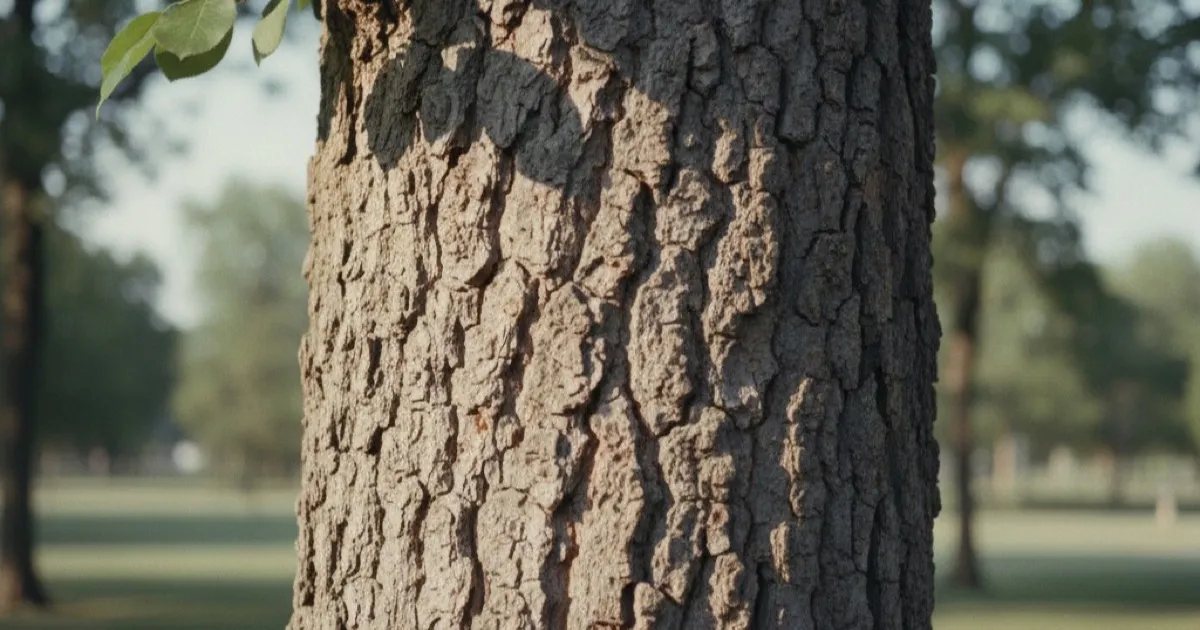
Start with the bark. Hackberry bark is unlike any other common tree in North America.
Young hackberry trees have smooth, pale gray bark. As the tree matures, the bark develops distinctive corky warts and ridges — raised, irregular bumps and narrow ridges that project outward from the trunk. These aren’t the orderly furrows you see on oaks or ashes. They’re random, knobby, and textured, making the trunk look rough and warty.
On some trees, the corky growths are small bumps scattered across otherwise smooth bark. On others, they merge into long, narrow ridges separated by smooth gray patches. The pattern varies from tree to tree, but the corky texture is consistent.
Key bark details:
- Color: Light to medium gray, often with a silvery quality
- Texture: Smooth patches interrupted by corky warts and ridges
- Pattern: Irregular — not the neat furrows or plates of other hardwoods
- Age variation: Young trees are smooth; mature trees develop heavy warts
The bark alone is enough to identify a hackberry in most settings. If you see a medium-to-large tree with gray bark covered in warty corky bumps, check the leaves to confirm, but you’re almost certainly looking at a hackberry.
For anyone learning to identify trees by their bark, hackberry is one of the most distinctive and easy-to-remember patterns.
Hackberry Leaves
Hackberry leaves are simple, alternate, and roughly oval with a pointed tip. They measure 2 to 5 inches long and have serrated margins (toothed edges). At first glance, they look similar to elm leaves, which is the main source of confusion.
Features that distinguish hackberry leaves:
- Asymmetrical base: The leaf base is lopsided — one side of the blade meets the stem slightly lower than the other. This asymmetry is subtle but consistent.
- Three prominent veins: Three main veins radiate from the base of the leaf, with two side veins curving upward alongside the central midrib. This three-vein pattern is more prominent in hackberry than in most elms.
- Texture: The upper surface is slightly rough to the touch (like fine sandpaper), while the underside is softer. This roughness varies by individual tree.
- Serration: The teeth are coarser and less uniform than those on most elm leaves.
Hackberry leaves turn dull yellow in fall. The color isn’t spectacular — you won’t confuse it with a maple or sweetgum — but the leaves drop relatively late in autumn.
Hackberry vs. Elm: Telling Them Apart
This is the most common identification challenge. Hackberry and elm trees are related (both were formerly in the family Ulmaceae) and share a similar leaf shape. But several features separate them clearly.
| Feature | Hackberry | Elm |
|---|---|---|
| Bark | Warty corky ridges on smooth gray | Deep furrows or scaly plates (varies by species) |
| Leaf base | Strongly asymmetrical, three-veined | Slightly asymmetrical, pinnately veined |
| Fruit | Round dark purple drupe (berry) | Flat papery samara (winged seed) |
| Twig buds | Pressed flat against the twig | Pointed, angled away from twig |
| Crown | Often has “witches’ brooms” (twig clusters) | Graceful vase shape (American elm) |
The fastest test: look at the bark. If it’s covered in corky warts on a gray background, it’s hackberry. Elms never develop that warty texture.
The fruit is another clear separator. Hackberry produces small, round, dark purple drupes in fall (about 1/4 inch). Elms produce flat, papery winged seeds in spring. If you see small dark berries on a tree with elm-like leaves, it’s hackberry.
Hackberry Fruit
Hackberry fruit is small, round, and easy to miss. Each drupe is about 1/4 inch in diameter, starting green in summer and ripening to dark purple or reddish-brown by early fall. The fruit has a thin, sweet layer of flesh around a hard, round seed.
Despite its small size, hackberry fruit is ecologically important:
- Over 40 bird species eat hackberry fruit, including cedar waxwings, robins, mockingbirds, and woodpeckers
- The fruit persists on the tree through winter, providing food when other sources are scarce
- Squirrels, raccoons, and foxes also eat the drupes
- The fruit was a food source for Indigenous peoples, who ground the entire berry (flesh and seed) into a paste
The persistent fruit is a useful winter identification feature. If you see a bare deciduous tree with warty bark and clusters of small dark berries still clinging to the branches in January, it’s almost certainly hackberry.
Hackberry Tree Shape and Size
Common hackberry is a medium to large tree, typically reaching 40 to 60 feet tall with a spreading, rounded crown. Some specimens in rich bottomland soils grow to 80 or even 100 feet.
The crown shape is broad and somewhat irregular, with arching branches. Hackberry doesn’t have the tidy vase shape of American elm or the symmetrical oval of a sugar maple. The branching tends to be coarser, with fewer fine twigs at the tips.
One distinctive feature to watch for: witches’ brooms. These are dense clusters of small twigs that grow in tight, ball-like bunches on branches throughout the crown. They’re caused by a combination of a mite and a powdery mildew fungus. Witches’ brooms are not harmful to the tree but are extremely common on hackberry and relatively rare on other species. If you see a large tree with warty bark and multiple twig clusters scattered through the crown, hackberry is a near-certain ID.
Where Hackberry Trees Grow
Common hackberry has one of the broadest native ranges of any North American tree. It grows from southern Quebec and Ontario south to Florida and west to the Great Plains.
Preferred habitats:
- Floodplains and river bottoms (where it reaches its largest size)
- Limestone bluffs and rocky hillsides
- Urban streets, parks, and parking lots
- Woodland edges and fencerows
- Disturbed areas and vacant lots
Hackberry’s greatest strength is its toughness. It tolerates:
- Drought, heat, and wind
- Alkaline and limestone soils
- Urban pollution and compacted soil
- Road salt spray
- Temporary flooding
This resilience makes it one of the most widely planted street trees in the Great Plains and Midwest, where summer heat and winter cold test most species. If you’re in Kansas, Oklahoma, Nebraska, or Texas and see a large shade tree you can’t identify, check for warty bark — it might be hackberry.
Sugarberry (Celtis laevigata), a close relative, replaces common hackberry in the Deep South. Sugarberry has smoother bark with fewer warts, thinner leaves, and a preference for wetter sites. In the overlap zone (roughly Virginia to Texas), both species occur and can hybridize.
Hackberry Wood and Uses
Hackberry wood is pale yellowish-white with no clear distinction between heartwood and sapwood. It’s moderately hard, flexible, and shock-resistant. Commercially, it’s sold as “hackberry” or sometimes blended with elm lumber.
Uses include:
- Furniture (especially chairs and bent-wood items)
- Crates and boxes
- Athletic equipment handles
- Firewood (it splits easily and burns moderately well)
The wood isn’t well-known commercially, but hackberry lumber is affordable and readily available in the Midwest. Woodworkers who’ve tried it appreciate its workability and subtle grain pattern.
Identifying Hackberry Trees With Tree Identifier
Hackberry’s warty bark is distinctive, but the leaves can fool you if you’re not sure whether you’re looking at hackberry, elm, or sugarberry. The Tree Identifier app sorts it out from a single photo. Snap a picture of the corky bark, an asymmetrical leaf, or the dark purple fruit, and the AI identifies the species. It works with leaves, bark, flowers, and fruit, giving you confidence no matter what part of the tree you photograph.
The app works offline too — useful if you’re hiking a limestone bluff trail or exploring a floodplain forest without cell signal. You get 2 free identifications per day to start.
Frequently Asked Questions
Are hackberry trees messy?
Hackberry trees drop fruit in fall, which can stain sidewalks and cars parked underneath. The fruit attracts birds, which adds to the mess. The leaf litter is average for a deciduous tree. Witches’ brooms are cosmetic but don’t create extra debris. Overall, hackberry is moderately messy compared to other large shade trees.
Are hackberry berries edible?
Yes. Hackberry fruit is edible and has been eaten by humans for thousands of years. The flesh is thin and mildly sweet. Indigenous peoples ground the entire berry into a nutritious paste. The berries are safe but not particularly flavorful eaten raw off the tree.
What causes the bumps on hackberry bark?
The corky warts and ridges are a natural growth pattern of the bark’s cork cambium layer. They aren’t caused by disease or insects. The corky bumps develop as the tree matures and are one of hackberry’s most reliable identification features.
How do you tell hackberry from sugarberry?
Common hackberry (Celtis occidentalis) has heavily warty bark, thicker leaves with a rough upper surface, and grows throughout the eastern and central U.S. Sugarberry (Celtis laevigata) has smoother bark with fewer or no warts, thinner and smoother leaves, and is concentrated in the Southeast. In areas where both occur, the bark texture is the clearest separator.
Is hackberry a good yard tree?
Hackberry is an excellent yard tree for tough sites. It tolerates drought, heat, alkaline soil, and pollution. It grows to a good shade size (40-60 feet) with a broad crown. Downsides include the witches’ brooms (cosmetic), moderate fruit mess, and susceptibility to nipple gall insects on the leaves (unsightly but harmless).
Spotted a tree with warty bark and elm-like leaves? Try Tree Identifier — snap a photo and confirm the species in seconds.
Identify a tree from your photo — free
Upload a leaf, bark, or whole-tree photo and get the species in seconds. No signup.
Confidence:
Unlock the full species profile
Free in the app — with unlimited identifications.


AI result for guidance — the app gives full species details and works offline.
Want unlimited identifications?
Get the full species profile, photos and details — free in the app, with unlimited scans.
- Unlimited identifications
- Full species profiles & details
- Works offline, anywhere
- Save and revisit your finds
Elena Torres
Tree Identifier Team