How Do Trees Communicate? The Wood Wide Web
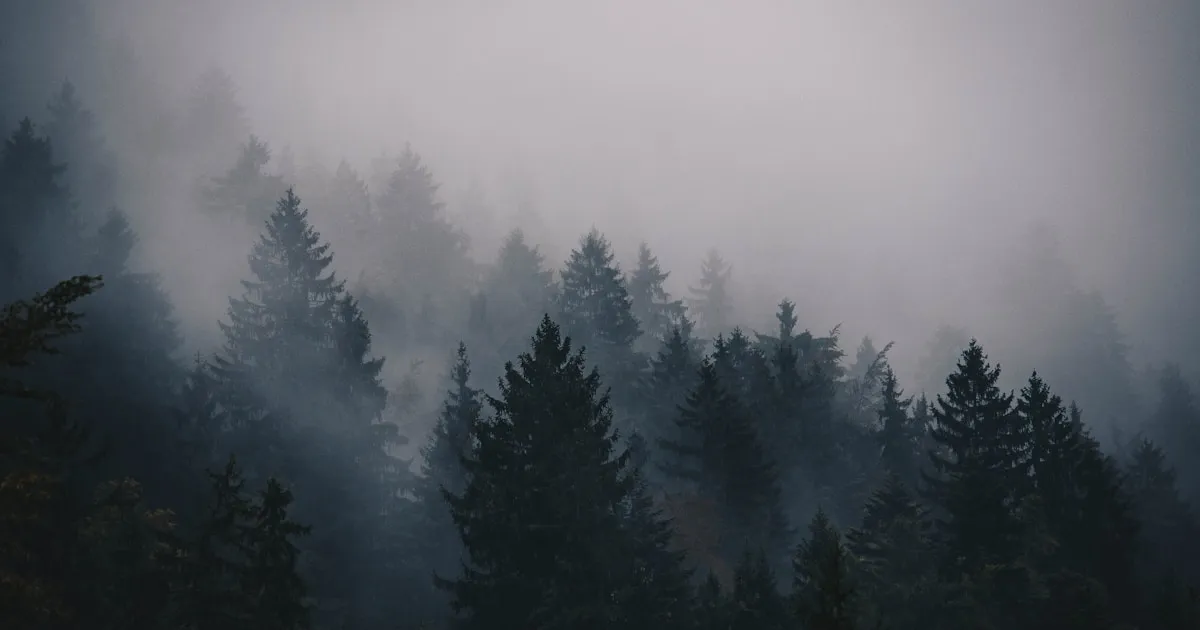
In a forest, trees that appear to be standing alone are actually connected underground. Their roots intertwine with fungal networks that link tree to tree across acres of forest floor.
Through these connections, trees share sugars, send chemical warnings about insect attacks, and may even recognize their own relatives. What looks like a collection of individuals is functioning more like a single organism.
This isn’t speculation or mysticism. It’s measurable. Ecologists have tracked radioactive carbon moving from one tree to another through fungal networks, documented chemical signals traveling underground, and observed mother trees preferentially feeding their offspring.
The Fungal Connection
The key players are mycorrhizal fungi—a group of fungi that have evolved partnerships with plant roots. The relationship goes back over 400 million years, to when plants first colonized land.
Here’s how it works: fungal threads (called hyphae) grow into and around tree roots. The fungus extends outward from the root into soil that the root alone couldn’t reach. It absorbs nutrients—especially phosphorus and nitrogen—and delivers them to the tree.
In return, the tree provides the fungus with sugars produced by photosynthesis. The fungus can’t photosynthesize, so it needs this carbon from its plant partner.
Neither organism forces this exchange. Both benefit. It’s mutualism, refined over hundreds of millions of years.
But here’s where it gets interesting: a single fungal individual can connect to multiple trees. Its network of hyphae spreads underground, linking root system to root system. When fungal threads from tree A meet fungal threads from tree B, resources can flow between them.
Scientists call this the “mycorrhizal network.” Journalists call it the “wood wide web.”
What Flows Through the Network
Carbon and Sugars
Trees produce sugars through photosynthesis. These sugars can move through the fungal network from tree to tree.
Why would a tree share food? Sometimes it’s not voluntary—the fungus takes a cut of everything it transports. But deliberate sharing happens too.
Shaded seedlings in a dark understory can receive carbon from tall trees above. The seedlings can’t photosynthesize enough to survive alone, but support from established trees keeps them alive until a gap opens in the canopy.
Dying trees sometimes dump their stored carbon into the network before death, transferring their resources to surviving neighbors.
Water
Fungal networks can move water, helping trees survive drought. A tree with deep roots accessing groundwater can share moisture with shallow-rooted neighbors.
Nutrients
Nitrogen, phosphorus, and other nutrients flow through the network. Trees with access to nutrient-rich patches share with trees in poorer soil.
Chemical Signals
When insects attack a tree, it often produces defensive chemicals—compounds that make leaves taste bad or become toxic. But trees don’t just defend themselves. They send chemical signals through the fungal network to warn their neighbors.
Neighboring trees receive these signals and begin producing defensive chemicals before the insects even reach them. They’re responding to a warning rather than waiting for actual attack.
This has been demonstrated experimentally. When scientists wound trees or expose them to insect damage, neighboring connected trees show defensive responses within hours.
Mother Trees
Ecologist Suzanne Simard discovered that large, old trees function as network hubs—nodes with connections to many smaller trees. She called them “mother trees.”
Mother trees send more carbon to seedlings than to adult trees. In some experiments, they seem to preferentially support seedlings of their own species. Even more remarkably, they may recognize their own offspring.
When Douglas fir seedlings that were genetically related to a mother tree were compared to unrelated seedlings, the related seedlings received more carbon through the network. The mother tree was feeding her own children more than strangers.
How does a tree recognize its offspring? Probably through chemical signals in root exudates—substances roots release into the soil. Trees seem able to detect the genetic relatedness of neighbors.
Competition vs. Cooperation
This doesn’t mean forests are utopias of sharing. Trees compete intensely for light, water, and space. Competition shapes forest structure.
But cooperation and competition coexist. A tree might compete fiercely for canopy space while simultaneously sharing resources underground.
The balance depends on conditions. When resources are abundant, trees compete more. When stressed, they may share more. When related, they may favor kin over strangers.
The fungal network isn’t entirely benevolent either. Some fungi take more than they give. Some connections benefit one tree at another’s expense. And the fungus itself has its own interests—it’s not managing the forest for the trees’ benefit.
Still, the overall pattern involves substantial resource sharing that benefits the forest community. A forest isn’t just a crowd of trees—it’s a networked system where connections matter.
Different Networks for Different Trees
Not all trees use the same type of fungal partner.
Ectomycorrhizal networks: Fungi that wrap around roots without penetrating cell walls. Common partners with oaks, pines, birches, beeches, and many other temperate forest trees. These networks can be extensive and long-lasting.
Arbuscular mycorrhizal networks: Fungi that penetrate root cells. Common with maples, ashes, tulip trees, and most tropical trees. These networks may be less extensive.
Some trees have both types. Others can switch between partners depending on conditions.
The type of network affects how connected trees are. Forests dominated by ectomycorrhizal trees (like Pacific Northwest conifer forests or eastern oak-hickory forests) may have more extensive underground networks than forests dominated by arbuscular mycorrhizal trees.
What This Means for Forests
Understanding mycorrhizal networks changes how we think about forest management.
Clearcutting disrupts networks. When all trees are removed, their fungal partners die too. The network has to rebuild from scratch, which can take decades. Leaving some mature trees maintains the network for regenerating seedlings.
Older trees are hubs. Removing the largest, oldest trees doesn’t just take the most timber—it removes network centers. The remaining trees may be less resilient without these connections.
Diversity matters. Mixed forests may have more resilient networks than monocultures. Different tree species host different fungi, creating redundancy in the system.
Soil disturbance damages networks. Heavy equipment compacting soil, bulldozing, or fire that sterilizes soil—all destroy fungal networks. Recovery can take years or decades.
This doesn’t mean we can’t harvest timber or manage forests. But it suggests that management that maintains some forest structure preserves ecological functions that we’re only beginning to understand.
Observing the Network
You can’t see mycorrhizal networks—they’re underground and microscopic. But you can see their fruiting bodies.
Many forest mushrooms are the reproductive structures of mycorrhizal fungi. The trees themselves have remarkable ways of surviving through the seasons, including winter dormancy that slows but doesn’t stop underground activity. That chanterelle or porcini you find in the forest is connected to tree roots by invisible threads extending in all directions.
The diversity of mushrooms in a forest roughly indicates the diversity of mycorrhizal connections. Old-growth forests with many tree species typically have more mushroom species than young, simplified forests.
What Trees Know
We should be careful about anthropomorphizing trees. They don’t “know” anything in the human sense. They don’t have brains or consciousness.
But they do respond to their environment in complex ways. They detect chemical signals, they alter their behavior based on neighbor identity, they preferentially allocate resources.
Whether we call this “communication” or just “chemical signaling” is partly semantic. What’s clear is that trees are not the isolated individuals they appear to be. They’re connected participants in a forest community, influenced by their neighbors and influencing them in return.
When you walk through a forest, you’re walking over a network as complex as anything above ground. Each tree you identify with the Tree Identifier app is a node in that network—connected to its neighbors, exchanging with them constantly, part of something larger than itself.
Identify a tree from your photo — free
Upload a leaf, bark, or whole-tree photo and get the species in seconds. No signup.
Confidence:
Unlock the full species profile
Free in the app — with unlimited identifications.


AI result for guidance — the app gives full species details and works offline.
Want unlimited identifications?
Get the full species profile, photos and details — free in the app, with unlimited scans.
- Unlimited identifications
- Full species profiles & details
- Works offline, anywhere
- Save and revisit your finds
Rachel Nguyen
Tree Identifier Team