Sassafras Tree Identification: Mitten Leaves and Root Beer Bark
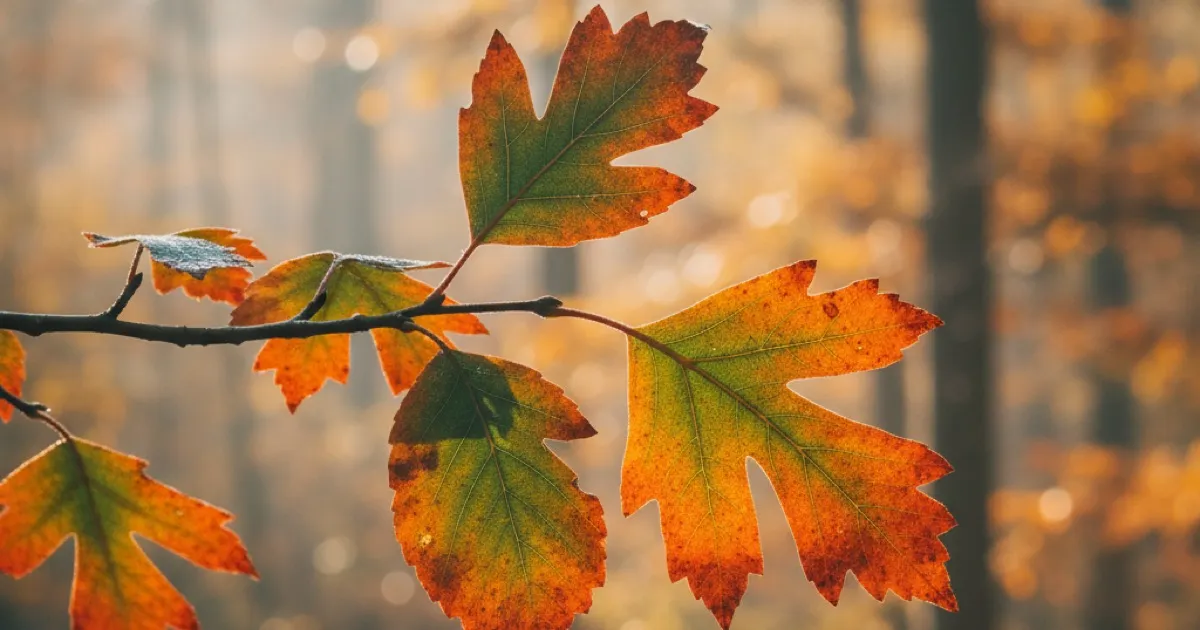
Sassafras is one of the few trees in North America where a single branch can show you three completely different leaf shapes. One leaf might be a plain oval. The next has a single side lobe that looks like a mitten. A third has two side lobes and resembles a three-pronged trident. This three-leaf trick makes sassafras tree identification one of the easiest skills a beginner can learn — and one of the most satisfying.
Sassafras (Sassafras albidum) grows throughout the eastern United States, from Maine to Florida and west to Texas. It’s a common understory tree in mixed hardwood forests, old fields, and woodland edges. Despite being everywhere, many people walk past it without a second glance. This guide will change that.
The Three Leaf Shapes of Sassafras
No other native tree produces three distinct leaf shapes on the same branch. This trait alone identifies sassafras from spring through fall.
Unlobed (egg-shaped). A simple oval leaf, 3 to 7 inches long, with a smooth margin and pointed tip. These are the most common leaf type on mature branches.
One-lobed (mitten). The same oval base, but with a single thumb-like lobe projecting from one side. The “mitten” can point left or right. Kids love finding these because they genuinely look like little green mittens.
Three-lobed (trident). Two side lobes plus the central tip create a shape like a trident or three-toed dinosaur foot. These are most common on vigorous new growth and young trees.
All three shapes appear on the same tree, often on the same branch. The leaves are alternate, 3 to 7 inches long, and have smooth (entire) margins with no teeth. The upper surface is bright green, the underside is paler and slightly fuzzy.
Two more clues confirm the leaf ID:
- Aromatic. Crush a sassafras leaf and it releases a spicy, citrusy scent. The smell is distinctive and pleasant — somewhere between root beer and lemon. If a mitten-shaped leaf smells like root beer when you crush it, you’ve found sassafras.
- Fall color. Sassafras leaves turn brilliant shades of orange, scarlet, and yellow in autumn. Like sweetgum, a single tree often shows multiple colors at once.
If you’re learning to identify trees by their leaf shape, sassafras is a great starting point because the mitten and trident shapes are unmistakable.
Sassafras Bark Identification
Sassafras bark changes significantly with age, giving you different clues depending on the tree’s size.
Young trees and saplings have smooth, green bark on the twigs and thin branches. The green bark is photosynthetic and has a spicy scent if scratched. Young trunk bark is thin, reddish-brown, and fairly smooth.
Mature trees develop thick, deeply furrowed bark with flat-topped ridges in a roughly interlocking pattern. The color is dark reddish-brown to cinnamon. The furrows deepen with age, and old sassafras trunks can look quite rugged.
The bark’s reddish-brown color is distinctive among eastern hardwoods. Combined with the aromatic scent (scratch the bark of a young branch and sniff), it confirms the identification even in winter when leaves are absent.
If you’re interested in identifying trees by their bark, sassafras offers a useful combination: the color (reddish-brown, not gray), the pattern (deep interlocking furrows on mature trees), and the scent (spicy when scratched).
Sassafras Flowers and Fruit
Sassafras blooms in early spring, usually in April, before the leaves fully emerge. The flowers are small, yellow-green, and clustered at the tips of twigs. Male and female flowers grow on separate trees (the species is dioecious). The flowers aren’t showy individually, but a sassafras in full bloom has a subtle golden haze about it.
The fruit is more noticeable. Female trees produce small, dark blue drupes (about 1/3 inch) that sit in bright red, club-shaped cups on red stalks. The contrast between the blue fruit and the red cup is striking and unique to sassafras. The fruit ripens in September and October, and birds eat them quickly — they’re a favorite of catbirds, vireos, kingbirds, and thrushes.
The fruit and its red cup are a strong identification feature in early fall, visible even from a distance when you know what to look for.
Sassafras Tree Shape and Growth Habit
Sassafras ranges from a small understory tree to a medium-sized canopy tree depending on conditions.
- In the open: Can reach 30 to 60 feet tall with a spreading, irregular crown
- In the forest understory: Often stays smaller, 15 to 30 feet, with a more columnar form
- As a colonizer: Spreads aggressively by root suckers, forming dense thickets of genetically identical stems in old fields and along forest margins
The root-suckering habit is a strong identification clue. If you see a grove of similar-looking medium trees with mitten-shaped leaves growing in an old field or along a highway right-of-way, it’s likely a sassafras colony.
The trunk on open-grown trees is often short, dividing into several large limbs that create the spreading crown. The branching pattern is somewhat irregular and horizontal, giving mature sassafras a distinctive silhouette that’s different from the more symmetrical shapes of oaks or maples.
Where Sassafras Trees Grow
Sassafras is native to the eastern United States, from southern Maine south to central Florida and west to eastern Texas and Iowa. It also grows in a few scattered locations in southern Ontario, Canada.
Preferred habitats include:
- Forest edges and woodland margins (where light is available)
- Old fields and abandoned farmland
- Fencerows and hedgerows
- Well-drained, acidic to neutral soils
- Sandy or loamy ground — it struggles in heavy clay
Sassafras is shade-tolerant when young but needs sun to develop into a full-sized tree. It’s often one of the first woody species to colonize abandoned agricultural land, along with eastern red cedar and invasive species like autumn olive.
In the forest, sassafras typically grows as a mid-story tree beneath taller oaks, hickories, and tulip poplars. It rarely dominates a canopy but is common enough that you’ll find it on most woodland hikes in the eastern U.S.
The Root Beer Connection
Sassafras is the tree that gave root beer its original flavor. The root bark contains an aromatic oil (safrole) that produces the distinctive root beer taste and smell. For centuries, sassafras root bark tea was a popular folk remedy and beverage. Early European colonists shipped sassafras roots back to England as a cash crop.
In 1960, the FDA banned safrole as a food additive after studies showed it could cause liver damage in laboratory rats at high doses. Modern root beer uses artificial sassafras flavoring instead. You can still smell the authentic root beer scent by scratching sassafras bark or crushing the leaves, but commercial use of the natural oil is no longer permitted in food.
The roots, twigs, and leaves all carry the scent to varying degrees. File powder (filé), a seasoning used in Cajun and Creole cooking, is made from dried and ground sassafras leaves. The leaves contain no safrole and remain legal for culinary use.
Sassafras Look-Alikes
Sassafras is distinctive enough that true look-alikes are rare, but a few trees cause occasional confusion:
Spicebush (Lindera benzoin): Another aromatic tree in the same family (Lauraceae). Spicebush has simple, unlobed leaves (never mitten-shaped), red berries, and a similar spicy scent. It stays small, usually under 15 feet.
Mulberry (Morus species): Mulberry leaves can be lobed (sometimes mitten-shaped) and sometimes appear on the same branch as unlobed leaves. But mulberry leaves have serrated margins (sassafras margins are smooth), the leaves are not aromatic, and mulberry produces fleshy fruit clusters rather than blue drupes.
Young maples: Occasionally confused at a glance, but maple leaves are opposite on the branch (sassafras are alternate), and they lack the aromatic scent.
The crush-and-sniff test resolves almost any confusion. If it smells like root beer, it’s sassafras.
Identifying Sassafras Trees With Tree Identifier
Found a tree with unusual lobed leaves and not sure if it’s sassafras? The Tree Identifier app can confirm the species from a single photo. Snap a picture of one of those mitten-shaped leaves, a section of the reddish-brown bark, or the blue fruit in its red cup, and the AI identifies it instantly. The app works with leaves, bark, flowers, and fruit photos.
It runs offline too, so if you’re exploring a woodland trail without cell service, you can still get an accurate ID. Start with 2 free identifications per day.
Frequently Asked Questions
Is sassafras safe to eat or make tea from?
Sassafras leaves (used to make filé powder) are considered safe for culinary use. However, sassafras root bark tea contains safrole, which the FDA banned as a food additive in 1960 due to potential liver toxicity in animal studies. Small amounts of bark tea are still consumed by some people, but it’s not recommended as a regular beverage.
How do you tell sassafras from mulberry?
Check the leaf margins. Sassafras leaves have completely smooth edges. Mulberry leaves have serrated (toothed) edges. Also crush a leaf — sassafras smells spicy and citrusy, mulberry does not. Sassafras leaves are alternate on the branch, and so are mulberry, but the margin and scent differences are definitive.
Do all sassafras trees have mitten-shaped leaves?
All sassafras trees produce the three leaf shapes (unlobed, one-lobed, three-lobed), but the ratio varies. Young trees and vigorous new growth tend to produce more lobed leaves. Mature trees may have more unlobed leaves. You’ll almost always find at least a few mittens if you check multiple branches.
How big do sassafras trees get?
In open conditions with good soil, sassafras can reach 60 feet tall and 2 feet in trunk diameter. Most trees are smaller, typically 30 to 40 feet. The largest recorded sassafras was over 100 feet tall in Owensboro, Kentucky. In forest understories and poor soils, sassafras often stays under 20 feet.
Why does sassafras spread into fields?
Sassafras reproduces aggressively through root suckers. A single tree can send up new stems from its root system, forming a thicket over time. This makes it one of the first trees to colonize abandoned farmland, highway medians, and cleared areas. The thickets are all clones of the parent tree.
Ready to spot sassafras on your next hike? Try Tree Identifier — photograph a mitten-shaped leaf, scratch some bark, or snap the blue fruit, and get an instant species match.
Identify a tree from your photo — free
Upload a leaf, bark, or whole-tree photo and get the species in seconds. No signup.
Confidence:
Unlock the full species profile
Free in the app — with unlimited identifications.


AI result for guidance — the app gives full species details and works offline.
Want unlimited identifications?
Get the full species profile, photos and details — free in the app, with unlimited scans.
- Unlimited identifications
- Full species profiles & details
- Works offline, anywhere
- Save and revisit your finds
Elena Torres
Tree Identifier Team