Texas Native Trees: 10 Species Every Texan Should Know
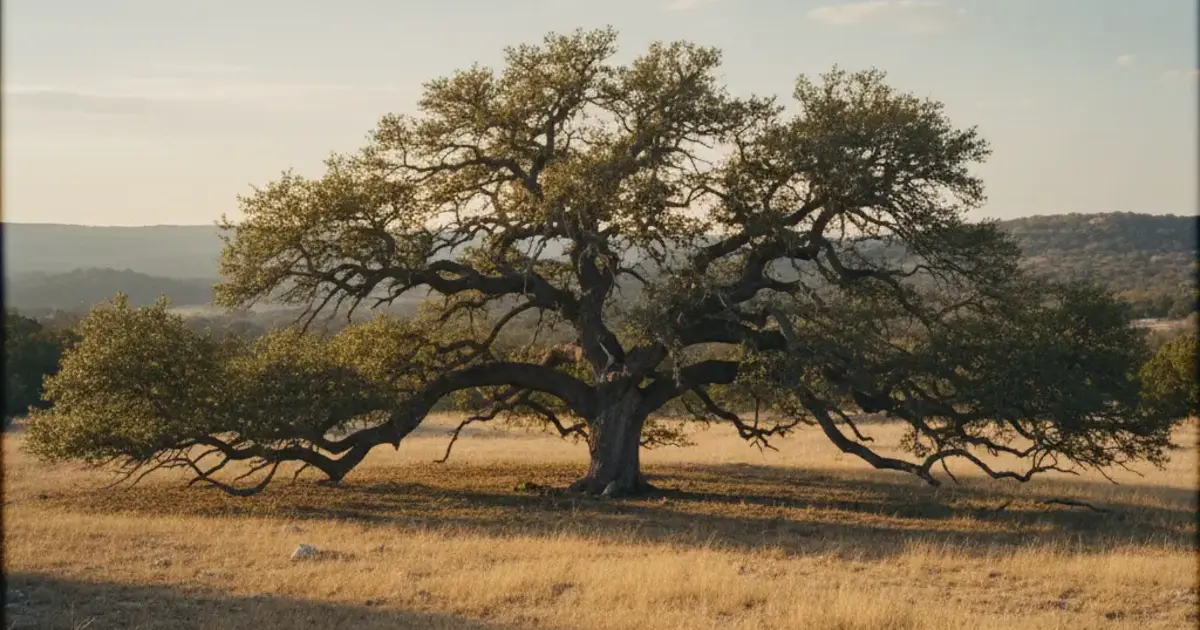
Texas covers 10 different ecoregions, from Gulf Coast swamps to Chihuahuan desert scrub. That range means the state grows more native tree species than most people expect. Whether you’re landscaping a yard in Austin, hiking Big Bend, or figuring out what’s growing in your East Texas woods, knowing your Texas native trees makes the outdoors more interesting and your planting decisions smarter.
Texas is home to more than 200 native tree species spread across 10 ecoregions. East Texas grows loblolly pines and bald cypresses. The hill country is dominated by live oaks and Ashe junipers. West Texas supports mesquites and desert willows. The right native tree depends on your region, soil type, and annual rainfall.
Iconic Texas Native Trees You’ll See Everywhere
Some trees define the Texas landscape. You’ll spot these across multiple regions, and they’re among the first species worth learning to identify.
Live Oak (Quercus virginiana)
Live oaks are the signature tree of central and south Texas. Their broad, spreading canopies can stretch 60 to 80 feet wide on a trunk that rarely tops 50 feet tall. The leaves are small, leathery, and evergreen (they drop old leaves in spring as new ones grow, so they’re never fully bare). Live oaks are the trees that line San Antonio’s River Walk and shade countless Texas ranches. They grow in USDA zones 7b through 10b and tolerate drought, poor soil, and coastal salt spray. You can tell a live oak from other oaks by its small, oval, unlobed leaves and its massive horizontal branching pattern.
Pecan (Carya illinoinensis)
The pecan is the Texas state tree. It grows wild along rivers and bottomlands from the Red River south to the Rio Grande. Mature pecans reach 70 to 100 feet tall with compound leaves made up of 9 to 17 leaflets. The nuts ripen in October and November. Pecans need deep soil and decent moisture, so they grow best in river bottoms and irrigated yards. If you’ve got a large, compound-leafed tree near a creek in Texas, it’s probably a pecan. Check the bark: mature pecans have deeply furrowed, grayish-brown bark with flat-topped ridges.
Texas Red Oak (Quercus buckleyi)
Texas red oak (sometimes called Buckley oak) is the go-to oak for hill country landscapes. It tops out at 30 to 50 feet and puts on one of the best fall color shows in central Texas, turning scarlet and orange in November. The leaves have 5 to 7 bristle-tipped lobes, similar to Shumard oak but smaller. Texas red oak grows on limestone soils that would stress most other red oaks. It’s a solid pick if you want fall color in a xeriscape-friendly package.
East Texas Native Trees: Piney Woods and Bottomlands
East Texas gets 40 to 56 inches of rain per year and feels more like the Deep South than the rest of Texas. The trees here reflect that.
Loblolly Pine (Pinus taeda)
Loblolly pine dominates the East Texas timber industry. These fast growers hit 60 to 90 feet tall with long needles (6 to 9 inches) in bundles of 3. The bark on young trees is dark and scaly, turning into thick, reddish-brown plates on mature trunks. Loblolly pines grow in acidic, sandy soils and need at least 35 inches of annual rain.
Bald Cypress (Taxodium distichum)
Bald cypress trees line rivers and swamps across East Texas. They’re the ones with feathery, flat needles that turn copper-orange in fall before dropping (making them one of the few deciduous conifers). Mature bald cypresses develop flared, buttressed trunks and distinctive “knees” that poke up from the water. They live for centuries. Some specimens along the Guadalupe River are estimated at over 1,000 years old.
Central Texas Hill Country Trees
The Edwards Plateau has thin, limestone soil, summer temperatures above 100 degrees, and unpredictable rainfall. The trees that thrive here are tough.
Ashe Juniper (Juniperus ashei)
Locals call it “cedar,” but Ashe juniper isn’t a true cedar. It’s the most common tree in the Texas hill country, forming dense thickets on rocky slopes. It grows 15 to 30 feet tall with shaggy, peeling bark and scale-like evergreen foliage. Ashe juniper is the primary host for the endangered golden-cheeked warbler, which nests exclusively in strips of its bark. Love it or hate it (many Texans blame it for allergies), it’s an essential part of the hill country ecosystem.
Texas Mountain Laurel (Dermatophyllum secundiflorum)
This small evergreen tree (10 to 15 feet) produces clusters of purple, grape-scented flowers in March and April. The glossy, compound leaves stay green year-round. It’s native to limestone hills from central Texas into the Trans-Pecos. Texas mountain laurel grows slowly but tolerates drought, heat, and poor soil. The bright red seeds inside the woody pods are toxic, so don’t let kids or pets chew on them.
Cedar Elm (Ulmus crassifolia)
Cedar elm is the most common elm in Texas. Unlike American elm, it flowers and sets seed in fall instead of spring. The leaves are small (1 to 2 inches), rough-textured, and have serrated edges. Cedar elms grow 50 to 70 feet tall and tolerate the alkaline, clay soils of central Texas better than any other elm species. Look for the small, corky wings on younger branches.
West Texas and Trans-Pecos Native Trees
West of the Pecos River, annual rainfall drops below 12 inches. Trees here are compact, drought-adapted, and widely spaced.
Mesquite (Prosopis glandulosa)
Mesquite is the defining tree of west and south Texas rangelands. It rarely grows above 30 feet but spreads a wide canopy of tiny, compound leaves. The taproot can reach 100 feet deep to find water. Mesquite wood is prized for smoking barbecue (Texas wouldn’t be Texas without mesquite-smoked brisket). The sweet bean pods were a staple food for Native Americans and still feed wildlife today.
Desert Willow (Chilopsis linearis)
Desert willow isn’t a true willow, despite the narrow, willow-like leaves. It grows 15 to 25 feet tall and produces showy, orchid-like flowers in pink, purple, or white from May through September. It thrives in dry washes and rocky soils where true willows would die. Desert willow drops its leaves early in fall and leafs out late in spring, so it looks dormant about 5 months of the year.
How to Pick the Right Texas Native Tree for Your Yard
Choosing a native tree starts with your ecoregion, not a nursery catalog. A bald cypress that thrives in Nacogdoches will struggle in Midland. A mesquite that looks great in El Paso will be an aggressive spreader in Houston’s wet soil. Here’s a quick framework:
Texas native tree selection depends on three factors: annual rainfall, soil pH, and heat zone. In East Texas (40+ inches of rain, acidic sandy soil), plant loblolly pines, bald cypresses, sweetgums, or water oaks. In Central Texas hill country (28 to 34 inches of rain, alkaline limestone soil), go with live oaks, Texas red oaks, cedar elms, or Mexican buckeyes. In West Texas (8 to 14 inches of rain, alkaline sandy or clay soil), stick with mesquites, desert willows, or Texas ebony. Native trees need less irrigation, resist local pests better, and provide food and habitat for native birds and insects that non-native ornamentals can’t match.
- Check your soil: Central Texas limestone soil is alkaline (pH 7.5 to 8.5). East Texas sand is acidic (pH 5.0 to 6.5). Most native trees are adapted to one or the other, not both
- Know your rainfall: Don’t plant a bald cypress where you get 12 inches of rain. Don’t plant a mesquite where you get 50
- Think about mature size: A pecan needs 40 feet of clearance. A Texas mountain laurel fits in a 15-foot space
- Buy local stock: Trees grown from seed collected in your region are better adapted than specimens shipped from out of state
How Tree Identifier Helps with Texas Native Trees
Identifying Texas trees in the field can get tricky. Is that a cedar elm or a winged elm? A Texas red oak or a Shumard oak? A post oak or a blackjack oak? Tree Identifier lets you snap a photo of a leaf, bark, or the whole tree and get an instant species ID with a confidence score. The app covers thousands of species, including all the Texas natives in this guide. You get 2 free identifications per day, and the offline mode means it works on remote hikes in Big Bend or the Piney Woods where cell service doesn’t exist.
Frequently Asked Questions
What is the most common native tree in Texas?
Live oak (Quercus virginiana) is the most widespread native tree across Texas, found in every region except the far western Trans-Pecos desert. In East Texas specifically, loblolly pine dominates by sheer numbers due to the timber industry.
Are mesquite trees actually native to Texas?
Yes. Honey mesquite (Prosopis glandulosa) is native to Texas, though it has spread far beyond its original range. Before European settlement, mesquite was mostly confined to South Texas and the Rio Grande valley. Overgrazing and fire suppression allowed it to colonize millions of acres of rangeland.
What native Texas trees grow the fastest?
Bald cypress, cedar elm, and loblolly pine are among the fastest-growing Texas natives, adding 2 to 3 feet per year in good conditions. Pecan trees also grow quickly when planted in deep, moist soil near waterways.
Can I plant live oaks in North Texas?
Live oaks grow well in north Texas (Dallas, Fort Worth) in USDA zones 7b and above. They may suffer leaf damage in unusually harsh winters (below 10 degrees F), but established trees typically recover. Plant them in a spot with some wind protection for the first few years.
Download Tree Identifier to identify any Texas native tree from a photo. Snap a picture of a leaf, bark, or branch, and get the species name, habitat details, and key characteristics in seconds.
Identify a tree from your photo — free
Upload a leaf, bark, or whole-tree photo and get the species in seconds. No signup.
Confidence:
Unlock the full species profile
Free in the app — with unlimited identifications.


AI result for guidance — the app gives full species details and works offline.
Want unlimited identifications?
Get the full species profile, photos and details — free in the app, with unlimited scans.
- Unlimited identifications
- Full species profiles & details
- Works offline, anywhere
- Save and revisit your finds
Elena Torres
Tree Identifier Team