How Trees Change Through the Seasons
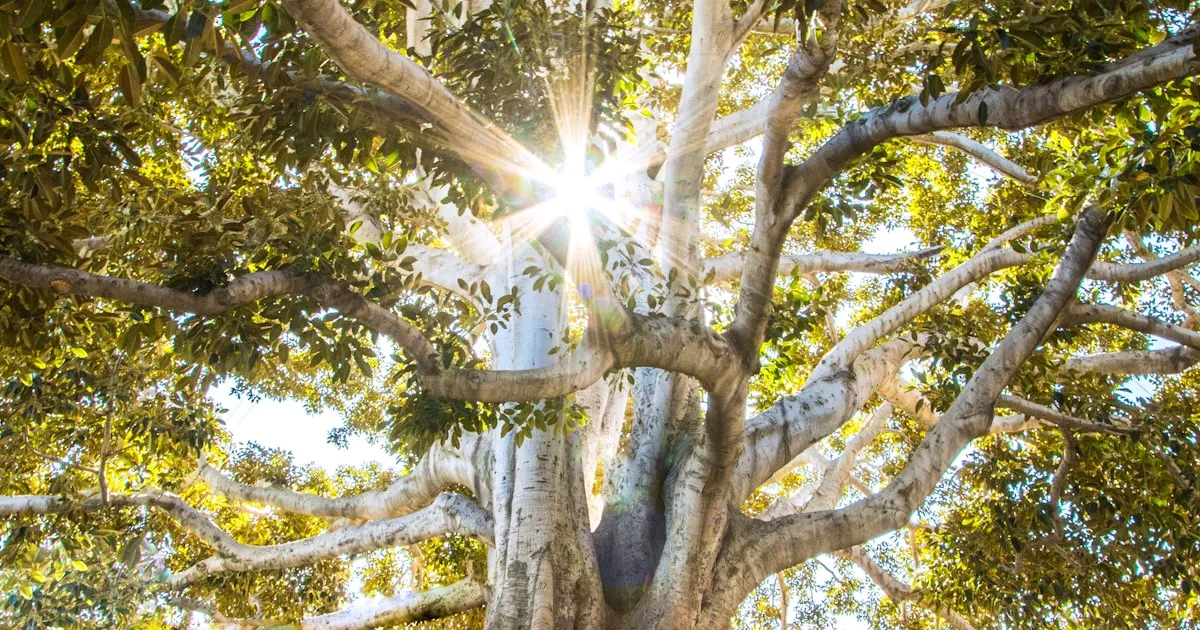
A tree in January looks nothing like the same tree in July. It’s bare, dormant, apparently lifeless. But it’s not dead—it’s waiting. And while it waits, it’s preparing for spring.
Understanding seasonal changes explains why trees look different throughout the year. It also makes identification possible in any season, not just when leaves are full.
Winter: Dormancy
What Trees Are Doing
Deciduous trees have dropped their leaves and shut down photosynthesis. They’re living off stored energy, metabolizing slowly.
Sap has retreated from branches to trunk and roots. Cells have hardened against freezing. Chemical antifreeze—sugars, proteins—protects living tissue from ice damage.
But dormancy isn’t complete inactivity. Roots may grow on warm days when soil isn’t frozen. Buds are fully formed, sealed in protective scales, ready for spring.
What to Look For
Buds: Each species has distinctive buds. Oak buds cluster at twig tips. Maple buds sit opposite each other. Beech buds are long and pointed. Learn bud shapes and you can identify bare trees. The complete approach is covered in how to identify trees in winter.
Bark: Without leaves distracting you, bark patterns stand out. Winter is the best season for bark study—see the full guide on identifying trees by their bark for what to look for.
Persistent fruits: Some trees hold fruits through winter. Sweetgum balls, oak leaves, beech husks. These help with identification.
Branching pattern: The tree’s overall architecture is visible. Does it branch opposite or alternate? Is it vase-shaped, rounded, columnar? These shapes are species-specific.
Evergreens: Conifers and broad-leaved evergreens remain green. They photosynthesize whenever temperature allows, though at reduced rates.
What Trees Need
Surprisingly, trees need cold. A certain number of chill hours (hours below about 45°F) completes dormancy properly. Trees that don’t get enough chilling may leaf out erratically, bloom weakly, or become confused about when spring has arrived.
This is why apple trees struggle in Florida—not enough winter cold—and why peach trees from Georgia fail in Maine—too much cold.
Spring: Awakening
What Happens
As soil warms and days lengthen, trees emerge from dormancy. The sequence varies by species, but the general pattern holds:
First: Roots resume active growth, absorbing water and nutrients.
Next: Sap begins flowing. In maples, this creates the pressure that allows syrup production.
Then: Buds swell. Scales loosen.
Finally: Buds open. Depending on species, flowers or leaves (or both) emerge.
Leaf Out Sequence
Trees don’t all leaf out at once. The order is fairly consistent:
Early: Red maple, willows, elms, serviceberries Middle: Birches, oaks, hickories Late: Walnuts, locusts, catalpa
This timing evolved for reasons. Early leafers get a head start on photosynthesis but risk late frost damage. Late leafers avoid frost but compete for light with trees already in full leaf.
Flowering
Many trees flower before they leaf out. This is practical—wind-pollinated trees like oaks and birches need pollen to travel unimpeded by leaves. Insect-pollinated trees want flowers visible to pollinators.
Look for:
- Red maple flowers in late winter—tiny red clusters before leaves
- Willows’ fuzzy catkins
- Redbud’s pink flowers on bare branches
- Cherry and apple blossoms
- Oak catkins, often overlooked but present on every oak
Identification Challenges
Spring is tricky for identification. New leaves are small, pale, and sometimes shaped differently from mature leaves. Flowers help but don’t last long.
Focus on buds and branching until leaves mature. Early spring is really extended winter in identification terms.
Summer: Full Production
Peak Photosynthesis
This is the productive season. Leaves are full-sized, fully green, maximally efficient. Trees are manufacturing sugars as fast as they can.
Most of those sugars go to:
- Current growth (new wood, roots, developing seeds)
- Storage (starch in trunk and roots for next year)
- Defense (chemicals to resist pests and disease)
What to Look For
Mature leaves: Now you can use leaf shape, size, and margin details for identification. Leaves have reached their final form.
Developing fruits: Acorns swell on oaks. Cones grow on conifers. Samaras develop on maples. These help confirm leaf-based identification.
Bark: Still visible, though less prominent behind summer foliage.
Canopy character: How dense is the shade? Some trees (beech, sugar maple) create deep shade. Others (birch, locust) let light through. This affects what grows beneath them.
Summer Stress
In hot, dry weather, trees close stomata (leaf pores) to conserve water. This stops photosynthesis—carbon dioxide can’t enter closed stomata.
Extended drought shows:
- Wilting leaves
- Early leaf drop
- Yellowing
- Scorched leaf edges
Some trees (like oaks) tolerate drought well. Others (like birches) suffer quickly. Stress responses can affect identification—a drought-stressed tree may look different from a healthy one.
Fall: Preparation for Winter
Why Leaves Change Color
Leaves are green because of chlorophyll, the pigment that drives photosynthesis. But chlorophyll isn’t stable—it breaks down constantly and is constantly replaced.
In fall, trees stop replacing chlorophyll. As existing chlorophyll degrades, other pigments show through:
Yellow and orange: Carotenoids, present all summer but masked by green chlorophyll. These colors are revealed, not produced.
Red and purple: Anthocyanins, often produced in fall. These colors are created, not revealed. Why trees make anthocyanins isn’t entirely understood—they may protect leaves during the final nutrient recovery before leaf drop, or they may just be a byproduct.
The Process of Leaf Drop
Trees don’t just wait for leaves to fall. They actively push them off.
Nutrient recovery: Before dropping a leaf, trees pull back valuable nutrients (especially nitrogen) and store them in trunk and roots.
Abscission layer: A corky layer forms where the leaf stem meets the twig, cutting off water and nutrient flow to the leaf.
Seal: After the leaf falls, a scar remains, sealed against infection and water loss.
This takes time—that’s why fall color lasts several weeks.
Fall Identification
Fall is excellent for identification:
Colors are diagnostic: Sugar maple oranges, red maple scarlets, oak russets. Color patterns help distinguish species.
Fruits are mature: Acorns, nuts, samaras, berries—all ripe and ready to collect.
Leaves are still present: You can still use leaf shape before they fall.
Birds and squirrels help: Watch what animals eat. They’ll lead you to nut trees and berry producers.
Evergreens in Fall
Evergreens don’t keep their needles forever. They just don’t drop them all at once.
White pines drop needles that are 2-3 years old, turning yellow and falling in autumn. This is normal, not a disease.
Spruce and fir needles may last 5-10 years. Hemlocks, 3-4 years.
Older needles, shaded by newer growth, become unproductive and are discarded.
Tracking Seasonal Change
Phenology is the study of seasonal timing in nature. Tracking when trees bud, flower, leaf out, change color, and lose leaves reveals patterns:
- The same species follows the same sequence each year
- Timing varies by a few weeks depending on weather
- Climate change is shifting timing earlier in spring, later in fall
Keeping a phenology journal connects you to these patterns. Note:
- Date of first visible buds swelling
- Date of first flowers
- Date of first full-sized leaves
- Date when color change begins
- Date when leaves are mostly fallen
After a few years, you’ll know your local trees’ rhythms intimately.
Using the Tree Identifier App
The app handles seasonal variation:
Winter: Focus on bark and bud photos. Bark is reliable year-round. Buds are species-specific.
Spring: Wait until leaves are nearly full-sized for best results. Early spring leaves may be ambiguous.
Summer: Ideal season. Leaves are fully developed and stable.
Fall: Works well. Color can actually help—certain color patterns are diagnostic. Fruits and seeds provide additional confirmation.
Photograph what’s present. The app analyzes whatever features you capture. If leaves are gone, photograph bark. If bark is obscured by snow, photograph branching pattern.
Trees change dramatically through the year, but their identity doesn’t. The same maple that blazed orange in October stands gray and bare in January, waiting for March sap flow and April leaves. Learning to read seasonal changes means you can identify that maple any day of the year.
Identify a tree from your photo — free
Upload a leaf, bark, or whole-tree photo and get the species in seconds. No signup.
Confidence:
Unlock the full species profile
Free in the app — with unlimited identifications.


AI result for guidance — the app gives full species details and works offline.
Want unlimited identifications?
Get the full species profile, photos and details — free in the app, with unlimited scans.
- Unlimited identifications
- Full species profiles & details
- Works offline, anywhere
- Save and revisit your finds
Rachel Nguyen
Tree Identifier Team