Black Walnut Tree Identification: A Complete Guide
Few trees in North America carry as much weight as the black walnut. Its wood sells for thousands of dollars per tree. Its roots poison neighboring plants through a chemical called juglone. And its compound leaves, dark furrowed bark, and round green-husked nuts make black walnut tree identification a skill that every homeowner, gardener, and woodworker should have. Whether you spotted a towering tree dropping heavy green fruits in your yard or noticed a stand of dark-barked hardwoods along a creek, this guide covers every feature you need to confirm you’re looking at a black walnut.
Black Walnut Tree Identification by Leaves
The leaves are where most people start, and black walnut leaves are distinctive once you know the pattern.
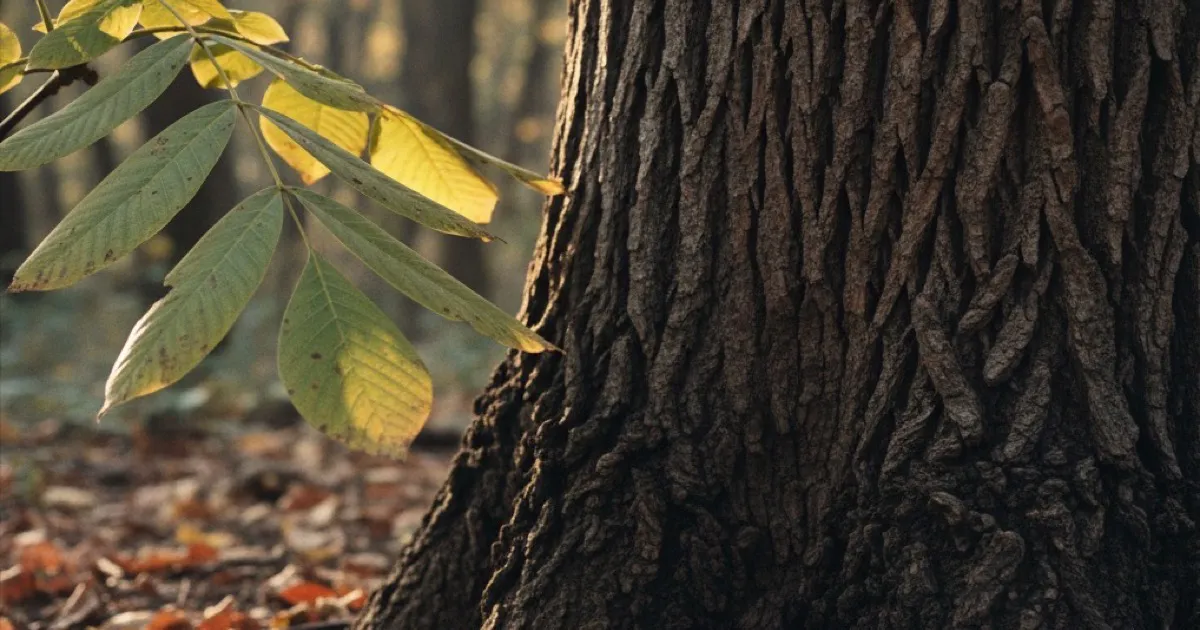
Black walnut produces large compound leaves, each made up of 15 to 23 leaflets arranged in pairs along a central stem called a rachis. Each leaflet is 2 to 5 inches long, lance-shaped, and finely serrated along the edges. The leaflets are dark green on top and slightly paler underneath with fine hairs.
One reliable identification clue: the terminal leaflet at the tip of the rachis is often missing or much smaller than the others. Most compound-leaved trees have a prominent terminal leaflet, so a compound leaf where the tip looks incomplete or bare is a strong pointer toward black walnut.
Crush a black walnut leaflet between your fingers. You’ll notice a sharp, spicy-citrus smell that’s hard to mistake for anything else. This scent comes from the same chemical compounds related to juglone, and it’s one of the fastest field tests you can do.
Black walnut leaves emerge late in spring (often the last native tree to leaf out) and drop early in fall, sometimes by September. They turn a dull yellow before falling, without the dramatic color of maples or oaks.
If you’re working on identifying trees by their leaves more broadly, the leaf shape identification guide covers the major leaf types and what they tell you.
Black Walnut Tree Identification by Bark
Black walnut bark changes significantly as the tree matures. Young trees have smooth, olive-gray bark that doesn’t stand out. But by the time a black walnut reaches 15 to 20 years old, the bark transforms into deep, dark furrows separated by narrow ridges.
Mature black walnut bark is very dark brown to nearly black. The furrows run vertically and create a rough, diamond-shaped ridge pattern. The ridges themselves are narrow and sharp-edged rather than rounded. On old-growth trees, the bark can be 2 to 3 inches thick.
The color is the key detail. Black walnut bark is darker than almost any other common hardwood in its range. If you’re looking at a large tree with very dark, deeply furrowed bark and compound leaves overhead, black walnut should be high on your list.
For more on reading bark patterns across different tree families, the bark identification guide is a useful reference.
Identifying Black Walnut by Nuts and Husks
Black walnut nuts are unmistakable once you’ve seen them. The tree produces round, golf-ball-sized fruits encased in a thick, bright green husk. These start dropping in September and October, and they hit the ground hard enough to dent a car hood.
The green husk is smooth and solid, about a quarter-inch thick. When the husk starts to decay, it turns black and releases a dark brown-black dye that stains skin, concrete, and clothing. This staining is notorious. If your hands turned dark brown after handling green fruits under a tree, you almost certainly found a black walnut.
Inside the husk sits the nut itself: a deeply ridged, rock-hard shell that’s nearly spherical. The shell surface is covered in sharp ridges and grooves, making it one of the hardest nuts to crack without a heavy-duty nutcracker or a vice. The meat inside is rich, earthy, and intensely flavored, prized in baking and ice cream.
Black Walnut vs. Butternut: Telling Them Apart
Butternut (Juglans cinerea), also called white walnut, is the black walnut’s closest native relative and the most common source of confusion. Both have compound leaves, produce husked nuts, and grow in similar habitats. But several differences separate them clearly.
Leaflet count and shape. Butternut typically has 11 to 17 leaflets per leaf, compared to black walnut’s 15 to 23. Butternut leaflets are broader and more rounded, while black walnut leaflets are narrower and more lance-shaped.
Nut shape. This is the fastest way to tell them apart. Black walnut nuts are round (spherical). Butternut nuts are oblong, shaped like a small football or egg, with prominent ridges running lengthwise. If the nut is round, it’s a black walnut. If it’s elongated, it’s a butternut.
Bark color. Butternut bark is much lighter, ranging from light gray to tan. The furrows are broad and flat-topped rather than the deep, dark, narrow-ridged pattern of black walnut. Side by side, the color difference is obvious.
Twig pith. Cut a small twig lengthwise. Both species have chambered pith (a series of small hollow chambers), but butternut pith is dark chocolate-brown while black walnut pith is tan or cream-colored.
Tree shape and size. Black walnut typically grows taller (75 to 100 feet) with a straighter trunk. Butternut tends to be shorter (40 to 60 feet) with a more spreading, irregular crown. Butternut is also increasingly rare due to a fungal canker disease that has devastated populations across its range.
Black walnut’s compound leaves also overlap with hickory trees, which share the same general leaf structure. The key difference: hickory twigs have solid pith, while walnut twigs have chambered pith.
Juglone Toxicity: Why Black Walnut Tree Identification Matters for Gardeners
Black walnut produces a chemical called juglone (5-hydroxy-1,4-naphthoquinone) in its roots, leaves, bark, and nut husks. Juglone is toxic to many common garden plants, and this is the main reason homeowners need to know how to identify black walnuts on their property.
The highest concentrations of juglone are in the roots, which can extend 50 to 80 feet from the trunk. Within the drip line of the tree, juglone levels in the soil are high enough to kill sensitive plants outright. Fallen leaves, decaying husks, and even sawdust from black walnut wood can release juglone into the soil.
Plants highly sensitive to juglone (will die or show severe damage):
- Tomatoes, peppers, and eggplant (all nightshades)
- Azaleas, rhododendrons, and blueberries
- Potatoes and asparagus
- Peonies
- White birch and Norway spruce
Plants tolerant of juglone (safe to grow near black walnut):
- Beans, corn, squash, and carrots
- Black raspberries and most grasses
- Hostas, daylilies, and ferns
- Most mature oaks, maples, and hickories
Symptoms of juglone toxicity include wilting, yellowing leaves, stunted growth, and eventual death, often within one growing season. The damage can look like drought stress or root rot, which makes it hard to diagnose unless you know a black walnut is nearby.
If you’re planning a garden on a property with large hardwood trees, identifying whether any of them are black walnuts should be one of your first steps. Even a tree 60 feet from your garden beds can cause problems through its root network.
The Value of Black Walnut Wood
Black walnut wood is among the most prized hardwoods in the world. Its heartwood has a rich, dark chocolate-brown color that darkens with age and develops a warm, lustrous patina. The grain is straight to slightly wavy, with a fine, even texture that takes finishes beautifully.
Commercially, black walnut is used for high-end furniture, cabinetry, gunstocks, musical instruments, and decorative veneer. A single large, straight black walnut tree can be worth $5,000 to $20,000 or more depending on its size and log quality. Timber buyers regularly drive through rural areas looking for mature black walnuts, and tree theft is a real problem in some regions.
The wood is rated as a hardwood, though it’s actually softer than oak, hickory, and maple on the Janka hardness scale (1,010 lbf compared to red oak’s 1,290 lbf). What makes it so valued isn’t hardness but color, workability, and stability. It machines cleanly, glues well, resists warping, and doesn’t need staining because the natural color is already deep and rich.
For more on how different woods compare, the wood grain guide and hardwood vs. softwood comparison cover the broader landscape.
How Tree Identifier Can Help with Black Walnut Trees
Black walnut identification is straightforward when you have nuts on the ground or mature bark to examine. But earlier in the season, before nuts develop, or on younger trees with less distinctive bark, the identification can be trickier. A 10-year-old black walnut with smooth bark and compound leaves could be confused with hickory, butternut, or even ailanthus (tree of heaven).
Tree Identifier handles these ambiguous cases. Take a photo of a compound leaf, a section of bark, or a fallen nut, and the AI returns a species identification with a confidence score. The app works with multiple input types, so if bark alone isn’t conclusive, a leaf photo often settles it. It covers thousands of species, including black walnut, butternut, and all the hickory species that share similar compound leaf structures.
You get 2 free identifications per day, which is enough to check a couple of mystery trees on your property or during a walk. If you’re surveying a wooded lot before planning a garden and need to flag any black walnuts, that’s exactly the kind of practical use where a quick photo identification saves real time and effort.
Frequently Asked Questions
How do I know if a tree in my yard is a black walnut?
Look for large compound leaves with 15 to 23 leaflets, deeply furrowed dark brown-to-black bark, and round green-husked nuts in fall. Crush a leaflet and smell it. If it has a sharp, spicy-citrus scent, you’re likely looking at a black walnut. The twig test confirms it: cut a small branch lengthwise, and black walnut pith will be chambered (a row of small hollow spaces) with a light tan color.
How far from a black walnut tree can I safely plant a garden?
Juglone from the root system can affect soil 50 to 80 feet from the trunk. For sensitive plants like tomatoes, peppers, and azaleas, stay at least 60 to 80 feet away. Raised beds with imported soil can reduce exposure, but roots can still grow underneath. Stick to juglone-tolerant plants if you’re within the root zone.
What is black walnut wood worth?
A mature black walnut with a straight, defect-free trunk can be worth $5,000 to $20,000 or more as a veneer or timber log. Prices depend on diameter, log length, and wood quality. Figured or curly black walnut veneer logs can sell for significantly more. Even smaller trees with 12-inch-plus diameter have commercial value for lumber.
How do I tell black walnut apart from tree of heaven?
Tree of heaven (Ailanthus altissima) is an invasive species with compound leaves that superficially resemble black walnut. The fastest way to tell them apart: tree of heaven leaflets have smooth edges with just one or two small teeth at the base, while black walnut leaflets are finely serrated along the entire margin. Tree of heaven also has a foul, rancid-peanut-butter smell when leaves are crushed, compared to black walnut’s pleasant spicy-citrus scent.
Wrapping Up
Black walnut is one of those trees that rewards identification with practical knowledge. Knowing whether a large hardwood on your property is a black walnut tells you what you can plant nearby, what that wood might be worth, and why the green husks on the ground are staining your driveway.
The compound leaves, dark furrowed bark, round nuts, and that unmistakable crushed-leaf smell make black walnut one of the easier native trees to confirm once you know the features. And if you need a quick second opinion on a tree you’re not sure about, snapping a photo with Tree Identifier takes a few seconds and gives you a clear answer.
Identify a tree from your photo — free
Upload a leaf, bark, or whole-tree photo and get the species in seconds. No signup.
Confidence:
Unlock the full species profile
Free in the app — with unlimited identifications.


AI result for guidance — the app gives full species details and works offline.
Want unlimited identifications?
Get the full species profile, photos and details — free in the app, with unlimited scans.
- Unlimited identifications
- Full species profiles & details
- Works offline, anywhere
- Save and revisit your finds
Elena Torres
Tree Identifier Team