Cedar Tree Identification: Leaves, Bark & Cones
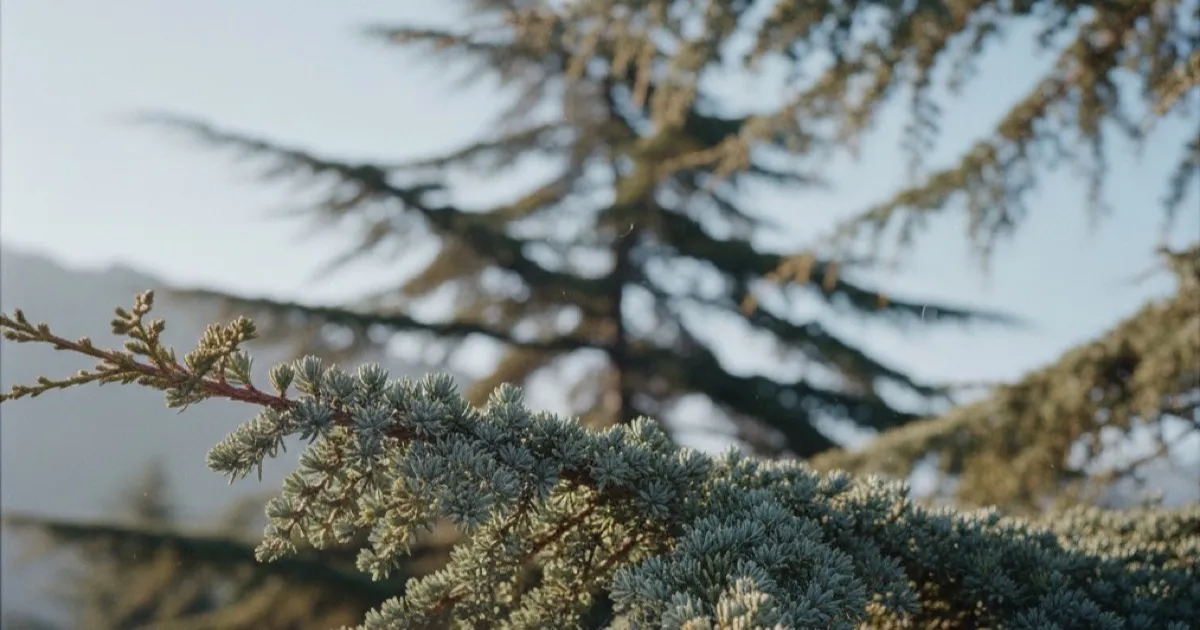
If you’ve ever pointed at a tall evergreen and called it a cedar, there’s a decent chance it was actually a juniper or an arborvitae. Cedar tree identification trips up even experienced hikers because the word “cedar” gets applied to trees from three entirely different plant families. The eastern red cedar in your neighbor’s yard? It’s a juniper. The western red cedar prized for deck lumber? That’s an arborvitae. True cedars — the ones botanists actually assign to the genus Cedrus — are native to the Mediterranean and Himalayas, not North America.
This guide covers how to identify true cedars, sort out the “false cedars” you’ll encounter across the continent, and tell these three evergreen groups apart.
True Cedars vs. False Cedars: Why Cedar Tree Identification Gets Confusing
True cedars belong to the genus Cedrus, and there are only four species worldwide: the Atlas cedar (Cedrus atlantica) from North Africa, the Cyprus cedar (Cedrus brevifolia), the deodar cedar (Cedrus deodara) from the western Himalayas, and the cedar of Lebanon (Cedrus libani). These are the only trees that botanists formally recognize as cedars.
So why does half of North America use the word “cedar” for trees that aren’t related? Early European settlers encountered aromatic, rot-resistant evergreens that reminded them of the cedars back home. They named them cedar, and the common names stuck.
Here’s how the names map to actual taxonomy:
| Common Name | Genus | Family | True Cedar? |
|---|---|---|---|
| Cedar of Lebanon | Cedrus | Pinaceae (pine family) | Yes |
| Deodar cedar | Cedrus | Pinaceae | Yes |
| Atlas cedar | Cedrus | Pinaceae | Yes |
| Eastern red cedar | Juniperus | Cupressaceae (cypress family) | No |
| Western red cedar | Thuja | Cupressaceae | No |
| Northern white cedar | Thuja | Cupressaceae | No |
| Incense cedar | Calocedrus | Cupressaceae | No |
| Alaska yellow cedar | Callitropsis | Cupressaceae | No |
The pattern: true cedars are in the pine family, while every North American “cedar” belongs to the cypress family.
How to Identify True Cedars (Genus Cedrus)
True cedars share a set of features that distinguish them from all the false cedars. If you live in a temperate region of North America, you’ll most likely encounter true cedars as ornamental plantings in parks, university campuses, and older neighborhoods — they don’t grow wild on this continent.
Needles. True cedars have short, stiff needles (about 1 to 2 inches long) arranged in dense rosette clusters on short woody spurs along the branches. Each spur holds 15 to 45 needles radiating outward in a spiral. This rosette pattern is the fastest identification clue. No North American “cedar” grows needles like this.
Cones. The cones are barrel-shaped, sit upright on top of the branches (rather than hanging down), and measure 3 to 5 inches long. They disintegrate on the tree when mature, shedding scales and seeds while the central stalk remains attached — you’ll often see bare cone spikes standing upright on upper branches.
Bark. Young trees have smooth gray bark. Mature true cedars develop dark gray bark with deep, irregular fissures and flat-topped ridges.
Growth habit. True cedars are large trees, often reaching 80 to 120 feet tall with massive horizontal branches. The deodar cedar has a graceful drooping tip on its leader (the topmost branch), making it easy to spot from a distance. Atlas cedars develop a broad, flat-topped crown with age. The cedar of Lebanon is famous for its wide, spreading horizontal branches that create a layered, tiered silhouette.
If you see a tree labeled “cedar” and its needles grow in flat sprays or tight scale-like clusters rather than in rosettes on woody spurs, it is not a true cedar.
Cedar Tree Identification: Eastern Red Cedar, Western Red Cedar, and Other False Cedars
Now for the trees most people actually mean when they say “cedar.” These fall into two main groups: junipers (genus Juniperus) and arborvitae (genus Thuja).
Eastern Red Cedar (Juniperus virginiana)
The eastern red cedar is the most widespread “cedar” in eastern North America, growing from Ontario to Florida and west to the Great Plains. Despite the name, it’s a juniper through and through.
Foliage. Young trees have sharp, prickly needles about half an inch long. Mature foliage shifts to tiny, overlapping scale-like leaves pressed against the twig. Many trees display both types at once — juvenile needles on interior branches and mature scales on outer growth.
Fruit. This is the dead giveaway. Eastern red cedars produce small, round, blue-gray berries (technically fleshy cones) about a quarter inch across with a waxy white coating. No true cedar or arborvitae produces anything resembling a berry. Berry-like fruits on a “cedar” means it’s a juniper.
Bark. Thin, reddish-brown bark that peels off in long, fibrous strips. The reddish color underneath the shredding bark is where the “red” in the name comes from.
Shape. Dense, columnar to pyramidal form, typically 30 to 50 feet tall.
Scent. Crush a few scale leaves for a sharp, distinctive juniper aroma — different from the pencil-shaving scent of the heartwood used in cedar chests and closet linings.
Western Red Cedar (Thuja plicata)
The western red cedar is one of the largest trees in the Pacific Northwest, reaching heights of 200 feet or more. It’s actually an arborvitae, closely related to the northern white cedar (Thuja occidentalis) found in eastern forests.
Foliage. Flat, fan-shaped sprays of tiny scale-like leaves, glossy dark green on top and paler beneath with faint whitish markings. The foliage forms flat, horizontal planes — very different from the rounded, bushy texture of juniper foliage.
Cones. Small, elongated seed cones about half an inch long with 8 to 12 thin, overlapping scales. They turn from green to brown when mature — nothing like juniper berries or the large barrel cones of true cedars.
Bark. Gray to reddish-brown, fibrous bark that peels in long vertical strips on mature trees.
Size and shape. Massive trunk with a buttressed base that can exceed 10 feet in diameter. The crown is conical, with branches that droop and sweep upward at the tips.
Scent. Crushing the foliage releases a sweet, fruity fragrance, distinct from the sharper juniper aroma.
Northern White Cedar (Thuja occidentalis)
Smaller than its western relative (40 to 60 feet), the northern white cedar shares the flat foliage sprays and small elongated cones of the Thuja genus. It grows across the northeastern United States and southeastern Canada, often in swampy ground. It’s extremely popular as a hedge and privacy screen, sold in nurseries under dozens of cultivar names.
How to Tell Cedar, Juniper, and Arborvitae Apart at a Glance
Here’s a quick-reference comparison for field identification.
| Feature | True Cedar (Cedrus) | Juniper (Juniperus) | Arborvitae (Thuja) |
|---|---|---|---|
| Needles/leaves | Short needles in rosette clusters on spurs | Scale-like (or prickly juvenile needles) | Scale-like in flat fan sprays |
| Foliage texture | Rosettes radiate in all directions | Rounded, bushy branch tips | Flat, horizontal planes |
| Cones/fruit | Large, barrel-shaped, upright | Small blue-gray berries (fleshy cones) | Small elongated cones with thin scales |
| Bark | Deep fissures, flat ridges | Thin, reddish, peeling strips | Fibrous, vertical strips |
| Typical size | 80-120 ft | 30-50 ft | 40-60 ft (eastern), 150-200 ft (western) |
| Native to N. America? | No (planted as ornamentals) | Yes | Yes |
The two fastest tests in the field:
- Check the foliage pattern. Rosette clusters on spurs = true cedar. Flat fan sprays = arborvitae. Rounded scale-covered twigs (sometimes with prickly juvenile needles) = juniper.
- Look for berries. Blue-gray berry-like fruits = juniper. Small woody cones = arborvitae. Large upright barrel cones = true cedar.
If you’ve already studied how to distinguish pine, spruce, and fir trees, this comparison follows similar logic: needle arrangement first, then cones, then bark.
Using Bark and Wood for Cedar Identification
When foliage is out of reach or you’re looking at lumber rather than a living tree, bark and wood become your primary clues. Bark pattern identification is practical and reliable for cedar species.
True cedar wood is pale yellowish-brown, moderately aromatic, and lightweight. It’s not commonly sold as lumber in North America.
Eastern red cedar (juniper) heartwood is a deep reddish-pink to purplish-brown, with a narrow band of pale sapwood. The scent is strong and familiar — it’s the wood inside “cedar” chests, closet panels, and pencils.
Western red cedar (arborvitae) heartwood ranges from pinkish-brown to dark brown, with a straight, even grain. It’s naturally rot-resistant, which is why it dominates the decking, fencing, and siding markets in the Pacific Northwest. The scent is warm and mildly spicy, distinct from the sharper juniper smell.
Incense cedar (Calocedrus decurrens), another false cedar native to the western mountains, has light reddish-brown wood with a pencil-like fragrance. It’s the primary wood used in pencils today, having replaced eastern red cedar as old-growth juniper stocks declined.
How Tree Identifier Can Help
The cedar-juniper-arborvitae confusion is one of the most common identification challenges people face with evergreens. When foliage is high up, when a tree is a young cultivar that doesn’t match the textbook, or when you’re looking at bark on a stump — visual clues alone can leave you uncertain.
Tree Identifier uses AI-powered image recognition to identify tree species from photos of leaves, bark, flowers, fruit, or whole-tree silhouettes. Point your phone at a branch of scale-like foliage and the app tells you whether you’re looking at a juniper, arborvitae, or something else. It also handles wood type recognition, which helps if you’re trying to confirm a cedar species from a board or cross-section.
You get 2 free identifications per day, and offline mode means it works on backcountry hikes where cell signal drops out. Available on iOS and Android.
Frequently Asked Questions
Is eastern red cedar actually a cedar?
No. Eastern red cedar (Juniperus virginiana) is a juniper in the cypress family, not the genus Cedrus in the pine family. Settlers gave it the name “cedar” because its aromatic wood reminded them of Mediterranean cedars, but the two trees are not closely related.
How can I tell if a tree is a juniper or an arborvitae?
Check two things: foliage and fruit. Juniper foliage forms rounded, bushy branch tips with scale-like leaves (sometimes mixed with sharp juvenile needles). Arborvitae foliage grows in flat, fan-shaped sprays. Junipers produce small blue-gray berries, while arborvitae produce small woody cones with thin, overlapping scales.
Do true cedars grow in North America?
True cedars (genus Cedrus) are not native to North America. They originate from the Mediterranean and the western Himalayas. However, deodar cedars, Atlas cedars, and cedars of Lebanon are widely planted as ornamentals in parks, campuses, and residential areas across the southern and western United States, thriving in USDA zones 6 through 9.
What is the best time of year to identify cedar trees?
Cedars, junipers, and arborvitae are all evergreens, so they retain foliage year-round — identifiable in every season, including winter when deciduous trees are bare. Fall is ideal for checking fruit: juniper berries ripen in autumn, arborvitae cones open to release seeds, and true cedar cones disintegrate on the branch between September and November.
Putting It All Together
Cedar tree identification comes down to one core question: which family of tree am I looking at? Start with foliage. Rosette clusters of short needles point to a true cedar. Flat fan sprays mean arborvitae. Rounded, bushy scale foliage (possibly mixed with prickly needles) means juniper. Confirm with the fruit — berries mean juniper, small woody cones mean arborvitae, large upright barrels mean true cedar.
Once you’ve sorted the family, bark, size, and geographic range narrow it down to species. And when you want a second opinion, snap a photo and let the AI handle the taxonomy.
Identify a tree from your photo — free
Upload a leaf, bark, or whole-tree photo and get the species in seconds. No signup.
Confidence:
Unlock the full species profile
Free in the app — with unlimited identifications.


AI result for guidance — the app gives full species details and works offline.
Want unlimited identifications?
Get the full species profile, photos and details — free in the app, with unlimited scans.
- Unlimited identifications
- Full species profiles & details
- Works offline, anywhere
- Save and revisit your finds
Elena Torres
Tree Identifier Team