How to Identify Trees in Winter Without Leaves
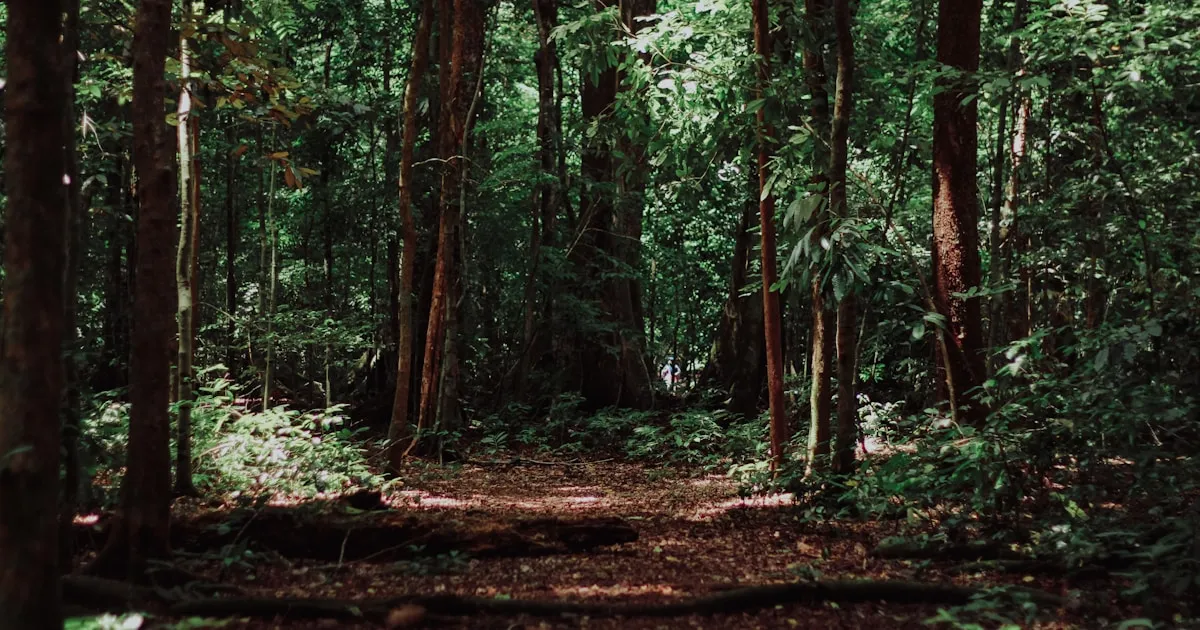
Most people learn to identify trees by their leaves. Then winter arrives, the leaves drop, and suddenly every tree looks like a gray stick against the sky.
But winter is actually a great time for tree identification. Without leaves blocking your view, you can see the entire structure—the branching pattern, the bark texture, the overall silhouette. And buds, those tiny packages waiting for spring, contain some of the most reliable identification features.
Here’s how to identify trees when there’s nothing green to go on.
Bark: The Tree’s Fingerprint
Bark is consistent year-round and develops distinctive patterns as trees age.
Bark Textures
Smooth bark stays relatively unchanged throughout the tree’s life. Beech trees keep their smooth, gray “elephant skin” bark even at 200 years old. American hornbeam has smooth, sinewy bark that looks like flexed muscles.
Peeling or papery bark separates in strips or sheets. Paper birch is the classic example—white bark peeling in horizontal strips. River birch has salmon-pink to reddish-brown bark that curls away in papery sheets. Learning the full range of birch tree varieties helps distinguish these species from each other. Sycamore bark peels in irregular patches, creating a camouflage pattern of green, cream, and brown.
Furrowed bark develops deep grooves and ridges. Most oaks, ashes, and walnuts have deeply furrowed bark at maturity. The pattern of ridges—whether they form long straight lines, interlocking patterns, or blocky plates—varies by species.
Scaly or plated bark breaks into flat sections. Mature pine bark often forms large, irregular plates with reddish or orange coloring in the gaps. Black cherry bark develops “burnt potato chip” scales on older trees.
Bark Color
Color provides clues but varies with age and growing conditions:
- White: Paper birch, American sycamore (upper branches), aspen
- Gray: Beech, red maple, ash
- Reddish-brown: Pine, cherry, cedar
- Nearly black: Black walnut, black locust, older sugar maples
Wet bark looks different than dry bark. Check in different weather conditions before making conclusions based on color alone.
Buds: Spring in Miniature
Winter buds contain next year’s leaves and flowers, packed and waiting. Their size, shape, arrangement, and covering scales provide excellent identification clues.
Bud Arrangement
Opposite buds grow in pairs directly across from each other. This is relatively rare. MAD Horse—Maple, Ash, Dogwood, and Horse chestnut—are the common trees with opposite buds. If you see opposite buds, you’ve narrowed the possibilities considerably.
Alternate buds spiral around the twig, not directly across from each other. Most trees have alternate buds.
Bud Characteristics
Size matters. Horse chestnut has huge, sticky buds nearly an inch long. Birch has tiny buds you could easily overlook.
Terminal vs lateral. Some trees have a single large bud at the tip of each twig (terminal bud). Others lack a terminal bud—the twig ends with two lateral buds or seems to just stop.
Scale count. Some buds have two visible scales (like willows), others have many overlapping scales (like oaks), and some are “naked” with no protective scales (like pawpaw).
Color and texture. Beech buds are long, pointed, and brown. Red maple buds are rounded and red. Ash buds are black and velvety.
Common Bud Identification
| Tree | Bud Description |
|---|---|
| Sugar Maple | Brown, pointed, with several scales |
| Red Maple | Red, rounded, clustered at twig tip |
| White Oak | Clustered at twig tip, rounded, reddish-brown |
| American Beech | Long (3/4 inch), sharply pointed, cigar-shaped |
| Ash | Black, velvety, opposite, dome-shaped |
| Horse Chestnut | Large, sticky, dark brown, opposite |
| Hickory | Large, with overlapping scales, sometimes hairy |
Branching Patterns
Step back and look at the overall structure.
Opposite vs Alternate Branching
Like buds, branches follow either an opposite or alternate pattern. Maples, ashes, and dogwoods have branches that grow in pairs. Most other hardwoods have alternate branching, where limbs don’t line up directly across from each other.
Growth Form
Single straight trunk with regular branching: Many conifers, tulip poplar, sweetgum when young.
Multiple trunks or low branching: Often indicates a tree that was cut or damaged when young. Silver maple, box elder, and honey locust frequently develop multiple trunks.
Drooping branches: Weeping willows are obvious, but American elm has a characteristic vase shape with arching, fountain-like branches.
Crooked or irregular branching: Black locust and honey locust have irregular, angular branches. Oaks often have horizontal limbs with dramatic curves.
Twig Details
Examine twigs closely for additional clues:
- Thorns or spines: Hawthorn, black locust, honey locust
- Corky ridges or wings: Sweetgum, winged euonymus, some elms
- Distinctive color: Red-osier dogwood has bright red twigs; willows can be yellow or red
- Chambered or solid pith: Split a twig lengthwise. Walnut has chambered pith (separated into sections). Most other trees have solid pith.
Silhouette and Shape
Each species has a characteristic shape, though this varies with age and growing conditions.
Vase-shaped: American elm (now rare due to Dutch elm disease), zelkova
Oval or rounded: Sugar maple, many oaks, linden
Pyramidal: Pin oak (with drooping lower branches), sweetgum when young, many conifers
Spreading and irregular: Open-grown oaks, old sycamores
Columnar: Lombardy poplar, some ornamental cultivars
Trees grown in forests look different from trees grown in open spaces. Forest trees tend to have long, straight trunks with crowns only at the top, while open-grown trees branch lower and spread wider.
Persistent Features
Some trees keep clues through winter:
Dead leaves that don’t fall: Oaks and beech often hold their brown leaves through winter (this is called marcescence). The sound of rattling beech leaves is distinctive on windy winter days.
Persistent fruits or seeds: Sycamore balls hang on long stalks. Sweetgum “gumballs” litter the ground. Ash samaras often cling to branches. Tulip poplar has distinctive cone-like fruit clusters at branch tips.
Bark smell: Scratch or snap a twig and smell it. Black cherry smells like almonds. Sassafras smells like root beer. Yellow birch smells like wintergreen.
Location Clues
Where a tree grows tells you something about what it might be.
Wet areas: Willows, river birch, bald cypress, red maple, sweetgum
Dry ridges: Oaks, hickories, pines
Urban streets: London plane, Norway maple, honey locust, ginkgo
Old homesteads: Apple, pear, walnut, and other planted trees often outlast abandoned buildings
A Winter ID Approach
When you encounter an unknown tree in winter:
-
Check branching pattern. Opposite or alternate? This eliminates many options immediately.
-
Examine the bark. Note color, texture, and any distinctive patterns.
-
Look at buds. Size, color, arrangement, and scale pattern.
-
Step back. Consider overall shape and size.
-
Look for persistent features. Dead leaves, fruits, or seeds still on the tree.
-
Check the ground. Fallen leaves, fruits, or seeds beneath the tree can confirm your identification.
-
Note the habitat. Wet? Dry? Urban? Forest edge?
The Tree Identifier app can analyze bark photos, helping match the patterns you see against its database. This works well for species with distinctive bark like sycamore, birch, or shagbark hickory.
Practice Makes Permanent
Start with trees you already know. Look at the maple in your yard during summer, then visit it in winter. Photograph the bark, the buds, the branching pattern. Build a mental connection between the leafy tree you know and its winter appearance.
Then branch out. Pick a park with labeled trees and study them in winter. Or work backward—find a tree with distinctive bark, take photos, and try to identify it using the features described here.
Winter tree identification seems difficult at first because you’re learning a new visual language. But bark and buds don’t change with weather like leaves do. Once you learn the pattern for shagbark hickory or paper birch, you’ll recognize it every time, in any season.
The forest in winter isn’t a collection of identical gray sticks. It’s a community of distinct species, each with its own characteristics, waiting to be recognized. Understanding how trees survive winter adds another layer of appreciation to what you’re observing.
Identify a tree from your photo — free
Upload a leaf, bark, or whole-tree photo and get the species in seconds. No signup.
Confidence:
Unlock the full species profile
Free in the app — with unlimited identifications.


AI result for guidance — the app gives full species details and works offline.
Want unlimited identifications?
Get the full species profile, photos and details — free in the app, with unlimited scans.
- Unlimited identifications
- Full species profiles & details
- Works offline, anywhere
- Save and revisit your finds
Rachel Nguyen
Tree Identifier Team