Poisonous Trees to Avoid: A Safety Guide for Families
Some of the most beautiful trees in your neighborhood could send a child or pet to the hospital. Poisonous trees grow in backyards, parks, and along hiking trails across North America, and plenty of them look completely harmless. Knowing which species to watch out for, and how to recognize each one on sight, is a practical safety skill for every parent, pet owner, and outdoor enthusiast.
This 2026 guide covers the most dangerous poisonous trees you might run into, what makes each one toxic, and the exact features that let you identify them before anyone gets hurt.
Poisonous Trees at a Glance
If you only skim one part of this guide, make it this. Here are the trees covered below, ranked by how much caution they deserve.
| Tree | Toxic parts | Main danger | Fastest ID clue |
|---|---|---|---|
| Manchineel | All parts | Blistering sap, deadly fruit | Shiny leaves, small green “apples” on coastal beaches |
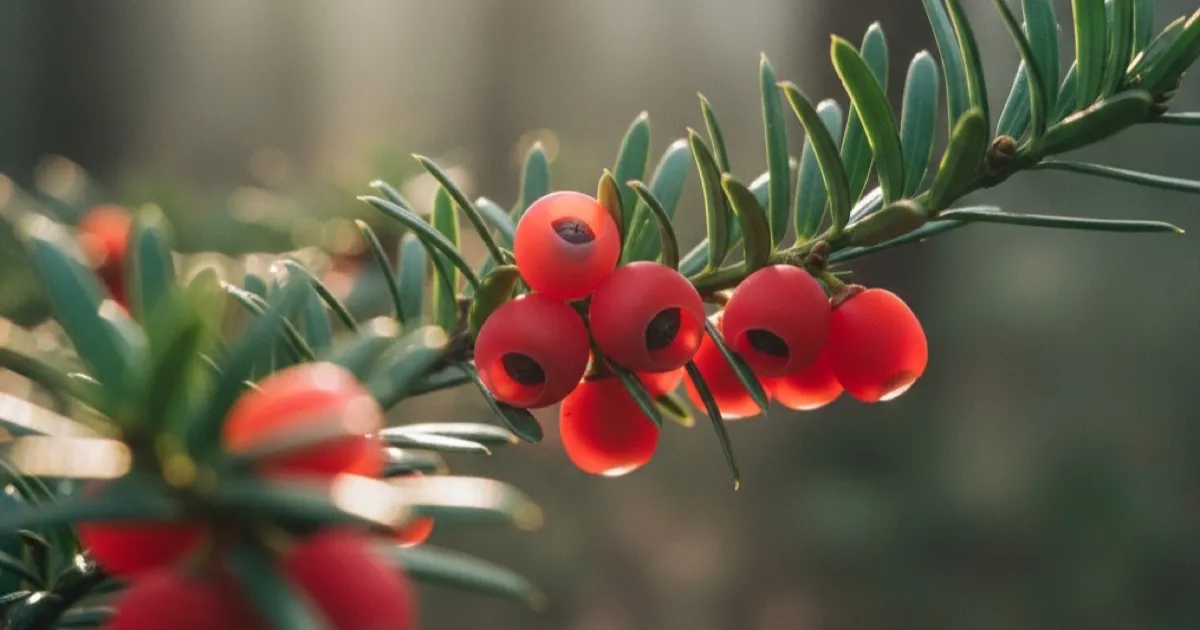
| Yew | Needles, bark, seeds | Fatal heart effects | Soft flat needles, red berry-like arils |
| Oleander | All parts | Fatal heart-rhythm effects | Narrow leathery leaves in threes, showy flower clusters |
| Poison sumac | Sap (urushiol) | Severe skin rash | 7 to 13 leaflets on a red stem, drooping white berries |
| Poisonwood | Sap (urushiol) | Severe skin rash | Reddish bark with oily black sap patches (South Florida) |
| Black locust | Bark, seeds, leaves | Vomiting, hospitalization | Paired thorns at leaf base, hanging white flowers |
| Chinaberry | Berries | Deadly to small dogs | Lacy doubly-compound leaves, yellow winter berries |
| Golden chain | Seeds, pods | Convulsions in children | Hanging chains of yellow flowers, pea-like pods |
| Sago palm | All parts, seeds worst | Liver failure in pets | Stiff palm-like fronds, orange seeds |
| Horse chestnut | Nuts, leaves | Vomiting, twitching | Palmate leaves, spiny green husks |
| Red maple | Wilted leaves | Fatal to horses | 3-to-5-lobed leaves, red stems, red fall color |
The Most Dangerous Poisonous Trees in North America
Not all toxic trees carry the same level of risk. Some cause skin irritation on contact, while others can be fatal if any part is swallowed. Here are the species that deserve the most caution.
Manchineel (Hippomane mancinella)
The manchineel holds the Guinness World Record for the most dangerous tree on Earth. Every part of it is toxic: fruit, bark, leaves, and sap. Standing under a manchineel during rain can cause blistering skin rashes as water carries the sap downward. The small, apple-like fruit (nicknamed “little apple of death”) causes severe burning and swelling of the mouth and throat if eaten.
How to identify it: Manchineel trees grow along coastal beaches and mangrove swamps in Florida, Central America, and the Caribbean. They have shiny, dark green leaves with fine serrations, smooth gray bark, and small greenish-yellow fruit that resemble crabapples. Many have warning signs posted near them, and some are marked with a painted red band around the trunk.
Yew (Taxus species)
Yew trees are one of the most common poisonous trees in residential landscapes. English yew, Japanese yew, and Pacific yew all contain taxine alkaloids in their needles, bark, and seeds. These alkaloids interfere with heart function and can cause cardiac arrest within hours of ingestion.
The bright red berry-like structures (called arils) attract children and animals. The fleshy red part is the only non-toxic portion, but the seed inside is deadly. Dogs that chew on yew branches or eat dropped berries are at serious risk. Horses and cattle have died from eating yew clippings tossed over a fence.
How to identify it: Yew trees have flat, dark green needles arranged in two rows along the stem, reddish-brown bark that peels in thin strips, and those distinctive red arils in fall. Unlike most conifers, yew needles are soft to the touch rather than sharp. The tree grows as either a small tree or a large shrub, often trimmed into hedges. Yew is one of several trees with red berries that look edible but aren’t, so the berries alone don’t confirm the species.
Oleander (Nerium oleander)
Oleander grows throughout the southern United States, heavily planted along highways, in parking lots, and in residential yards in California, Texas, Florida, and Arizona. Every single part is poisonous. The cardiac glycosides it contains (oleandrin and neriine) disrupt heart rhythm and can be fatal to both humans and animals.
Cases of poisoning have come from eating the flowers, using oleander branches as skewers for roasting food, and even from drinking water where oleander leaves had fallen. Dogs and cats that chew on oleander leaves can develop vomiting, irregular heartbeat, and seizures.
How to identify it: Oleander has long, narrow, leathery leaves that grow in groups of three. The showy flowers bloom in clusters of white, pink, red, or yellow. The plant grows 6 to 20 feet tall and stays green year-round in warm climates. If you’re unsure whether a flowering shrub is oleander, examining the leaf shape closely can help distinguish it from similar-looking plants.
Poison Sumac (Toxicodendron vernix)
Poison sumac causes more severe allergic skin reactions than poison ivy or poison oak. The urushiol oil in its sap triggers blistering rashes that can last for weeks. Unlike poison ivy, poison sumac grows as a small tree or tall shrub, reaching 6 to 20 feet.
How to identify it: Poison sumac has compound leaves with 7 to 13 smooth-edged leaflets arranged in pairs along a red stem. In fall, the leaves turn vivid orange-red. The tree produces clusters of small, white berries that droop downward, a key difference from non-poisonous sumac species, which have upright red berry clusters. Poison sumac grows almost exclusively in wet, swampy areas in the eastern United States.
Poisonwood (Metopium toxiferum)
Poisonwood is a close relative of poison ivy and grows across South Florida, the Keys, and the Caribbean. Its sap carries urushiol at high concentration, so brushing against the trunk or a broken leaf can trigger a painful, weeks-long blistering rash much like poison sumac. It’s a common tree in tropical hardwood hammocks, which makes it easy to blunder into on a hiking trail.
How to identify it: The giveaway is the bark, which is reddish-brown and marked with dark, oily-looking black patches where sap has oozed and dried. No other Florida tree shows that signature. Leaves are compound with 3 to 7 glossy leaflets that have smooth, slightly drooping edges, often speckled with black spots. It produces clusters of orange-yellow fruit that birds eat but people should leave alone.
Poisonous Trees That Grow in Backyards
Several toxic trees are commonly planted as ornamentals, which means one could already be growing in your yard or your neighbor’s.
Black Locust (Robinia pseudoacacia)
Black locust is widespread across the eastern U.S. and planted ornamentally throughout much of the country. The bark, seeds, and leaves contain toxalbumins that cause nausea, vomiting, and diarrhea. Children who have chewed on the bark or eaten the seeds have needed hospitalization.
How to identify it: Black locust has compound leaves with 7 to 21 small, oval leaflets. The bark is deeply furrowed with thick, interlocking ridges. White, fragrant flower clusters hang down in late spring. The tree also carries paired thorns at the base of each leaf, which sets it apart from honey locust (which has larger, branching thorns along the trunk) — the locust tree identification guide compares the two species feature by feature. If you’re working out which spiky species you’ve got, this guide to trees with thorns breaks down the differences.
Black Walnut (Juglans nigra)
Black walnut nuts are edible, but every other part of the tree produces juglone, a chemical toxic to horses. Horses exposed to black walnut shavings in bedding can develop laminitis (a painful hoof condition) within hours. The roots, leaves, and husks also kill many garden plants growing nearby, including tomatoes, peppers, and azaleas.
How to identify it: Black walnut has compound leaves with 15 to 23 pointed, finely serrated leaflets. Mature bark is dark brown to black with deep diamond-shaped furrows. The round green fruit has a thick husk that stains hands brownish-black. Our full black walnut identification guide covers how to tell it apart from similar species like butternut.
Chinaberry (Melia azedarach)
Chinaberry trees are fast-growing ornamentals found throughout the southern United States. The yellow, berry-like fruit contains neurotoxins that are especially dangerous to dogs, cats, and children. As few as six berries can kill a small dog. The toxin concentration climbs as the fruit dries and ferments on the ground in winter, right when bored pets are most likely to chew on it.
How to identify it: Chinaberry has doubly-compound leaves that give the tree a lacy, feathery look. Clusters of fragrant lavender flowers appear in spring, followed by round yellow berries (about half an inch across) that persist through winter. The bark is reddish-brown, relatively smooth on young trees, and furrowed with age. Chinaberry spreads aggressively and shows up on many regional invasive tree species lists, so a self-seeded one in your yard is common.
Golden Chain Tree (Laburnum anagyroides)
Golden chain is a popular ornamental prized for its dramatic hanging chains of yellow flowers. Every part contains cytisine, a nicotine-like alkaloid, and the pea-like seed pods are the biggest hazard because children mistake the seeds for garden peas. Swallowing a handful can bring on vomiting, drowsiness, and convulsions.
How to identify it: Look for long, drooping clusters (up to 10 inches) of bright yellow, pea-shaped flowers in late spring, followed by brown pods that look like flattened pea pods. Leaves are clover-like, grouped in threes on long stalks. The tree usually tops out around 15 to 25 feet.
Poisonous Trees That Are Dangerous to Pets
Dogs and cats interact with trees differently than humans do. They chew bark, eat fallen berries, and dig around roots. Several species pose risks specifically because of these behaviors.
Yew is the most dangerous tree for dogs. Even a small amount of chewed needles can cause fatal cardiac effects within two to three hours. Cats are also at risk, though they less commonly chew on yew.
Sago palm (Cycas revoluta) is technically a cycad, not a true tree, but it’s commonly planted as one. All parts are toxic to dogs, with the seeds being the most dangerous. Ingestion causes liver failure in roughly 50% of cases, even with treatment. Sago palms are extremely common in southern landscaping.
Horse chestnut (Aesculus hippocastanum) produces shiny brown nuts (conkers) containing aesculin, a toxin that causes vomiting, diarrhea, and muscle twitching. Its North American relatives, the buckeyes (Aesculus glabra and others), carry the same compound. Dogs sometimes eat the nuts after they drop in autumn, and children have been poisoned after confusing horse chestnuts with edible sweet chestnuts. Tell them apart by the husk: horse chestnut husks are thick and dotted with short spines, while edible chestnut husks are covered in dense, needle-sharp spines.
Red maple (Acer rubrum) is one of the deadliest trees for horses. Wilted or dried red maple leaves, the kind that blow into a pasture after a storm or drop in fall, damage a horse’s red blood cells and can be fatal within a day or two. Fresh leaves still on the tree are far less of a concern. Identify red maple by its 3-to-5-lobed leaves with jagged teeth, reddish leaf stems, and brilliant red fall color.
Cherry trees (Prunus species) have leaves, bark, and seeds that contain cyanogenic glycosides, compounds that release hydrogen cyanide when chewed and digested. Wilted cherry leaves are especially dangerous to livestock. The flesh of the cherry fruit is safe, but the pit is not.
If you’re trying to identify trees in your yard that attract birds and wildlife, keep in mind that some of those same fruit-bearing trees may pose risks to pets.
How to Identify a Poisonous Tree With Tree Identifier
Knowing what species is growing in your yard is the first step toward keeping your family and pets safe. If you spot an unfamiliar tree and want to figure out whether it’s one of the species in this guide, Tree Identifier can help you put a name to it.
The app identifies tree species from photos of leaves, bark, flowers, and fruit using AI-powered recognition. Snap a photo of the tree’s leaves or bark, submit it, and the app returns the species name along with characteristics and habitat details. You get 2 free identifications per day on both iOS and Android, so you can check a couple of unfamiliar trees without any commitment.
One important clarification: Tree Identifier tells you what species a tree is. It does not rate toxicity, edibility, or safety, and it won’t warn you that a tree is dangerous. Once you have the species name, look up its toxicity profile through a veterinary or poison control resource like the ASPCA’s toxic plant list. The identification is the groundwork: you can’t research a tree’s risks until you know what it actually is. And if you’re checking trees on a remote property without cell service, offline mode lets you download species data ahead of time.
What to Do if Someone Is Exposed to a Poisonous Tree
If a child or pet has swallowed part of a toxic tree, or has a severe skin reaction from tree sap, take these steps:
- Remove any remaining plant material from the mouth and save a sample (or take a photo) of the plant for identification
- For human ingestion, call Poison Control at 1-800-222-1222 (U.S.) or your local emergency number
- For pet ingestion, contact the ASPCA Animal Poison Control Center at 1-888-426-4435 or your emergency veterinarian
- For skin exposure (poison sumac, poisonwood, or manchineel sap), wash the affected area right away with soap and lukewarm water, and avoid touching your eyes or face
- Do not induce vomiting unless a medical professional or poison control specifically tells you to
Fast identification of the tree species helps medical professionals choose the right treatment. Having a photo of the tree or a sample of the leaves can save critical time in an emergency.
Frequently Asked Questions
How can I tell if a tree in my yard is poisonous?
Start by identifying the species. Many common poisonous trees (yew, oleander, black locust, chinaberry) have distinctive features described in this guide. If you can’t identify the tree visually, photograph its leaves, bark, or fruit and use a species identification tool. Once you know the species, search for it in the ASPCA’s toxic plant list or your regional poison control resources.
Which trees are most poisonous to dogs?
Yew and sago palm top the list. A few chewed yew needles can cause fatal heart effects within hours, and sago palm seeds cause liver failure in about half of cases even with treatment. Chinaberry berries are also deadly to small dogs, and oleander, black locust, and horse chestnut all cause serious illness. If your dog chews on an unknown tree, identify the species and call the ASPCA Animal Poison Control Center at 1-888-426-4435.
Are poisonous trees dangerous to touch?
Most poisonous trees are only dangerous if swallowed. The main exceptions are poison sumac and poisonwood (which cause severe skin rashes from urushiol oil) and manchineel (whose sap blisters skin on contact). Yew, oleander, and chinaberry are safe to touch but dangerous to eat. Always wash your hands after handling unknown plant material, especially before eating or touching your face.
What is the most poisonous tree in the world?
The manchineel tree (Hippomane mancinella) is widely considered the most dangerous tree and holds the Guinness World Record for most toxic. Its sap blisters skin on contact, its fruit can be fatal if eaten, and even the smoke from burning its wood causes eye and respiratory irritation. It grows along coastlines in Florida, Central America, and the Caribbean.
Should I remove a poisonous tree from my yard?
It depends on the species and who uses your yard. Yew hedges in a yard with toddlers or dogs that chew plants warrant more concern than a black walnut in a fenced area without horses. If you decide to remove a toxic tree, hire a professional arborist, especially for manchineel, poisonwood, or poison sumac, where the sap itself is hazardous. Never burn wood from poisonous trees, since the smoke can carry toxins.
Stay Safe and Stay Curious
Poisonous trees are a normal part of the natural landscape, not something to panic about. But knowing which species carry real risks, and being able to identify them on sight, gives you a meaningful safety advantage, especially if you have young children or pets that spend time outdoors. Learn the trees in your yard, teach your kids which ones to leave alone, and keep your veterinarian’s emergency number handy.
Identify a tree from your photo — free
Upload a leaf, bark, or whole-tree photo and get the species in seconds. No signup.
Confidence:
Unlock the full species profile
Free in the app — with unlimited identifications.


AI result for guidance — the app gives full species details and works offline.
Want unlimited identifications?
Get the full species profile, photos and details — free in the app, with unlimited scans.
- Unlimited identifications
- Full species profiles & details
- Works offline, anywhere
- Save and revisit your finds
Rachel Nguyen
Tree Identifier Team