Trees With Silver Leaves: 8 Species Identified
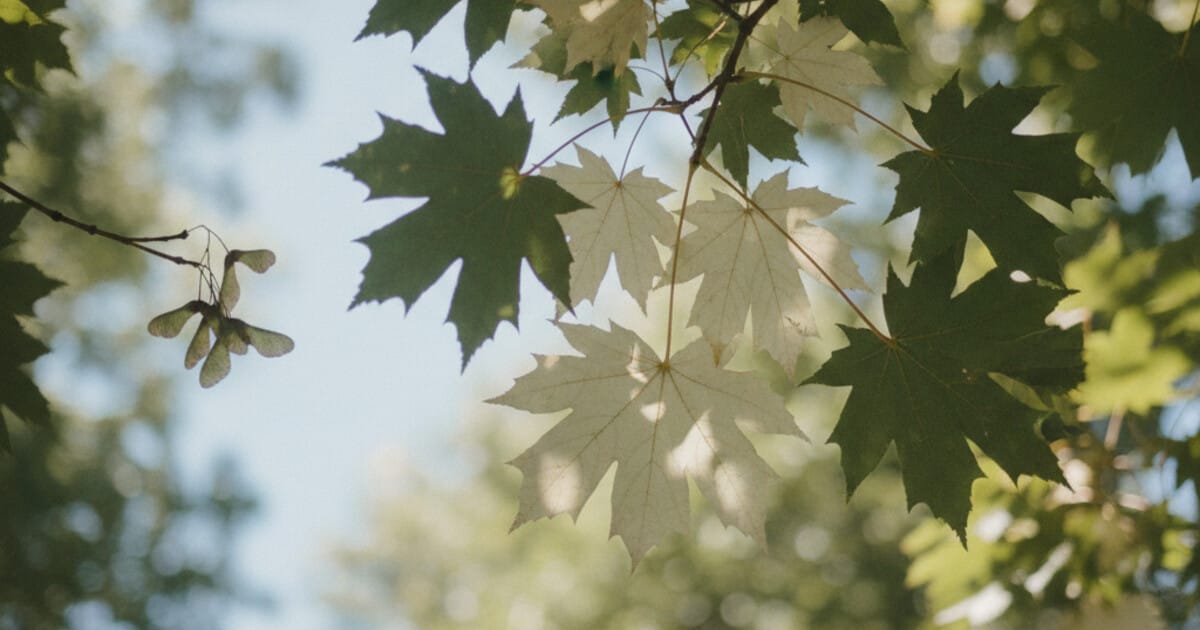
You’re walking through a yard or along a trail when a tree catches your eye. The leaves shimmer. They’re not quite green and not quite gray. In a breeze, they flash silver like the underside of a coin.
Trees with silver leaves are more common than people realize. Several species carry this look across North America and Europe, each producing it through a different mechanism. Some grow fine hairs on the leaf surface or underside. Others coat leaves in tiny metallic scales. A few expose pale undersides when wind flips their leaves over.
This guide covers 8 trees with silver or silvery leaves, what they look like, and how to tell them apart in the field.
Trees with silver leaves include Silver Maple, White Poplar, Trembling Aspen, Russian Olive, Weeping Willow, Silver Linden, White Willow, and Olive. Their leaves appear silver because of fine hairs (trichomes) on the underside, a waxy or scaly coating on the leaf surface, or pale undersides that flash when wind turns the leaves over.
Standing in front of one? Identify it from a photo in seconds — free, no sign-up needed.
Why Some Trees Have Silver Leaves
The silver look is an adaptation to sunlight, heat, and water stress.
Silver or silvery-gray leaves evolved in response to heat and direct sun exposure. The silvery coating reflects sunlight and reduces leaf temperature by 2 to 5 degrees Celsius in full-sun conditions. Some species, like Silver Linden (Tilia tomentosa), rely on dense white hairs called trichomes on the leaf underside. These trichomes trap a thin layer of air that slows moisture loss during hot months. Others, like Russian Olive (Elaeagnus angustifolia), cover their leaves in tiny star-shaped metallic scales called lepidote scales. This produces a similar silver-gray appearance by a completely different mechanism. Trembling Aspen and White Poplar get their silver flash another way entirely. Their leaves have pale undersides and flat stems (petioles) that rotate freely in any breeze, causing the whole canopy to shimmer. That motion is so distinctive you can spot an Aspen grove from 200 feet away just by watching the leaves move. Knowing which mechanism a tree uses helps narrow identification down fast.
Three mechanisms produce silver leaves in trees:
- Trichomes (fine hairs): Silver Maple, Silver Linden, White Willow (when young), White Poplar. The hairs create a felt-like or silvery surface on the underside.
- Scales (lepidote scales): Russian Olive. Tiny star-shaped metallic scales cover both leaf surfaces, giving consistent silver-gray color throughout.
- Pale undersides with flutter: Trembling Aspen, White Poplar. Flat leaf stems allow free rotation in wind, flashing the pale underside repeatedly.
8 Trees With Silver Leaves: A Species Guide
1. Silver Maple (Acer saccharinum)
Silver Maple is probably the most common silver-leaved tree in eastern North America. Its leaves are deeply lobed with 5 pointed tips and sharp sinuses between them. The upper surface is medium green. Flip the leaf over and the underside is silvery-white.
On a windy day, a Silver Maple looks like it’s waving two-toned flags. It’s one of the fastest-growing native maples, common along streams, floodplains, and suburban streets. The silver underside is what separates it from Sugar Maple and Red Maple at a glance.
Leaf size runs 3 to 6 inches. Fall color is yellow, occasionally touched with orange. For a full comparison of maple species, see our maple tree identification guide.
2. White Poplar (Populus alba)
White Poplar has two different leaf types on the same tree. Lower branches carry maple-like lobed leaves. Upper branches carry rounder, less divided ones. Both have the same underside: dense white woolly hairs that look almost like cotton batting pressed flat.
The tree spreads readily by root suckers and forms thickets. It grows fast in poor soils and disturbed sites, which makes it common along roadsides and abandoned lots. Native to Europe and Central Asia, it’s naturalized across much of North America.
See our poplar tree identification guide to separate White Poplar from Lombardy Poplar and Eastern Cottonwood.
3. Trembling Aspen (Populus tremuloides)
Trembling Aspen doesn’t have silver leaves in the strict sense. Its round leaves are pale greenish-white on the underside. The silver effect comes from constant motion: the flat petioles mean leaves rotate at the slightest air movement, flashing pale undersides continuously.
It’s the most widely distributed tree in North America, ranging from Alaska through the Rockies and across Canada. Large clonal colonies grow from a single root system, so what looks like a grove of separate trees can share one organism underground. In fall, entire groves turn bright golden yellow simultaneously.
4. Russian Olive (Elaeagnus angustifolia)
Russian Olive carries silver color on both leaf surfaces, not just the underside. The narrow, willow-like leaves are covered in tiny star-shaped lepidote scales that give a consistent silver-gray look year-round. From a distance, the whole tree reads silver-gray, especially against dry summer landscapes.
It has fragrant small yellow flowers in spring and small olive-like fruits in fall. The branches typically carry short thorns. Native to Central Asia, it’s now invasive in many western states where it spreads along rivers and crowds out native cottonwoods and willows.
If you see a silver-leafed tree with narrow leaves in a dry or riparian setting in the West, Russian Olive is the most likely match. Our guide to trees with narrow leaves covers other narrow-leaved species to compare it against.
5. Weeping Willow (Salix babylonica)
Weeping Willow has narrow lance-shaped leaves with a subtle silver-green cast on the underside. The silver is less pronounced than on most trees in this list, but the tree form makes it unmistakable. Long, drooping branches sweep toward the ground from the crown.
It grows almost exclusively near water. If you spot a tree with sweeping silver-green branches beside a pond, river, or stream, Weeping Willow is the answer almost every time.
See our willow tree identification guide for how to tell Weeping Willow from native North American willow species.
6. Silver Linden (Tilia tomentosa)
Silver Linden has heart-shaped leaves that are dark green on top and covered with dense white hairs underneath. The contrast between the two sides is sharp. When wind moves through the canopy, it produces rapid white flashes across the whole tree.
It’s a popular street tree in European cities and is increasingly planted in North America. In summer, it produces small cream-colored flowers with a strong honey fragrance that draws large numbers of bees. A city tree with heart-shaped leaves and a sweet summer scent is worth checking for Silver Linden.
7. White Willow (Salix alba)
White Willow has narrow leaves covered in silky white hairs when they first emerge in spring. As the season progresses, the hairs thin out and the silver look fades. Early in the season, the whole tree has a distinctly silvery appearance from a distance.
Like Weeping Willow, it grows near water. Unlike Weeping Willow, it grows upright rather than drooping. The leaves are narrower than Silver Maple and longer than Silver Linden. When young leaves are present in spring, the silvery color is strong and easy to spot.
8. Olive Tree (Olea europaea)
The Olive tree has narrow lance-shaped leaves that are gray-green on top and silver-gray on the underside. Both surfaces show silver coloring. The leaves are evergreen and stay on the tree year-round, which means the silver look persists through all seasons.
Olive trees grow in warm climates: California, the American Southwest, and the Southeast. A silver-gray tree with very narrow evergreen leaves and a gnarled, multi-stemmed trunk in a warm-climate yard is almost certainly an Olive.
How to Tell Silver-Leaved Trees Apart in the Field
Leaf shape is the fastest starting point:
- Lobed: Silver Maple, White Poplar
- Round: Trembling Aspen
- Heart-shaped: Silver Linden
- Narrow: Russian Olive, Weeping Willow, White Willow, Olive
After shape, check which surfaces show silver:
- Both sides: Russian Olive, Olive Tree
- Underside only: Silver Maple, Silver Linden, White Willow (in spring)
- Flash effect (canopy shimmer): Trembling Aspen, White Poplar
Then look at the setting. Weeping Willow, White Willow, and Silver Maple are almost always near water. Russian Olive and White Poplar tolerate dry, disturbed ground. Silver Linden is typically a street or park tree. Olive Tree grows only in warm climates.
Working through shape, surface coloring, and habitat narrows 8 species down to 1 or 2 in most cases.
How Tree Identifier Helps You Name Silver-Leaved Trees
When field clues leave you uncertain, a photo can close the gap. Tree Identifier’s AI processes photos of leaves, bark, flowers, or the whole tree and returns a species ID with a confidence score.
The app covers thousands of species, including all 8 silver-leaved trees in this guide. Each identification comes with species details: habitat range, leaf characteristics, and notable traits. It works without a cell signal too, which matters when you’re on a remote hike away from data coverage.
You get 2 free identifications per day without a subscription. For most casual outings, that’s plenty to confirm anything unfamiliar you spot on a walk.
Download Tree Identifier at treeidentifier.app and take a photo the next time a silver-leaved tree catches your eye.
Frequently Asked Questions
Why do some trees have silver leaves?
Silver leaves are an adaptation to heat and sunlight. Fine hairs (trichomes), waxy or scaly coatings, and pale undersides all reflect incoming light, which lowers leaf temperature and reduces water loss. Trees in hot, sunny, or dry environments are more likely to develop this trait. It appears across unrelated species because the problem (sun stress) is the same even when the solution evolved separately.
Do silver-leaved trees change color in fall?
It depends on the species. Silver Maple turns yellow, sometimes with orange tones. White Poplar and Trembling Aspen turn bright yellow. Weeping Willow, White Willow, and Russian Olive turn yellow and drop their leaves. Olive trees are evergreen and keep their silver-gray leaves year-round without seasonal color change.
Is Russian Olive invasive?
Yes, in many parts of the United States. It spreads aggressively along rivers and streams in the western US and crowds out native cottonwoods and willows. Several states ban planting it. If you’re in the West and considering a silver-leaved tree for landscaping, check your state’s invasive species list before choosing Russian Olive.
What’s the easiest silver-leaved tree to identify?
Weeping Willow. The drooping branches make it unmistakable regardless of leaf detail. Among upright trees, Trembling Aspen is a strong second: the constant leaf flutter from flat petioles is a visual signature you can recognize from across a field once you’ve seen it once.
Can Tree Identifier handle photos of silver leaves?
Yes. The app identifies trees from photos of leaves, including the underside, where silver coloring is most visible on many species. If you photograph both surfaces and the bark, the AI has multiple data points to work from, which improves accuracy for species that look similar at first glance.
Identify a tree from your photo — free
Upload a leaf, bark, or whole-tree photo and get the species in seconds. No signup.
Confidence:
Unlock the full species profile
Free in the app — with unlimited identifications.


AI result for guidance — the app gives full species details and works offline.
Want unlimited identifications?
Get the full species profile, photos and details — free in the app, with unlimited scans.
- Unlimited identifications
- Full species profiles & details
- Works offline, anywhere
- Save and revisit your finds
Elena Torres
Tree Identifier Team