Flowering Tree Identification: A Visual Spring Guide
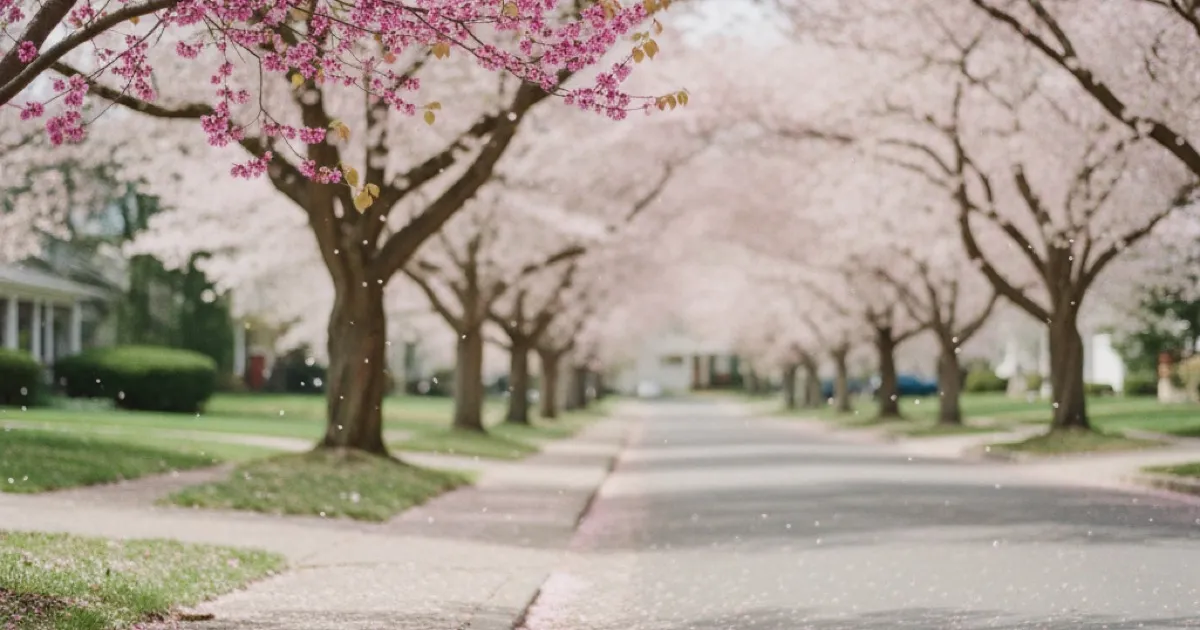
Every spring, neighborhoods and parks explode with color as flowering trees bloom all at once. Pinks, whites, purples, and reds cover branches that were bare just weeks earlier. But telling one species from another? That’s where most people get stuck. Flowering tree identification becomes much easier once you learn to read a few key details: flower shape, petal count, bloom timing, and how the flowers sit on the branch.
This guide covers the most common flowering trees in North America — the ones you’ll actually see on your street, in your yard, or on a spring hike. By the end, you’ll be able to distinguish a dogwood from a redbud at a glance.
Got a bloom in front of you? Our free flower identifier tool names the species from a photo in seconds.
How Flowering Tree Identification Works: What to Look For
Before diving into specific species, it helps to know which details matter most. Not all pink-flowering trees are the same, and not all white blossoms belong to the same family. Here are the features that separate one flowering tree from another.
Petal count and shape. Some trees produce simple five-petaled flowers (cherry, crabapple). Others have large, showy petals that are actually modified leaves called bracts (dogwood). Magnolias have thick, waxy petals arranged in a cup or star shape. Counting petals is the single fastest way to narrow your options.
Flower size. Redbud flowers are tiny — about half an inch — and grow in dense clusters directly on the branches and even the trunk. Magnolia flowers can be 8 to 12 inches across. If you can estimate the size, you’ve already eliminated half the possibilities.
Bloom timing. Flowering trees don’t all bloom at the same time. Redbuds and magnolias are among the earliest, often flowering before their leaves appear. Dogwoods and crabapples bloom later, usually after leaves have started to emerge. This staggered timing is a powerful identification clue.
Where flowers attach. Some species produce flowers in clusters on short stems (cherry, crabapple). Others bloom directly from older wood — redbud flowers emerge straight from the bark of thick branches and the trunk itself, a trait called cauliflory. Dogwood flowers appear at the tips of branches. The attachment point narrows your search fast.
Color range. White, pink, magenta, purple, and occasionally red. Most flowering trees stick to a narrow color range, but cultivated varieties can shift the palette. A deep pink dogwood exists, but the wild native form is white. Knowing each species’ default color helps you spot cultivars versus wild trees.
Cherry Trees: The Spring Icon
Flowering cherry trees (Prunus species) are probably the most recognized spring bloomers, thanks to Washington D.C.’s famous cherry blossom festival and similar displays worldwide.
Yoshino cherry (Prunus x yedoensis) produces clusters of five-petaled white to pale pink flowers. The blossoms appear before the leaves fully emerge, covering the entire canopy in a cloud of soft color. Petals are delicate and fall like confetti in the wind — peak bloom lasts only about a week.
Kwanzan cherry (Prunus serrulata ‘Kanzan’) has double flowers with 20 to 50 petals per bloom, creating a ruffled, almost carnation-like appearance. The flowers are a deeper pink than Yoshino and bloom slightly later. Double-flowered cherries are easy to identify because no wild cherry produces flowers that dense.
Okame cherry blooms early — often in late February or early March — with deep pink, single flowers. It’s one of the first flowering trees to bloom each spring, making it a reliable seasonal marker.
All flowering cherries share the smooth, reddish-brown bark with prominent horizontal lenticels (thin stripes) that wrap around the trunk. If you spot that bark pattern on a pink- or white-flowering tree, you’re almost certainly looking at a cherry. For more on using bark as an identification clue, see our bark identification guide.
Magnolia: Ancient Flowers, Bold Blooms
Magnolias are among the oldest flowering trees on Earth — their lineage predates bees, so the flowers evolved to be pollinated by beetles. That ancient heritage shows in their thick, waxy petals and sturdy flower structure.
Saucer magnolia (Magnolia x soulangeana) is the most common ornamental magnolia. It produces large, tulip-shaped flowers in shades of pink, purple, and white. Flowers appear on bare branches in early spring before any leaves, making the tree look like it’s covered in porcelain cups. Each flower is 5 to 10 inches across.
Star magnolia (Magnolia stellata) has narrower, strap-like petals that radiate outward, creating a star shape. The flowers are white (sometimes flushed pink) and slightly smaller than saucer magnolia. Star magnolias bloom very early and are vulnerable to late frosts.
Southern magnolia (Magnolia grandiflora) is an evergreen species with massive white flowers that can reach 12 inches in diameter. Unlike the deciduous magnolias above, southern magnolias bloom in late spring and summer, and their thick, glossy leaves persist year-round. The underside of each leaf has a rusty-brown felt.
Magnolia flowers are easy to identify because of their size and structure — no other common landscape tree produces flowers that large with thick, fleshy petals. After the petals fall, magnolias produce distinctive cone-like seed pods with bright red seeds.
Dogwood: Four Bracts and a Cluster
Flowering dogwood (Cornus florida) is native to eastern North America and one of the most beloved spring trees. But here’s the thing: what most people call dogwood “petals” are actually bracts — modified leaves that surround a tiny cluster of true flowers in the center.
Each dogwood “flower” consists of four large, rounded bracts (white in the native form, pink or red in cultivars) surrounding a tight button of small, yellowish-green true flowers. The bracts have a distinctive notch at the tip. This four-bract arrangement is unique among common flowering trees and makes dogwoods instantly recognizable.
Kousa dogwood (Cornus kousa) blooms about a month later than the native flowering dogwood and has pointed bracts instead of rounded ones. Kousa bracts come to a sharp tip rather than a notch, and the tree flowers after the leaves are fully out, so you see green leaves behind the white bracts. Kousa dogwood also produces round, raspberry-like fruit in fall.
Dogwood bark on mature trees develops a distinctive blocky, alligator-skin pattern — small, square-ish plates that look like a puzzle. This bark pattern is visible year-round and helps with identification even in winter.
Redbud: Purple-Pink on Bare Branches
Eastern redbud (Cercis canadensis) is one of the easiest flowering trees to identify because of where its flowers grow. Tiny, pea-shaped flowers in magenta-pink emerge directly from the branches and trunk in early spring, before any leaves appear. The flowers cluster so densely along the wood that entire limbs turn solid pink.
The flowers are about half an inch long and have the distinctive butterfly shape of legume family blossoms — redbud is related to beans and peas. After blooming, the tree produces flat, brown seed pods that hang on the branches well into winter, providing another identification clue across seasons.
Redbud leaves are equally distinctive: heart-shaped, 3 to 5 inches across, with smooth edges and a pointed tip. Few other trees have leaves this perfectly heart-shaped. The combination of cauliflorous flowering and heart-shaped leaves makes redbud one of the simplest flowering trees to identify at any time of year. For more on how trees change across seasons, check out our seasonal tree identification guide.
Crabapple: Ornamental Cousins of the Apple
Flowering crabapples (Malus species) are close relatives of eating apples, bred for their flower display rather than their fruit. They’re planted heavily in urban landscapes, parks, and residential yards.
Crabapple flowers have five petals and grow in clusters, similar to regular apple blossoms. The color range is wider than apple: pure white, soft pink, deep rose, and even near-red depending on the cultivar. Some varieties produce double flowers. Bloom time overlaps with dogwoods, typically mid to late spring.
The quickest way to distinguish a crabapple from a cherry is the fruit. Crabapples produce small, round fruits (under 2 inches) that persist into fall and winter, turning red, yellow, or orange. Cherries produce drupes (stone fruits) with a single pit. Crabapple fruit hangs in clusters and often stays on the tree long after leaves drop. If you want to explore fruit-based identification further, our fruit tree guide covers the details.
Crabapple bark is gray-brown with shallow furrows — less distinctive than cherry or dogwood bark, which is why flowers and fruit are the better identification features for this genus.
Other Flowering Trees Worth Knowing
A few more species appear regularly in yards and parks.
Crape myrtle (Lagerstroemia) blooms in mid to late summer — long after the spring trees have finished. Flowers are crinkled and paper-like, in shades of pink, red, purple, and white. The bark peels to reveal smooth, mottled patches underneath.
Hawthorn (Crataegus) produces small white or pink flowers in late spring, similar to crabapple but with thorny branches. The thorns are the giveaway.
Flowering Tree Identification Made Faster with Technology
Learning to identify flowering trees by sight is rewarding, but spring blooms are short-lived. You might get a one-week window to see a tree in full flower before the petals drop. When you need to pin down a species quickly, a photo-based approach helps.
Tree Identifier lets you snap a photo of a flower, leaf, bark, or the whole tree and get an AI-powered species identification. It handles all the flowering trees in this guide and thousands of other species. The app is available on iOS and Android, and it gives you 2 free identifications per day.
Flowering trees are actually ideal subjects for photo identification because the flowers are so distinctive. A close-up of a dogwood’s four-bract arrangement or a magnolia’s cup-shaped bloom gives the AI a clear signal to work with. And if you’re hiking in an area without cell service, the app’s offline mode means you can download identification data before you leave.
Frequently Asked Questions
How can I tell the difference between cherry and crabapple blossoms?
Look at the flower structure and wait for fruit. Cherry blossoms tend to appear before or just as leaves emerge, while many crabapple varieties bloom alongside their leaves. The definitive test is the fruit: cherries produce a fleshy drupe with a single pit, while crabapples produce a small pome (like a tiny apple with seeds in a central core). Crabapple fruit also persists on the tree through winter, while cherry fruit is eaten by birds quickly.
Why do some magnolias bloom before their leaves appear?
Deciduous magnolias like saucer and star magnolia evolved to bloom on bare wood, making the flowers more visible to pollinators early in the season when few other food sources exist. The downside: early blooms are vulnerable to late frosts, which is why you sometimes see magnolia flowers browned after a cold snap. Evergreen species like southern magnolia bloom later and avoid this tradeoff.
What flowering tree has pink flowers directly on its trunk and branches?
That’s almost certainly an eastern redbud (Cercis canadensis). Redbud is one of the few temperate trees that exhibits cauliflory — flowering directly from older wood, including the trunk. The tiny, pea-shaped flowers are magenta-pink and bloom in early spring before the leaves emerge. If the tree also has heart-shaped leaves later in spring, you can confirm it’s a redbud.
When should I photograph flowering trees for the best identification results?
Aim for peak bloom, when flowers are fully open but haven’t started dropping petals. Take both a close-up of individual flowers (showing petal count, shape, and center structure) and a wider shot of the whole tree (showing growth habit and flower distribution). Overcast morning light gives the most accurate color.
Spring Is Your Best Window
Flowering trees give you the most dramatic, most identifiable features of any season — but only for a few weeks. Take advantage of bloom season to lock in your identifications. Walk your neighborhood, visit a local arboretum, and photograph every flowering tree you can find. The more species you see in person, the faster the differences click into place.
Identify a tree from your photo — free
Upload a leaf, bark, or whole-tree photo and get the species in seconds. No signup.
Confidence:
Unlock the full species profile
Free in the app — with unlimited identifications.


AI result for guidance — the app gives full species details and works offline.
Want unlimited identifications?
Get the full species profile, photos and details — free in the app, with unlimited scans.
- Unlimited identifications
- Full species profiles & details
- Works offline, anywhere
- Save and revisit your finds
Rachel Nguyen
Tree Identifier Team