How to Identify Fruit Trees by Leaf, Bark, and Fruit
You just moved into a house with a backyard full of trees, and you have no idea what any of them are. Or maybe you’re walking through an old orchard and wondering whether those branches hold apples or pears. Fruit tree identification is one of those skills that seems hard until you know what to look for. The good news: most common fruit trees give you four clear signals — leaves, bark, flowers, and fruit. You just need to know which details matter.
This guide covers the eight fruit trees you’re most likely to encounter in North American yards, parks, and orchards. By the end, you’ll be able to tell an apple from a pear without tasting anything.
How to Identify Fruit Trees by Their Leaves
Leaves are the most reliable year-round clue (except in winter, obviously). Each fruit tree species has a distinct leaf shape, size, and texture. Here’s what to look for.
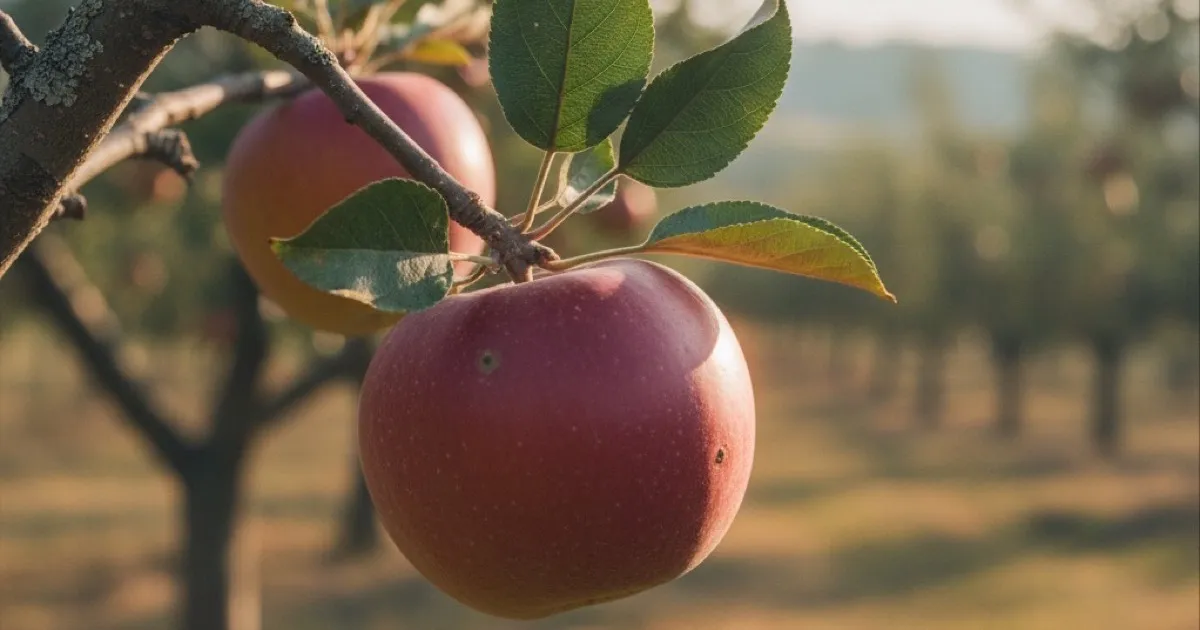
Apple trees have oval leaves with serrated edges, typically 2 to 5 inches long. The color is a deep green on top and slightly fuzzy underneath. If you rub the underside and feel a soft fuzz, that’s a strong apple indicator.
Cherry trees produce elongated leaves with fine teeth along the edges. They’re bright green rather than the darker green of apple leaves, and the veins run close together in parallel lines. Cherry leaves also tend to be thinner and more delicate.
Peach and nectarine trees have long, narrow leaves that range from 3 to 6 inches. The leaves curl inward slightly, forming a shallow V-shape when you look at them from the tip. Peach leaves are among the easiest to spot once you know this curl pattern.
Pear trees have glossy, rounded leaves with finely serrated edges. They’re shorter than peach leaves (1 to 4 inches) and have a distinctive shine on the upper surface. The glossiness is the giveaway — most other fruit tree leaves have a matte finish.
Plum trees carry oval leaves with serrated edges, similar to apple at first glance. The difference: plum leaves are often slightly smaller, and some varieties have a purple or reddish tint, especially ornamental plums. Look at the leaf underside too — plum leaves tend to be paler beneath.
Citrus trees (lemon, orange, lime, grapefruit) are easy to spot if you know one trick. Look at where the leaf meets the stem. Citrus leaves have a small, wing-like flap at the base of the leaf stalk called a petiole wing. The leaves are also thick, waxy, and smell faintly of citrus when crushed.
Fig trees are unmistakable. The leaves are large (sometimes 10 inches across), deeply lobed with 3 to 5 distinct lobes, and rough-textured on top. No other common fruit tree has leaves this big and this dramatically shaped.
If leaf identification alone doesn’t give you a definitive answer, bark patterns can help narrow it down — especially in winter when leaves have dropped.
Identifying Fruit Trees by Bark and Branch Structure
Bark doesn’t change with seasons, which makes it useful when leaves and fruit aren’t available. Young fruit trees have smoother bark that gets rougher with age, but each species ages differently.
Apple bark starts smooth and olive-gray on young trees. As the tree matures, the bark develops scaly, flaking plates that peel outward. Old apple trees have deeply furrowed, gray-brown bark with a rugged character.
Cherry bark is the easiest to identify. It’s smooth with distinctive horizontal lines called lenticels — thin, papery stripes that wrap around the trunk. Young cherry bark has a reddish-brown sheen. This horizontal striping pattern is the fastest way to spot a cherry tree from across a yard.
Peach bark is smooth and reddish-brown on young trees, darkening to gray-brown with shallow furrows as the tree ages. Peach trees rarely grow very large, so the bark often stays relatively smooth compared to apple or pear.
Pear bark develops small, rectangular plates as it ages — almost like a grid pattern. Young pear bark is smooth and gray-brown. The grid-like cracking is distinctive once you’ve seen it.
Citrus bark stays smooth and often retains a greenish tint, especially on younger branches. Citrus trees are evergreen, so you’ll always have leaves to work with too.
Branch structure offers another clue. Apple trees spread wide with branches angling outward. Cherry trees grow more upright. Peach trees tend to be smaller with a rounded, vase-like shape. Understanding how different tree species develop unique bark and branching patterns applies to fruit trees the same way it does to oaks and maples.
Using Flowers and Fruit for Identification
Spring blossoms make fruit tree identification almost too easy. Each species flowers at a slightly different time and with distinct colors.
Apple blossoms are white with pink edges, growing in clusters of five petals. They appear after the leaves have started to emerge. The pink-to-white gradient is classic apple.
Cherry blossoms are white or pale pink, appearing in dense clusters before the leaves fully open. The flowers are smaller than apple blossoms and cover the branches so thickly that the tree looks like it’s covered in snow.
Peach blossoms are bright, vibrant pink — darker than cherry or apple. They appear on bare branches before any leaves, which makes peach trees one of the first signals of spring. If you see a tree covered in hot-pink flowers on bare wood in early spring, it’s almost certainly a peach.
Pear blossoms are pure white (no pink tinge) and appear in clusters. They look similar to apple blossoms but without the pink edges.
Plum blossoms range from white to pale pink, appearing before the leaves like peach blossoms. They’re smaller and more delicate than peach flowers.
When fruit appears, identification gets straightforward. But knowing the fruit type helps with species you might confuse:
- Pome fruits (apple, pear): Seeds inside a central core. Cut the fruit crosswise and you’ll see a star-shaped seed chamber
- Stone fruits / drupes (cherry, peach, plum, apricot): Single hard pit in the center surrounded by flesh
- Citrus fruits (orange, lemon, lime): Segmented interior with juice vesicles, thick rind
- Fig fruit: Soft, pear-shaped, with tiny seeds throughout the flesh (technically an inverted flower)
Knowing which category a mystery fruit falls into immediately narrows your options.
Quick Fruit Tree Identification Chart
| Tree | Leaf Shape | Bark | Flower Color | Fruit Type |
|---|---|---|---|---|
| Apple | Oval, serrated, fuzzy underside | Gray, scaly plates | White-pink clusters | Pome (core with seeds) |
| Cherry | Elongated, fine-toothed, bright green | Smooth, horizontal lenticels | White/pink, dense clusters | Drupe (single pit) |
| Peach | Long, narrow, curls inward | Smooth, reddish-brown | Bright pink, on bare wood | Drupe (single pit) |
| Pear | Glossy, rounded, finely serrated | Gray-brown, grid-like plates | Pure white clusters | Pome (core with seeds) |
| Plum | Oval, sometimes purple-tinged | Dark, rough with age | White to pale pink | Drupe (single pit) |
| Citrus | Thick, waxy, petiole wing | Smooth, greenish | Small, white, fragrant | Hesperidium (segmented) |
| Fig | Large, 3-5 deep lobes, rough | Smooth, pale gray | None visible (inside fruit) | Syconium (inverted flower) |
Print this chart or save a screenshot. It covers the identification clues for every common backyard fruit tree in one glance.
How Tree Identifier Can Help
Sometimes a leaf or bark photo isn’t enough for a confident ID — especially with young trees that haven’t fruited yet, or cultivars that don’t match the textbook descriptions.
Tree Identifier uses AI to identify tree species from photos of leaves, bark, flowers, and fruit. Snap a photo of whatever part of the tree you can see, and the app returns a species identification with a confidence score. It works with all the fruit trees in this guide and thousands of other species.
The app gives you 2 free identifications per day, so you can test it without a subscription. If you’re doing a full yard inventory or walking through an old orchard, that’s enough to ID the trees you’re most curious about.
One feature that’s particularly useful for fruit trees: the app handles multiple input types. Found a fallen leaf on the ground but can’t reach the fruit? Photograph the leaf. See interesting bark but no leaves yet? Photograph the bark. The AI works with whatever you give it. And if you’re hiking somewhere without cell service, offline mode lets you download species data ahead of time.
Frequently Asked Questions
Can I identify a fruit tree in winter without leaves or fruit?
Yes, but it’s harder. Focus on bark patterns (cherry’s horizontal lenticels are visible year-round), branch structure, and any dried fruit or buds remaining on the tree. Leaf buds in late winter also differ between species — apple buds are fuzzy, while cherry buds are smooth and clustered.
What’s the difference between a peach tree and a nectarine tree?
Almost nothing, visually. Peach and nectarine trees are the same species (Prunus persica). The only reliable difference is the fruit itself: peaches have fuzzy skin, nectarines have smooth skin. The leaves, bark, flowers, and growth habit are identical.
How do I tell a wild fruit tree from an ornamental variety?
Ornamental fruit trees (like ornamental cherry or crabapple) typically have showier flowers, smaller fruit, and sometimes colored foliage (purple-leaf plum is common). If the fruit is very small (under 1 inch) or the tree is covered in double-petaled flowers, it’s likely ornamental. Wild or cultivated fruit trees have larger fruit and simpler, single-petaled flowers.
When is the best time of year to identify fruit trees?
Late spring through early fall gives you the most clues — you’ll have leaves, flowers (spring), and developing or ripe fruit (summer/fall). But each season has its strengths. Winter bark identification works well for cherry and apple trees. Early spring flower color is the fastest way to distinguish peach from cherry from apple.
Start Identifying
You don’t need to memorize every detail in this guide. Start with one clue — leaf shape is usually the easiest — and cross-reference with bark or flowers when you’re unsure. After identifying a handful of trees, the patterns start clicking.
Next time you spot an unknown tree in your yard or on a walk, snap a photo with Tree Identifier and compare what the AI finds against the identification tips above. Between the app and this guide, you’ll have the species pinned down in minutes.
Rachel Nguyen
Tree Identifier Team