Overcup Oak Tree Identification: 7 Reliable Signs
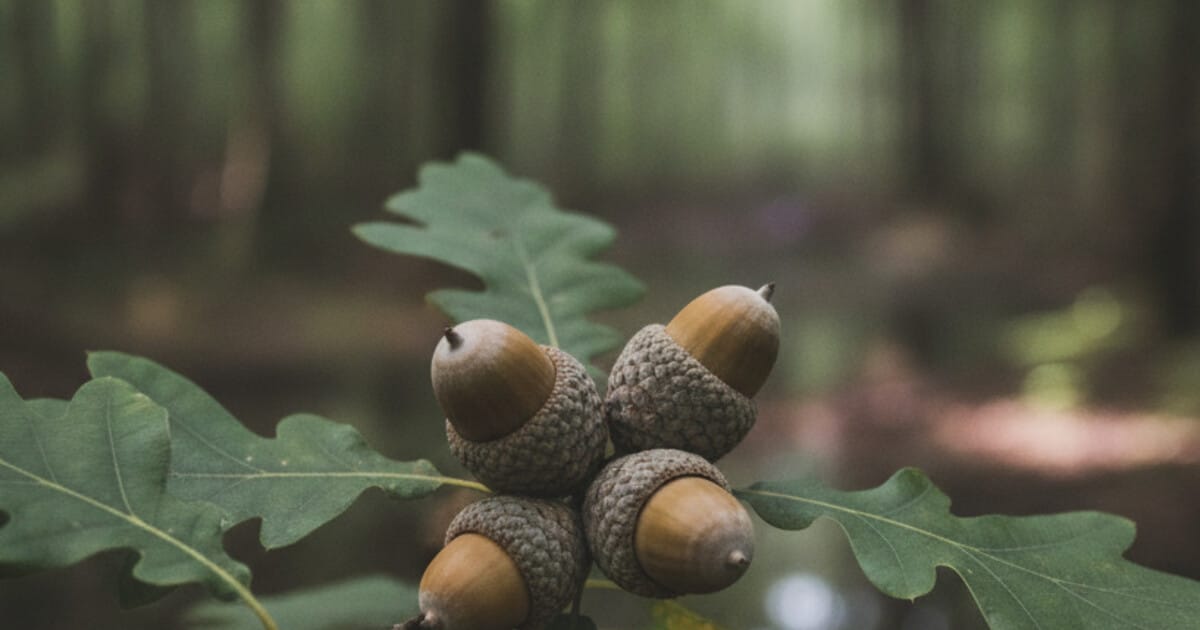
Overcup oak is one of those trees that rewards a careful look. Walk past dozens of oaks in a bottomland forest without a clear ID, then find a single acorn on the ground and you’ll know right away. That cup wraps around the nut so completely that barely a sliver of acorn peeks through, and no other native oak in North America does this. If you’ve found an unusual acorn in wet bottomland country, overcup oak tree identification starts with that cup.
Overcup oak (Quercus lyrata) is identified by 7 reliable signs: an acorn cup enclosing 80-100% of the nut, lyre-shaped leaves with irregular rounded lobes, pale grayish leaf undersides, light gray scaly bark, floodplain or bottomland habitat, small round acorns (0.5-0.75 inches), and rounded lobe tips with no bristle points.
Overcup Oak Identification: Key Features at a Glance
Overcup oak belongs to the white oak group (subgenus Quercus). Its lobe tips are rounded and blunt rather than sharp and bristle-tipped, which rules out red oak, pin oak, scarlet oak, and the rest of the red oak subgroup.
Within the white oak group, overcup oak has a signature that sets it apart from white oak, bur oak, and swamp white oak: the acorn cup. Most oaks in this group cover 25-50% of the acorn. Overcup oak covers 80-100%, so the nut is nearly or completely hidden. Turn one over and it looks more like a small spherical seedpod than a typical acorn.
Overcup oak (Quercus lyrata) is a native bottomland hardwood in the white oak group, found across the southeastern US and Mississippi River valley from Delaware to southern Illinois. Mature trees reach 60-80 feet tall with an irregular crown. Many develop a buttressed or swollen trunk base in sites that flood seasonally, an adaptation to waterlogged, oxygen-poor soils.
The species takes its name from its most striking feature: an acorn cup covering 80-100% of the nut, a trait found in no other North American oak. Leaves are 5-9 inches long with 5-9 irregular rounded lobes in a lyre-like silhouette, narrowing toward the middle then widening at the broad terminal lobe.
Bark on mature trees is light gray, breaking into small scaly or platy ridges. Overcup oak tolerates prolonged flooding better than almost any other upland oak, which restricts it to river bottomlands, floodplain forests, and coastal plain swamps across its range.
Overcup Oak Leaf Identification
The leaves are the second-best field mark after the acorn cup, and they’re distinctive once you know the lyre shape.
Overcup oak leaves run 5-9 inches long with 5-9 rounded lobes. The shape is the key tell: the blade widens near the base, narrows noticeably in the middle section, then flares out at a broad rounded terminal lobe. This lyre-like outline, combined with irregular lobe sizes and depths, looks quite different from the more symmetrically lobed leaves of white oak or the deeply cut lobes of chestnut oak.
The upper surface is dark green and dull to slightly glossy. The underside is distinctly paler, grayish-green, and often carries fine short hairs near the midrib and major veins. In fall, overcup oak leaves turn dull yellow-brown to reddish-brown, and they’re among the last oaks in their range to color up in autumn.
For a useful comparison, white oak leaves also have rounded lobes, but they’re more symmetrically arranged without the pronounced narrowing in the middle. If you’re sorting between the two, the guide to white oak tree identification covers the lobing differences in detail.
Buds are small, red-brown, and clustered at twig tips like other white oak group members. Twigs are slender and grayish-brown.
Overcup Oak Bark and Tree Shape
On young overcup oaks, bark is relatively smooth and light gray. As the tree ages it breaks into small, flat, scaly ridges, similar to white oak but typically lighter in color and less deeply furrowed.
The trunk base is a useful indicator on mature trees in flooded sites. Look for a swollen, flared, or buttressed base where the trunk meets the soil. This develops because overcup oak roots have to function in anaerobic conditions during flood periods, growing wider at the base to anchor the tree. Not every individual shows this clearly, but in consistently flooded spots it’s a reliable sign.
Crown shape is open and irregular. Overcup oaks don’t have the strongly tiered horizontal branching of pin oak or the massive spreading crown of bur oak. The canopy tends to be narrower and somewhat ragged-looking, especially in denser forest stands.
Mature height is typically 60-80 feet, with trunk diameter reaching 1.5-3 feet.
Overcup Oak Acorn: The Definitive Field Mark
If you find an acorn on the ground beneath an unknown oak in a bottomland setting, this is the sign that closes the ID. The cup wraps up and around the nut, covering 80-100% of its surface. Sometimes the nut is completely enclosed, visible only as a small rounded bump at the top of the cup.
The acorn itself is small and round, 0.5-0.75 inches in diameter. The cup is covered in bumpy, slightly elongated scales with a rough-textured, warty appearance. Color is gray-brown when mature, ripening in late September through October.
Overcup oak acorns are notably buoyant, which helps them disperse when floodwaters rise and recede. Squirrels cache them like other white oak group acorns, but water carries them along river systems in a way that extends the species’ range.
For comparison, bur oak also has a cup that covers more of the acorn than typical, with a distinctive mossy fringe extending outward from the cup’s rim. Overcup oak’s cup is smooth-scaled and fully enveloping, with no fringe. The two species also differ in habitat: bur oak grows on dry uplands and prairies, while overcup oak needs wet bottomlands.
Overcup Oak Habitat and Range
Overcup oak is specific about where it grows. It needs wet bottomlands, floodplain forests, and poorly drained ground that floods regularly, sometimes for weeks at a time. In those habitats it grows alongside bald cypress, water tupelo, swamp white oak, green ash, and red maple.
Its native range covers the Atlantic Coastal Plain from Delaware south to Florida, west through the Gulf States to eastern Texas, and north through the Mississippi Alluvial Valley to southern Illinois and southwestern Indiana. Within this range, overcup oak is common in the lowlands but absent from upland sites.
If you’re in the Southeast or Midwest standing in a low, wet hardwood forest that floods in spring, overcup oak is worth checking. Look up for irregular, open crowns. Look down for acorns with nearly-enclosed cups. In the right habitat, the combination of flood-adapted forest and that distinctive acorn makes overcup oak one of the more confirmable southeastern oaks.
Outside its native range, overcup oak is occasionally planted in parks and restoration areas. Planted specimens may not show the buttressed trunk base if they’re growing in well-drained conditions.
How Tree Identifier Helps with Overcup Oak Identification
Identifying overcup oak from a photo is genuinely practical because its features are so distinctive, especially the acorn. A clear close-up of that nearly-enclosed cup gives the Tree Identifier app everything it needs to make the call.
Tree Identifier accepts photos of leaves, bark, acorns, and whole trees, so you can work with whatever’s accessible. Submit a photo of that odd-looking enclosed acorn and the app’s AI narrows down the species with a confidence score attached. The app’s offline mode works fine on remote bottomland hikes where cell signal drops out.
One common source of confusion: overcup oak can resemble bur oak and swamp white oak when acorns aren’t present. In those cases, submitting photos of both leaves and bark together gives the AI more to work with and sharpens the result. You can photograph different features separately and compare the results.
Tree Identifier is free to start with 2 identifications per day. If you’re on a walk through bottomland and find an unusual oak, you can get a same-day answer without any subscription.
Frequently Asked Questions
What is the most reliable way to identify overcup oak?
The acorn cup is the single most reliable sign. Overcup oak’s cup encloses 80-100% of the nut, leaving little or no acorn visible. No other native North American oak has a cup that covers that proportion of the nut. Find an acorn that’s almost completely wrapped in its cup, and you’ve almost certainly found an overcup oak.
Where does overcup oak grow?
Overcup oak grows in the southeastern US and Mississippi River valley, from Delaware south to Florida and west to eastern Texas, extending north into southern Illinois. It’s a bottomland species that requires wet, poorly drained soils and tolerates seasonal flooding better than most oaks. You’ll find it in floodplain forests, river bottoms, and coastal plain swamps.
How do overcup oak leaves differ from white oak leaves?
Both species have rounded lobes with no bristle tips, but overcup oak’s leaves have a lyre-shaped silhouette: the blade narrows toward the middle then widens at the broad terminal lobe. White oak leaves are more symmetrically lobed without that pronounced narrowing. Overcup leaves also tend to be more irregular in lobe size and depth across the same leaf.
Is overcup oak in the red oak or white oak group?
Overcup oak is in the white oak group (subgenus Quercus). Its leaves have rounded lobe tips with no bristle points, and its acorns mature and germinate in the same fall they ripen. Red oak group members such as red oak, pin oak, and scarlet oak have bristle-tipped lobes and take two full years for acorns to mature.
Can overcup oak and bur oak be confused?
Yes, both have cups that cover more of the nut than typical oaks. Bur oak’s cup has a mossy fringe that extends outward from the rim. Overcup oak’s cup is smooth-scaled and wraps fully around the nut without any fringe. They also differ in habitat: bur oak grows on dry uplands and prairies, while overcup oak requires wet bottomlands.
If you’re in southeastern bottomland and spot a puzzling oak, snap a photo with the Tree Identifier app. Submit the acorn, a leaf, or bark, and get a species ID with a confidence score. Download it at treeidentifier.app on iOS or Android.
Identify a tree from your photo — free
Upload a leaf, bark, or whole-tree photo and get the species in seconds. No signup.
Confidence:
Unlock the full species profile
Free in the app — with unlimited identifications.


AI result for guidance — the app gives full species details and works offline.
Want unlimited identifications?
Get the full species profile, photos and details — free in the app, with unlimited scans.
- Unlimited identifications
- Full species profiles & details
- Works offline, anywhere
- Save and revisit your finds
Elena Torres
Tree Identifier Team