Trees With Leathery Leaves: 8 Species Identified
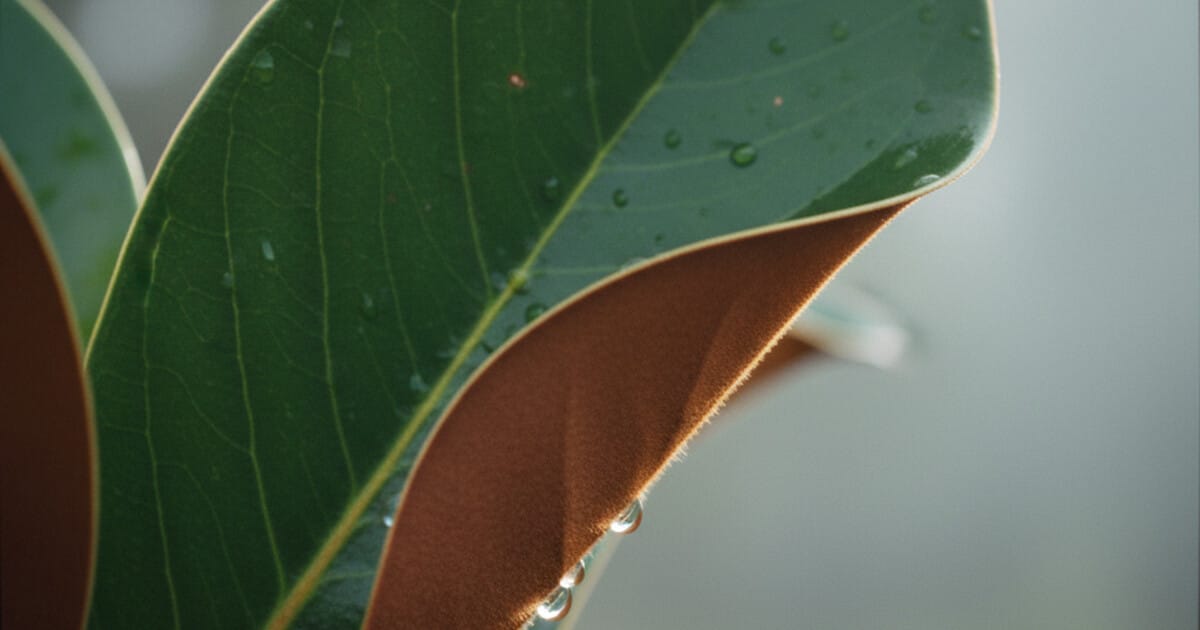
Pick up a leaf from a southern magnolia and it feels almost like stiff cardboard wrapped in wax. Pick one from a nearby oak and it’s thin, papery, easy to fold. That difference in texture is worth paying attention to.
Leathery leaves are a reliable field mark, and once you learn to spot them, they help you narrow a species ID before you even look at shape or color. This guide covers 8 trees with leathery leaves found across North America, with the details you need to tell them apart.
Trees with leathery leaves include southern magnolia, live oak, American holly, Pacific madrone, camphor tree, loquat, cherry laurel, and California bay laurel. Each grows leaves that feel stiff, thick, and waxy when pressed. Most are broadleaf evergreens that hold their leaves year-round. They’re most common in the American South, along the Pacific Coast, and in mild-winter regions.
What Makes a Leaf Leathery?
A leathery leaf is built to last. It’s thicker than average, with a waxy outer coating called a cuticle, dense cell walls, and less internal air space than a thin leaf. That structure slows water loss, which matters for trees that keep their leaves through hot summers or cold winters.
Leathery leaves are an adaptation found in trees that live in heat, drought, or mild winters. The technical term is sclerophyllous, from the Greek for “hard leaf.” These leaves have a thick cuticle (the waxy outer coating), dense cell walls, and reduced air spaces inside the leaf tissue. Together, these features cut water loss through evaporation by 30 to 50% compared to thin, papery leaves. Trees with leathery leaves are almost always broadleaf evergreens, meaning they photosynthesize year-round instead of dropping leaves in fall. Because they hold their leaves through winter, they need to protect them from cold, wind, and frost without drying out. The highest concentration of leathery-leaved trees in North America grows along the Pacific Coast, throughout the American South, and in Mediterranean-climate zones. Common examples include southern magnolia, live oak, American holly, Pacific madrone, and California bay laurel.
Leathery leaves often pair with a glossy surface. The same waxy cuticle that stiffens the leaf also reflects light, giving many of these species their characteristic shine. For more on that combination, see trees with glossy leaves.
Trees With Leathery Leaves: 8 Species to Know
1. Southern Magnolia (Magnolia grandiflora)
Southern magnolia has some of the most recognizable leathery leaves in North America. They’re large (6 to 12 inches long), oval, dark green on top, and covered in rusty-brown fuzz on the underside. The surface is stiff and waxy. This is a large evergreen tree, native to the Southeast, that holds those leaves year-round.
The rust-colored underside is the fastest ID for this species. Flip a fallen leaf over and you’ll see it immediately. For a full breakdown of magnolia species, see the magnolia tree identification guide.
2. Live Oak (Quercus virginiana)
Live oak leaves are small (2 to 4 inches), oval, and dark green with a smooth, slightly waxy surface. They don’t look like the classic lobed oak leaf, which surprises a lot of people. They’re leathery and stiff, and the tree holds them through winter before dropping them in early spring just as new leaves come in.
Live oak is native to the coastal Southeast and is one of the most common shade trees across Florida, Georgia, and Texas. The bark is dark and deeply ridged, which helps separate it from other small-leaved oaks.
3. American Holly (Ilex opaca)
American holly leaves are leathery, stiff, and edged with sharp spines. They’re dark green, oval, and about 2 to 4 inches long. That spiny margin is the obvious ID mark, but the texture confirms it: these leaves feel thick and rigid, not flexible.
Holly is a broadleaf evergreen native to the eastern United States. It produces red berries in fall and winter, but only on female trees. The leaves stay on the tree year-round.
4. Pacific Madrone (Arbutus menziesii)
Pacific madrone has large, oval leaves (3 to 5 inches), leathery, dark green on top and pale on the underside. The edges are smooth, and the leaf has a thick, waxy feel. The leaves are evergreen, which pairs with one of the most distinctive features on the tree: peeling reddish-orange bark.
This species grows along the Pacific Coast from British Columbia to northern California. The combination of leathery evergreen leaves and that dramatic bark makes it hard to confuse with anything else in its range.
5. Camphor Tree (Cinnamomum camphora)
Camphor tree leaves are oval, 2 to 4 inches long, and leathery with a smooth, waxy surface. Here’s the field trick: crush one between your fingers and you’ll smell camphor immediately, a sharp medicinal scent. The leaves are alternately arranged, and new growth comes in red or bronze before turning green.
Camphor tree is native to Asia but widely planted across the southern United States as a shade tree. It’s common in parks and street plantings in Florida, California, and along the Gulf Coast.
6. Loquat (Eriobotrya japonica)
Loquat has large, deeply veined leaves (6 to 12 inches) that are among the most leathery of any tree in this list. The surface is dark green, stiff, and slightly rough on top, with dense tan fuzz on the underside. The veins are deeply pressed from above, giving the leaf a corrugated look.
Loquat is widely planted across the southern US as both an ornamental and fruit tree. It produces small orange fruits in late winter. The size and corrugated texture of the leaves make it easy to spot.
7. Cherry Laurel (Prunus laurocerasus)
Cherry laurel leaves are 4 to 6 inches long, oval, and noticeably glossy. They feel thick and leathery, with smooth edges and a pointed tip. The surface almost looks polished. This is one of the species where leathery and glossy overlap most clearly.
Cherry laurel is widely planted as a hedge and privacy screen across the eastern and southern United States. It’s evergreen and grows fast. Crush a leaf and you’ll notice a faint almond scent from the same compounds found in cherry bark.
8. California Bay Laurel (Umbellularia californica)
California bay laurel leaves are lance-shaped, 2 to 5 inches long, and leathery with a smooth, slightly waxy surface. The underside is paler than the top. Crush a leaf and you’ll get a powerful, peppery herbal smell, much stronger than the cooking bay leaves you’d find in a kitchen.
This species grows in the coast ranges and foothills of California and southwestern Oregon. It’s an evergreen tree that can reach 80 feet in good conditions, though it often grows shorter. The aromatic leaves make it unmistakable in its range.
How to Tell Leathery Leaves Apart in the Field
All 8 species share that thick, waxy, rigid feel. Here’s how to separate them when you’re standing in front of an unfamiliar tree.
Start with leaf size. Loquat and southern magnolia have large leaves (6 to 12 inches). California bay laurel, camphor, and live oak are smaller (2 to 5 inches). Cherry laurel and Pacific madrone fall in the middle.
Check the underside. Southern magnolia has rusty fuzz underneath. Loquat has tan fuzz. Pacific madrone is pale but smooth. The others are smooth on both sides.
Smell the leaf. Camphor tree smells like camphor when crushed. California bay laurel has a strong peppery herbal smell. Cherry laurel has a faint almond scent. The other 5 have no strong odor.
Look at the margins. American holly has sharp spiny teeth. Cherry laurel has smooth or finely toothed edges. The others are mostly smooth.
For a broader look at how leaf features fit into tree identification, the tree identification by leaf shape guide walks through the full framework.
How Tree Identifier Helps With Leathery-Leaved Trees
When you’re holding a stiff, waxy leaf and can’t name the tree, a photo can close the gap fast. Tree Identifier lets you photograph the leaf, bark, or whole tree and get a species ID in seconds.
Leathery-leaved species photograph well because their leaves don’t curl or droop, and the surface detail comes through clearly in a photo. You can photograph the rusty underside of a magnolia leaf or the corrugated surface of a loquat leaf as a second shot to improve accuracy.
The app covers all 8 species in this guide, plus hundreds of other broadleaf evergreens across North America. It works offline, so you can use it on hikes where you don’t have cell service. You get 2 free identifications per day without a subscription.
Download Tree Identifier at treeidentifier.app and take a photo the next time a leathery-leaved tree stops you on a trail.
Frequently Asked Questions
What does it mean when a tree has leathery leaves?
Leathery leaves are thick, stiff, and waxy, built to reduce water loss. Trees grow them to survive heat, drought, or year-round leaf retention. Most trees with leathery leaves are broadleaf evergreens that hold their leaves through winter instead of dropping them in fall.
Are leathery leaves always glossy?
Often, but not always. The same waxy cuticle that makes a leaf leathery also tends to make it shiny. Southern magnolia, cherry laurel, and live oak all have glossy leathery leaves. Loquat and camphor tree have a more matte finish despite being leathery.
Which leathery-leaved trees are most common in the eastern United States?
Southern magnolia, live oak, American holly, and cherry laurel are the most common leathery-leaved trees in the eastern US. All four are broadleaf evergreens. Southern magnolia and live oak are native; cherry laurel is introduced from Europe and widely planted as a hedge.
Can I identify a tree from leaf texture alone?
Leaf texture narrows the field but rarely gets you to a species on its own. Use it alongside leaf size, shape, smell, margin, and the tree’s bark and habitat. Together, those details usually get you to a confident ID.
Leathery leaves are one of the most tactile field marks in tree identification: pick up the leaf, press it, and you know immediately whether you’re dealing with a tough evergreen or something else. The 8 species above cover most of what you’ll encounter across North America. When you need a fast ID in the field, Tree Identifier can match your photo to a species in seconds.
Identify a tree from your photo — free
Upload a leaf, bark, or whole-tree photo and get the species in seconds. No signup.
Confidence:
Unlock the full species profile
Free in the app — with unlimited identifications.


AI result for guidance — the app gives full species details and works offline.
Want unlimited identifications?
Get the full species profile, photos and details — free in the app, with unlimited scans.
- Unlimited identifications
- Full species profiles & details
- Works offline, anywhere
- Save and revisit your finds
Elena Torres
Tree Identifier Team