Trees With White Bark: 7 Species Identified
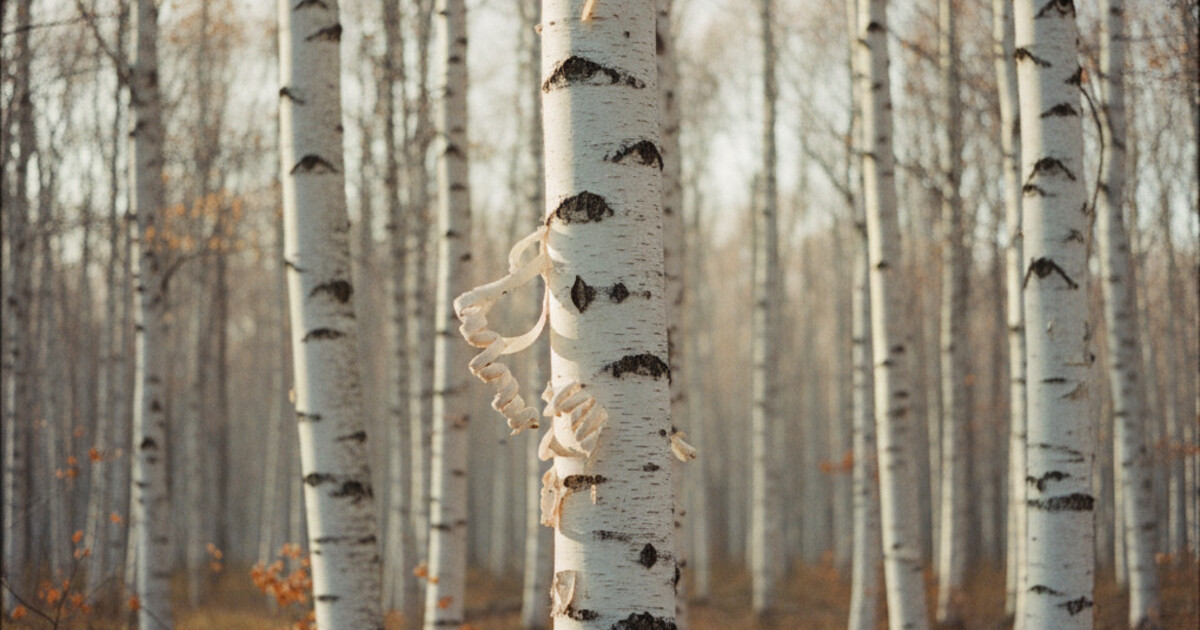
Walk through a northern forest in late fall or winter, and you’ll spot them immediately: trees with white bark that glow against the darker woods. In summer they’re just as noticeable, standing out from the surrounding green.
White bark narrows your identification field considerably. Only a handful of North American tree species have that distinctive pale trunk. The difference between them comes down to how the bark behaves, what the leaves look like, and where the tree is growing.
This guide covers 7 trees with white bark and the specific details that separate them.
The most common trees with white bark in North America are paper birch, gray birch, European white birch, quaking aspen, bigtooth aspen, American sycamore, and white poplar. Paper birch has the most vivid peeling white bark. Aspens have smoother, cream-to-white trunks with dark eye-shaped scars. Sycamores show white only on upper branches, where the outer bark flakes away. Bark texture and leaf shape quickly separate these species.
Why Some Trees Have White Bark
The pale color isn’t decorative. White bark reflects sunlight, which helps trees stay dormant longer in early spring rather than warming up prematurely during a February thaw. In cold climates, breaking dormancy too early can kill a tree when the next frost hits.
This is called bark thermoregulation, and it explains why birches and aspens dominate northern and mountain forests across Canada, Alaska, and the Rockies.
In birches, the white color comes partly from a compound called betulin. Betulin is antifungal, giving the bark some protection against pathogens. It’s also why birch bark has been used for thousands of years as a waterproof, rot-resistant material for baskets, canoes, and writing surfaces.
7 Trees With White Bark: Species Guide
These 7 species account for the vast majority of white-barked trees you’ll encounter in North America and Europe. Paper birch (Betula papyrifera) has the most iconic white bark, peeling away in papery sheets to reveal cream or pale orange beneath. Gray birch (Betula populifolia) is chalky white but stays intact rather than peeling, and often grows in multi-stem clusters. European white birch (Betula pendula) looks similar to paper birch but has distinctly drooping branches. Quaking aspen (Populus tremuloides) is often mistaken for birch, but its bark is smooth and greenish-white, and its small round leaves flutter in the lightest breeze. Bigtooth aspen (Populus grandidentata) shares aspen’s smooth white trunk but has larger, coarser leaves. American sycamore (Platanus occidentalis) only shows white near its upper branches, where flaking outer bark reveals pale chalky patches. White poplar (Populus alba) has white bark with dark diamond-shaped lenticels, and silvery-white leaf undersides.
Paper Birch (Betula papyrifera)
Paper birch is the most recognizable white-barked tree in North America. The bark peels away in thin, horizontal sheets, curling back from the trunk to reveal a creamy or pinkish inner layer beneath.
Young paper birches are reddish-brown before the white develops, usually by around year 5 to 10. Mature trees grow 50 to 70 feet tall and are most common in northern forests from Alaska to the northeastern United States.
Look for black, diamond-shaped lenticels (pores) scattered across the white surface. If the bark is peeling and those black marks are present, it’s almost certainly a paper birch. For a full comparison of paper, gray, river, and yellow birch, see our complete guide to birch trees.
Gray Birch (Betula populifolia)
Gray birch has a chalky white trunk, but the bark doesn’t peel the way paper birch does. The tree often grows in clusters of 2 or 3 stems and tends to lean rather than stand perfectly upright.
The easiest identifier: dark triangular patches where branches meet the trunk, giving it a spotted look. The leaves are triangular with a long, tapered tip, somewhat longer than paper birch leaves.
Gray birch prefers disturbed, rocky, or poor soils and grows primarily in the northeastern United States and southeastern Canada.
European White Birch (Betula pendula)
European white birch is a common ornamental tree in parks and yards across North America, though it’s native to Europe and Asia. The bark is strikingly white with black marks at the base on older trees.
The giveaway: strongly drooping, pendulous branches. No native North American birch has the same weeping habit. Older trees also develop rough, deeply furrowed black bark at the base while the upper trunk stays white.
Quaking Aspen (Populus tremuloides)
Quaking aspen is one of the most widespread trees on the continent, ranging from Alaska to the Appalachians and down through the Rockies. Its bark is smooth (not peeling) and ranges from cream to pale greenish-white, darker near the base of older trees.
The leaves are small and nearly round, attached to flattened stalks that let them spin in the slightest wind. That flutter is the easiest field ID whenever there’s any breeze.
Aspens almost always grow in groves connected by a shared root system. One grove can span acres and include thousands of stems. See the full breakdown of aspen and its relatives in our poplar tree identification guide.
Bigtooth Aspen (Populus grandidentata)
Bigtooth aspen has the same smooth, greenish-white bark as quaking aspen, and at a distance the two look nearly identical. The difference is in the leaves: bigtooth aspen has larger leaves with coarser, more irregular teeth along the edges.
It grows in similar northern habitats but tends to prefer slightly drier sites. The two aspens sometimes grow side by side, making leaf comparison the clearest way to separate them.
American Sycamore (Platanus occidentalis)
American sycamore has a bark pattern unlike anything else in North American forests. The lower trunk is rough and brownish-gray. About 20 feet up, the outer bark starts flaking off in large plates, exposing chalky white, cream, and pale green patches beneath.
Sycamores grow large, typically 75 to 100 feet tall, and almost always near water: river banks, floodplains, stream corridors. If you’re looking at a massive tree with a ghostly white upper canopy near a river, sycamore is the first species to check.
For a full species breakdown, the sycamore tree identification guide covers leaves, seed balls, and how to tell it from the London plane tree.
White Poplar (Populus alba)
White poplar has bright white bark covered in dark, diamond-shaped lenticels, similar in structure to aspen but typically whiter. The undersides of the leaves are coated in white, woolly hairs, which makes them flash silver in the wind.
It’s native to Europe and central Asia but now grows throughout the United States. White poplar spreads through root sprouts, often forming dense thickets along roadsides and disturbed areas.
How to Tell White-Bark Trees Apart at a Glance
When you’re standing in front of a pale-trunked tree and trying to ID it, focus on 4 things:
- Does the bark peel? Peeling in horizontal sheets points to birch (paper birch especially). Smooth, non-peeling bark points to aspen or white poplar.
- Where is the white bark? If the bark is only white high up on the tree and darker gray at the base, it’s almost certainly a sycamore.
- Check the leaves. Small, round leaves that flutter = aspen. Triangular, toothed leaves = birch. Maple-like lobed leaves with white undersides = white poplar.
- Where is it growing? Sycamores grow near water. Paper birch prefers cool northern forests. Aspens grow in large, clonal groves.
For a deeper look at using bark as a diagnostic feature, the tree bark identification guide walks through key patterns across many species.
And if you’re zeroing in on birch specifically, the birch tree varieties guide covers paper birch, gray birch, river birch, and yellow birch with full species profiles.
How Tree Identifier Can Help With White-Bark Trees
Telling paper birch from gray birch from European white birch can be tricky in person, especially without a clear look at the leaves. Tree Identifier handles that kind of comparison well.
Take a photo of the bark, a leaf, or the whole tree. The app’s AI processes the image and returns an identification with a confidence score, plus species details: habitat range, characteristics, and distinguishing features.
It works offline too. Download the species data before you head out, and the app runs just as fast in remote areas as it would with a cell signal. That’s useful when you’re in the woods and trying to ID a stand of birches without any service.
You get 2 free identifications per day on the free tier, which is enough for a casual hike or backyard walk. Available on iOS and Android at treeidentifier.app.
Frequently Asked Questions
What tree has white peeling bark?
Paper birch (Betula papyrifera) is the most common white-barked tree with peeling bark in North America. The bark strips away in thin, horizontal layers. Gray birch and European white birch also have white bark, but they don’t peel as dramatically. If the bark is coming off in papery sheets and there are dark lenticels on the white surface, paper birch is the most likely species.
Is aspen bark white or green?
Quaking aspen bark ranges from cream-white to pale greenish-white. It’s smooth and doesn’t peel. The greenish tint comes from chlorophyll in the outer bark layers, which lets aspens photosynthesize even before leaves emerge in spring. In winter light, aspen bark often reads as bright white. Older aspens develop dark, furrowed bark near the base.
How do I tell birch from aspen?
The easiest way is bark texture. Birch bark peels in horizontal layers; aspen bark is smooth. Also check the leaves. Aspen leaves are nearly round with flattened stalks that make them flutter constantly in the wind. Birch leaves are more triangular with toothed edges. In winter without leaves, birch bark tends to be brighter white and more papery; aspen bark is smoother with dark horizontal scars.
Why does sycamore bark look white?
Sycamores shed their outer bark in large, irregular plates, revealing fresh inner bark that’s chalky white or pale cream. As the new bark ages, it darkens to gray and eventually flakes off too. The result is a constantly cycling patchwork of white, cream, and gray on the upper branches. It’s a normal, healthy process, not a sign of disease.
Spotted a white-barked tree you can’t place? Tree Identifier can identify it from a photo of the bark, leaf, or whole tree. Download the app on iOS or Android, take a clear photo, and get your answer in seconds.
Identify a tree from your photo — free
Upload a leaf, bark, or whole-tree photo and get the species in seconds. No signup.
Confidence:
Unlock the full species profile
Free in the app — with unlimited identifications.


AI result for guidance — the app gives full species details and works offline.
Want unlimited identifications?
Get the full species profile, photos and details — free in the app, with unlimited scans.
- Unlimited identifications
- Full species profiles & details
- Works offline, anywhere
- Save and revisit your finds
Elena Torres
Tree Identifier Team