Black Oak Tree Identification: 7 Reliable Signs
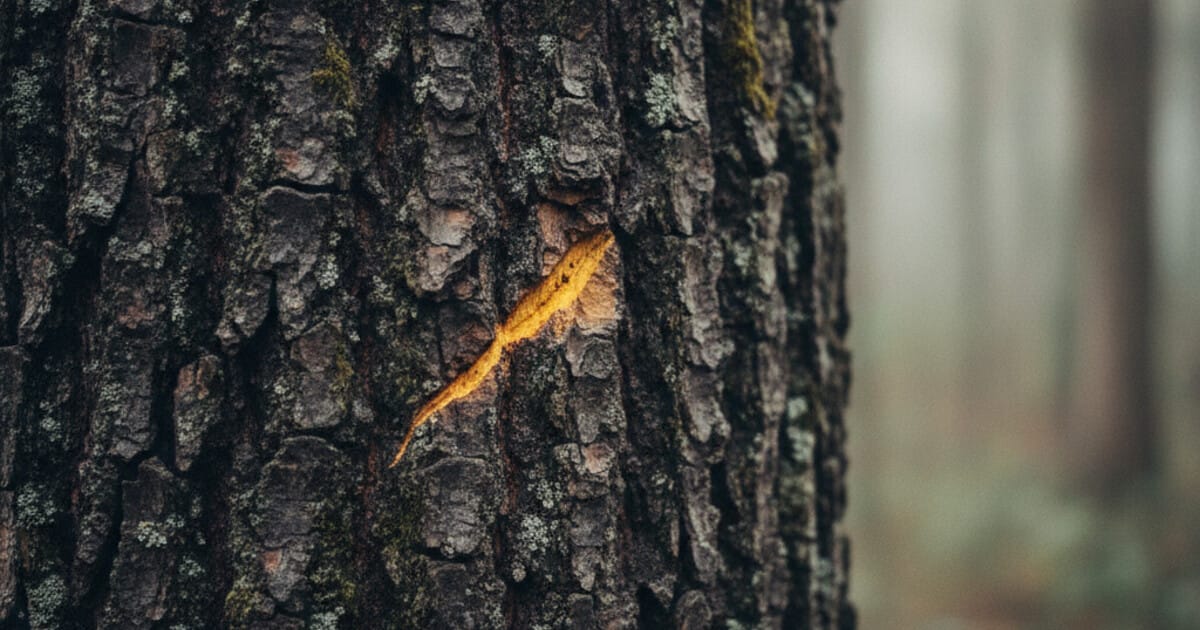
Stand at the edge of a dry upland forest in Pennsylvania or Ohio and look for trunks with bark so dark it’s almost black, carved into blocky, irregular ridges. Scratch through that outer bark with a fingernail or knife and you’ll find something unexpected: bright yellow-orange wood just beneath the surface. That’s black oak (Quercus velutina), and the yellow inner bark is the single most distinctive field mark that separates it from every other oak in the east.
Black oak grows throughout eastern and central North America, from Maine to Nebraska and south to Florida and Texas. It favors dry, gravelly ridges and slopes where other oaks struggle to get established. Once you know what to look for, identification is reliable across every season. This guide walks through 7 consistent signs that confirm the ID.
Black oak (Quercus velutina) is identified by its deeply lobed leaves with C-shaped sinuses and bristle-tipped lobes, very dark furrowed bark with bright yellow inner bark, grayish-hairy angular buds, and small acorns covered halfway by a deep turbinate cup. It grows 50-80 feet tall on dry upland soils across eastern and central North America.
What Is Black Oak?
Black oak belongs to the red oak group (section Lobatae), which means its leaf lobes end in bristle tips and its acorns take 2 full years to mature. It shares this group with red oak, scarlet oak, pin oak, and shumard oak.
Black oak (Quercus velutina) grows across eastern and central North America, from southern Maine west to Nebraska and south to Georgia and Texas, most abundantly on dry, acidic uplands between 500 and 2,500 feet elevation. Mature trees reach 50-80 feet tall with a broad, open crown and trunks 2-3 feet in diameter. The inner bark contains quercitron, a yellow pigment harvested commercially from the 1700s through the mid-1800s as a textile dye before synthetic dyes took over.
Black oak typically grows in mixed stands with scarlet oak, chestnut oak, and pitch pine on south-facing slopes and exposed ridges. It’s shade-intolerant and among the first oaks to colonize poor, well-drained soils. The wood is sold commercially as red oak lumber and used for flooring, furniture, and cabinetry.
Acorns are a key mast crop for deer, wild turkey, blue jays, and woodpeckers across its full range. Wildlife value is one reason black oak is actively managed in upland oak-hickory forests throughout the eastern U.S.
The tree grows most frequently in the eastern half of the country but extends into the Ozarks and southern Great Plains edge. You’ll find it sharing ridgelines with scarlet oak and post oak, occasionally mixed into bottomland edges, though that’s less typical. Dry, exposed, gravelly slopes are its home turf.
For a broader introduction to the oak family, see our guide to how to identify oak trees.
Black Oak Leaf Identification: Lobes, Sinuses, and Bristle Tips
Black oak leaves are one of the most reliable features from spring through fall. They’re 5-9 inches long with 7 lobes (sometimes 5 or 9) arranged in pairs along the midrib. The key features to look for:
- Sinuses: Deep, C-shaped cutouts between each lobe that go roughly 2/3 of the way to the midrib. The sinuses are rounded at the base, not pointed or angular.
- Lobes: Each lobe ends in 1-3 bristle tips, small thread-like extensions off the tip. All red oak group members share this feature, but black oak’s combination of deep C-shaped sinuses and broad lobes is distinctive.
- Leaf surface: Shiny dark green above, often with a slightly leathery feel. The underside is lighter with small tufts of yellowish-brown hair in the vein axils, the angles where side veins meet the main vein.
- Fall color: Red to orange-red, sometimes rusty brown. Variable across trees and years.
Leaves drop in late October or November and often hang partially through early winter. The bristle tips stay visible on fallen leaves, which helps with late-season ground ID.
Black oak leaf shape overlaps with scarlet oak and red oak. The comparison section below covers what separates them. In the meantime, see our red oak tree identification guide for a close look at the most common source of confusion.
Black Oak Bark: What the Yellow Inner Bark Reveals
Bark gives you two layers of information with black oak, and both are worth checking.
The outer bark on mature trees is very dark brown to nearly black, with deep furrows that create blocky, irregular ridges. On young trees under 10 inches in diameter, the bark is smoother and grayish, darkening and breaking into its characteristic texture over time. The furrows are deeper and more chopped-looking than red oak, which tends to show flatter, broader ridges.
The inner bark is where black oak really sets itself apart. Scratch through the outer layer with a fingernail or a corner of a knife blade. If the layer underneath is bright yellow to orange-yellow, you’ve confirmed black oak.
Red oak inner bark is reddish-pink to light tan. Scarlet oak can show yellow inner bark similar to black oak, so rely on the outer bark texture and bud features to separate those two.
The yellow pigment is quercitron, a flavonoid compound that Indigenous peoples across the Northeast and Southeast used as a yellow dye for textiles and baskets. Colonial-era settlers commercialized it starting in the 1700s, exporting ground black oak bark to Europe as a dye source. It stayed in commercial use until synthetic aniline dyes took over by the 1870s.
Sign #5: Black Oak Acorns
Acorns are only present in late summer and fall, but they’re distinctive when you find them. Black oak produces small to medium acorns, typically 1/2 to 7/8 inch long. They’re broadly egg-shaped with a striated (longitudinally ridged) surface. The cup is deep, turbinate (top-shaped), and covers the bottom half or slightly more of the nut. Cup scales are broad at the base and slightly loose toward the rim, giving the cup a fringed appearance at the edge.
Like all red oak group members, black oak acorns need 2 years to mature. You’ll often find both tiny first-year buds and full-sized second-year acorns on the same branch in late summer.
Sign #6 and #7: Buds and Growth Form
Buds are a reliable winter ID feature when leaves and acorns are gone. Black oak buds are:
- 5-angled (pentagonal in cross-section)
- 1/4 to 1/3 inch long with a sharp point
- Covered in grayish-white hairs, giving a dull, frosted look
The gray hairy buds are distinctive. Red oak buds are similar in shape but hairless and have a polished appearance. Scarlet oak buds are darker brown with hair only at the very tip.
Growth form: Black oak develops a broad, spreading crown that becomes more open and irregular with age. It’s generally larger than scarlet oak at maturity and has a heavier, more robust branching structure. Trunk bark on old trees can look almost corrugated, with thick blocky ridges you can fit your fingers into.
Black Oak vs Red Oak, Scarlet Oak, and Shumard Oak
These four species overlap in range and appearance. Here’s how to separate them:
Black oak vs red oak: Red oak leaves have shallower sinuses that cut about 1/3 to 1/2 of the way to the midrib, a dull green surface above, and no hair tufts below. Red oak inner bark is reddish-pink, not yellow. Red oak bark shows flatter, wider ridges with a grayish cast. Red oak also grows on richer, moister soils than black oak, so habitat is a useful starting clue. Our red oak tree identification guide covers this comparison in detail.
Black oak vs scarlet oak: Scarlet oak has sinuses cut more deeply, often 3/4 of the way to the midrib, giving the lobes a spidery, angular outline. Black oak lobes are broader with rounded C-shaped sinuses. Scarlet oak inner bark can show yellow coloring similar to black oak, so rely on leaf shape and bud hair to separate them. See our scarlet oak identification guide for the full comparison.
Black oak vs shumard oak: Shumard oak grows primarily in the Southeast and lower Midwest on richer, moister soils. Its leaves tend to have more deeply cut, angular sinuses. Shumard oak acorns are larger (up to 1.25 inches) with a shallow, flat cup rather than the deep turbinate cup of black oak. Shumard oak inner bark is not reliably yellow.
How Tree Identifier Helps Confirm Black Oak
The inner bark scratch test is the most reliable single field check, but it requires accessing the trunk and isn’t always practical. Leaves work well from spring through early winter, but black oak leaf shape varies considerably from tree to tree. Some individuals produce nearly oval leaves with shallow lobes. Others have deeply cut leaves that look almost like scarlet oak.
Tree Identifier’s AI processes photos of leaves, bark, and whole-tree shape to give you a species ID with a confidence score. For a variable species like black oak, taking photos from multiple angles — one of the leaf upper surface, one of the underside showing the vein tufts, one of the bark — gives a sharper result than a single shot. The app identifies from any of these features and weights the combination.
It also works offline, so you can run IDs on remote ridge hikes without cell service. You get 2 free identifications per day, and each result includes habitat info, characteristics, and species details you can cross-check against the signs in this guide. Download it from the App Store or Google Play and try it on the next mystery oak you encounter.
Frequently Asked Questions
How do I tell black oak from red oak?
Check the inner bark: scratch through the outer layer. Black oak shows bright yellow to orange underneath; red oak shows pinkish-tan. Black oak leaves also have deeper sinuses and a shinier, more leathery surface than red oak. The outer bark on black oak is darker and more blocky. When in doubt, the yellow inner bark is the fastest confirmation.
Why is it called black oak?
The name comes from the very dark gray to nearly black bark on mature trees, which is noticeably darker than most other eastern oaks. Some sources also point to the dark heartwood when freshly cut, though that’s a secondary explanation. The species has been called black oak consistently since at least the 1700s.
When do black oak acorns fall?
Black oak acorns mature and fall in September and October of their second year. Because they take 2 years to develop, you’ll see both tiny first-year acorn buds and full-sized second-year acorns on the same branch in late summer. Peak drop is typically mid-September through October, depending on location.
Is black oak a good tree for wildlife?
Yes. Black oak produces large acorn crops that feed deer, wild turkey, blue jays, woodpeckers, squirrels, and black bears. The deep-furrowed bark shelters insects that attract woodpeckers. As a shade-intolerant species that colonizes dry, disturbed uplands, it also creates habitat structure that benefits early-succession wildlife.
What’s the difference between black oak and pin oak?
Pin oak (Quercus palustris) has distinctively drooping lower branches, a feature black oak doesn’t share. Pin oak leaves have deeply cut sinuses similar to scarlet oak. Pin oak grows on flat, wet to moist soils, the opposite of black oak’s dry ridges. Pin oak acorns are very small, nearly round, with a thin shallow cup covering only 1/4 of the nut.
Identify a tree from your photo — free
Upload a leaf, bark, or whole-tree photo and get the species in seconds. No signup.
Confidence:
Unlock the full species profile
Free in the app — with unlimited identifications.


AI result for guidance — the app gives full species details and works offline.
Want unlimited identifications?
Get the full species profile, photos and details — free in the app, with unlimited scans.
- Unlimited identifications
- Full species profiles & details
- Works offline, anywhere
- Save and revisit your finds
Elena Torres
Tree Identifier Team