Box Elder Tree Identification: 7 Reliable Signs
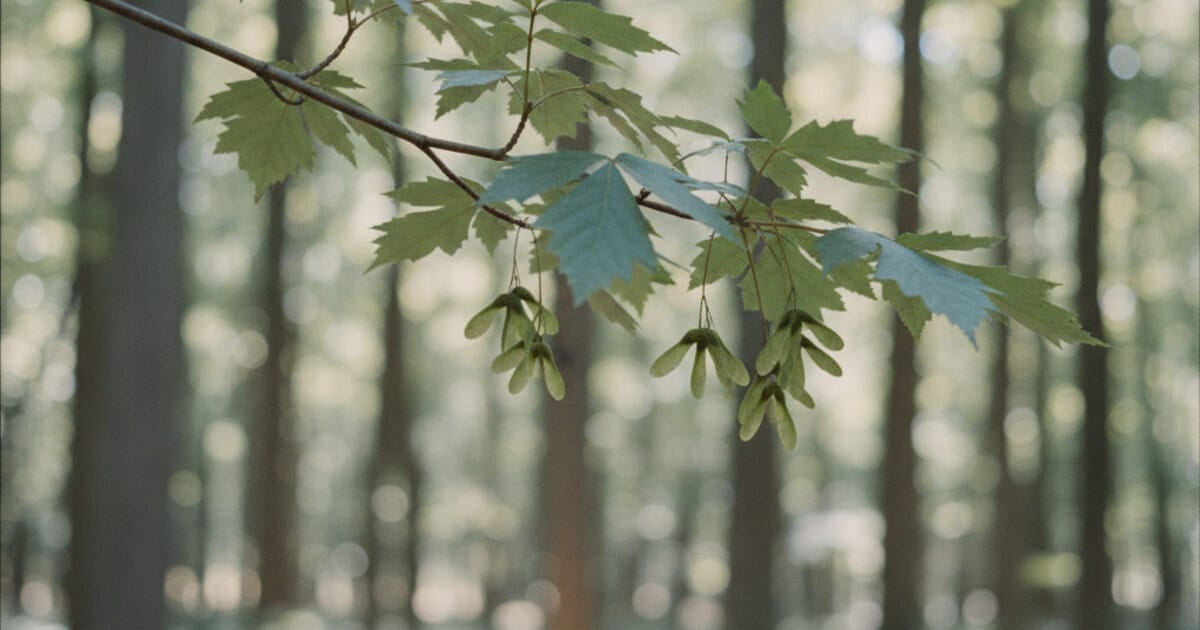
The box elder tree is everywhere: creek bottoms, vacant lots, the corner of someone’s backyard that nobody tends. Yet most people have never heard of it by name. It’s one of North America’s most misidentified trees, regularly confused with ash, poison ivy, or tree of heaven. Some field guides spell it boxelder as one word, but both spellings point to the same tree, Acer negundo. The confusion happens because a box elder tree doesn’t look like what most people picture when they think of a maple.
It is a maple. That’s the first surprise.
Knowing you have a box elder on your property matters for practical reasons. It’s a short-lived, fast-growing tree that seeds aggressively, and it’s the primary host for box elder bugs (those orange-and-black insects that pile up on sunny walls every fall). Box elder tree identification takes about two minutes once you know the seven signs.
Box elder (Acer negundo) is the only native maple with compound leaves. Look for groups of 3 to 7 leaflets arranged opposite each other on the twig, paired samara seeds (the same helicopter-style seeds other maples produce), green or waxy-purple young twigs, and a preference for wet or disturbed ground. Those five features together rule out almost everything else.
Box Elder Tree Leaf Identification: Compound and Opposite
This is the most reliable field mark, and the one that trips people up most. Every other native maple has simple leaves, one blade per stem. Box elder has compound leaves, with 3 to 7 distinct leaflets attached to a central stalk.
Box elder (Acer negundo) is the only maple species in North America with compound leaves. Each leaf consists of 3 to 7 distinct leaflets attached to a central stalk, with 3 or 5 leaflets being most common. The leaflets range from 2 to 4 inches long, oval to lance-shaped, with coarsely toothed or slightly lobed margins. Leaf color is medium green on the upper surface and paler, sometimes softly hairy, on the underside. Leaves attach to the twig in opposite pairs, meaning each leaf has a partner directly across the twig from it. This opposite arrangement is shared with ash trees but differs from tree of heaven, which carries its compound leaves in an alternate pattern. In fall, box elder leaves turn yellow, occasionally with orange or brown tones. The combination of compound leaf structure and opposite arrangement is the most reliable field mark for distinguishing box elder from the 15 or more other tree species with compound leaves found across eastern North America.
The 3-leaflet form is what causes the most confusion with poison ivy. Poison ivy also has 3 leaflets, but in an alternate arrangement. Box elder pairs line up directly across the twig from each other. That’s the one check that settles it.
For a broader look at which North American trees carry compound leaves, the article on trees with compound leaves covers 12 species side by side.
Box Elder Bark and Twigs
Young box elder twigs are green, sometimes with a distinct blue-green or purple cast. Many twigs carry a waxy, almost glaucous coating that you can scratch off with a fingernail. Under that coating, the twig stays green.
This is a strong winter feature when leaves are gone. Most other deciduous trees have brown or gray twigs. A green twig on a compound-leaved tree in the Midwest or East is box elder until proven otherwise.
Young bark is smooth and pale gray. On older trunks, it shifts to gray-brown with shallow, irregular furrows running vertically. Nothing shaggy, peeling, or deeply ridged. Medium-textured and unremarkable, which helps rule out species with dramatic bark like shagbark hickory or sycamore.
Buds are small, white to pale pink, paired opposite each other on the twig, with a slightly fuzzy texture.
Box Elder Seeds: The Helicopter Samara
Box elder produces the same winged samara seeds as other maples: the “helicopter” seeds that spin as they fall. In box elder, samaras form in dense hanging clusters, each pair joined at the base with wings angling slightly inward (a V-shape when fresh).
Seeds ripen from late summer into fall and often cling to the tree through winter. Female trees carry the seed clusters; box elder is dioecious, meaning male and female flowers grow on separate trees. Males flower but set no fruit.
The samara is the clearest proof you’re looking at a maple. Compound opposite leaves plus helicopter seeds on the same tree closes the ID.
For context on samara-bearing trees more broadly, the guide on trees with helicopter seeds covers maple, ash, and elm species.
Habitat: Where Box Elder Grows
Box elder grows where most trees won’t bother: riverbanks, floodplain edges, road margins, abandoned lots, utility corridors. It tolerates wet feet, compacted soil, drought, and heavy disturbance better than almost any native hardwood.
Its natural range runs through the eastern half of North America, from the Gulf Coast to southern Canada, and west to the Rocky Mountains. It’s been introduced widely in Europe and parts of Asia, and as of 2026 it’s flagged as invasive across much of central Europe and parts of eastern Asia, where it crowds out native riverbank willows and poplars.
Young trees grow fast, often 3 to 5 feet per year in good conditions, which lands box elder on most lists of fast-growing trees. Most box elders top out around 50 to 70 feet, though many never get there. The average lifespan is 60 to 75 years, short for a hardwood.
The growth habit is often scraggly. Box elder leans, forks low, and develops multiple stems from the base. If you’re looking at a messy multi-stemmed tree near a drainage ditch with compound opposite leaves, box elder is the first species to consider.
Is Box Elder a Good Tree?
Property owners argue about box elder more than almost any native tree. It’s fast, adaptable, and good at stabilizing streambanks where slower maples can’t establish. But it’s also short-lived, structurally weaker than true maples, and (on female trees) an annual source of the bugs that pile up on south-facing walls each fall.
Wildlife finds box elder genuinely useful. Purple finches, evening grosbeaks, and squirrels work the seed clusters through fall and winter. Dense low branching provides nesting cover in riparian corridors that otherwise grow little but invasive shrubs.
As firewood, box elder delivers around 13 million BTU per cord, roughly half what white oak produces, and it throws sparks readily. Most people who heat with wood treat it as a mixing species, burning it alongside heavier hardwoods rather than alone.
The practical comparison for most property owners: if fast growth is the goal, silver maple covers similar territory with a lifespan of 130 years instead of 75. The silver maple tree identification guide details its leaf, bark, and seed features for a field comparison.
Box elder growing along a creek bank far from structures usually earns its place. Box elder volunteering against a foundation or in a garden bed typically doesn’t.
Box Elder Bugs: A Seasonal Marker
This sign is ecological rather than botanical, but it’s practically useful.
Box elder bugs (Boisea trivittata) are oval, black insects about half an inch long with red-orange markings on their backs. They feed on box elder seeds and aggregate on female trees, and on any warm, sun-facing wall nearby, in late summer and fall before moving indoors for winter.
If you’ve noticed clusters of red-and-black bugs on the south side of your house each October, there’s almost certainly a female box elder within a few hundred feet. Finding the seed-bearing female tree (look for hanging samara clusters) usually solves both the bug mystery and the tree ID at once.
Box Elder vs. Ash: The Most Common Confusion
Both trees have opposite compound leaves, similar overall size, and overlapping habitat. Here’s the quick comparison:
| Feature | Box Elder | Ash |
|---|---|---|
| Leaf type | Compound, 3-7 leaflets | Compound, 5-9 leaflets |
| Leaflet shape | Irregular teeth or lobes | More uniform fine serration |
| Twig color | Green or purple-green | Gray-brown |
| Seeds | Paired samaras (helicopter) | Single paddle-shaped keys |
| Bark (mature) | Shallow irregular furrows | Interlocking diamond ridges |
The twig color and seed type together make a definitive call in any season. If you see green twigs plus helicopter seeds, it’s box elder. If you see gray-brown twigs plus paddle-shaped seeds, check the full ash tree identification guide.
Box Elder Tree Lookalikes: Ash, Poison Ivy, and Tree of Heaven
Three plants get mistaken for box elder more than anything else, and each one has a tell that ends the argument.
Ash seedlings. Young ash and young box elder both throw compound opposite leaves at knee height, and in a shady understory they look nearly identical. Count the leaflets and read the edges. Ash carries neat pairs of 5 to 9 leaflets with fine, even teeth, while box elder runs 3 to 7 leaflets with ragged, irregular teeth and the occasional mitten-shaped lobe. Snap a twig if you’re still unsure: box elder stays green under the bark, ash is gray-brown all the way through.
Poison ivy seedlings. The 3-leaflet form of box elder is the one that gets people worried, sometimes for good reason. A knee-high box elder sprout and a poison ivy seedling can both show three leaflets on a green stem. The arrangement settles it. Poison ivy leaflets alternate up the stem, box elder pairs sit directly opposite. Poison ivy also climbs as a hairy vine or spreads as a low groundcover, while box elder stands up on a single woody trunk. When you can’t tell, don’t grab the stem, photograph it.
Tree of heaven. This one fools people because it also piles big compound leaves onto fast, weedy growth in the same trashy urban lots. But tree of heaven leaves run alternate, not opposite, and its crushed leaflets smell like rancid peanut butter. The tree of heaven identification guide walks through the smell test and the gland-tipped notch at each leaflet base that seals the call.
How to Identify a Box Elder Tree in Winter
Leaves are off the table, but box elder stays identifiable.
The green or purple-green twigs are the clearest cold-season feature. Pair that with opposite bud placement, tiny pale buds, and (on female trees) persistent samara clusters still clinging to bare branches. The bark pattern is consistent year-round, and the low-branching, multi-stem habit is recognizable by silhouette.
On a mild winter day, scratch a twig with a fingernail. The bark is waxy, and the twig underneath is green. That combination belongs to box elder in most of North America.
How Tree Identifier Helps with Box Elder Identification
If you’ve got compound leaves but can’t decide between box elder, ash, or tree of heaven, a photo handles it. Tree Identifier’s AI processes photos of leaves, bark, seeds, and whole tree shape, returning a species match with a confidence score in seconds.
Take a clear photo of a leafy branch showing at least one full leaf with the opposite twig attachment visible. The app cross-references leaf shape, leaflet count, and margin detail against its species database. You can also photograph the bark or seeds separately for a second confirmation.
The app works offline, so it’s useful on remote creek-bottom hikes where box elder is most common. It identifies both living trees and wood species from photos, so it’s the same tool whether you’re on a trail or trying to identify box elder lumber from a salvage pile.
Two free identifications per day get you started without a subscription. Download Tree Identifier on iOS or Android and take it outside.
Frequently Asked Questions
Is box elder a maple tree? Yes. Box elder (Acer negundo) is a true maple in the genus Acer. It’s the only North American maple with compound leaves, which is why most people don’t recognize it as a maple on first encounter. It produces the same paired samara seeds as sugar maple, silver maple, and other Acer species.
Is box elder dangerous or poisonous? Box elder isn’t toxic to humans on contact. However, box elder seeds contain hypoglycin A, a compound that causes seasonal pasture myopathy in horses, a serious and sometimes fatal muscle disease. Keep horses away from areas where box elder seeds accumulate in fall.
Can you identify box elder in winter without leaves? Yes. The green or purple-green twigs are the clearest winter feature. Look for opposite bud pairs, a waxy twig surface, and (on female trees) persistent samara clusters still attached to bare branches. The shallow gray-brown bark furrows are consistent through all seasons.
How fast does box elder grow? Fast. Young trees commonly add 3 to 5 feet per year in good conditions. The tradeoff is longevity: most box elders live 60 to 75 years, shorter than most native hardwoods. They often develop multiple trunks and a leaning, irregular crown as they age.
What’s the difference between box elder and poison ivy? The 3-leaflet form of box elder causes the most confusion with poison ivy. The key difference is leaf arrangement: box elder leaves are opposite on the twig, while poison ivy leaves alternate. Box elder leaflets are also larger (2 to 4 inches vs. 1 to 3 inches for poison ivy), and box elder grows as a woody tree trunk rather than a vine or low shrub.
Conclusion
Box elder is a maple hiding in plain sight. The seven signs cover compound opposite leaves with 3 to 7 leaflets, green or waxy-purple young twigs, gray-brown furrowed bark, paired samara helicopter seeds, riparian or disturbed-ground habitat, fast scraggly growth habit, and box elder bug activity on nearby surfaces. Together they give you a reliable ID in any season.
If you want a quick confirmation on a tricky specimen, take a photo with Tree Identifier. Snap the leaves and the twig junction and the app returns a species match in seconds. Download it for iOS or Android.
Identify a tree from your photo — free
Upload a leaf, bark, or whole-tree photo and get the species in seconds. No signup.
Confidence:
Unlock the full species profile
Free in the app — with unlimited identifications.


AI result for guidance — the app gives full species details and works offline.
Want unlimited identifications?
Get the full species profile, photos and details — free in the app, with unlimited scans.
- Unlimited identifications
- Full species profiles & details
- Works offline, anywhere
- Save and revisit your finds
Elena Torres
Tree Identifier Team