Trees With Compound Leaves: 9 Species Identified
Trees With Compound Leaves: 9 Species Identified
You’re out on a walk, stop at an unfamiliar tree, and count what looks like 15 individual leaves on a single branch. Except it’s not 15 leaves. It’s one leaf with 15 leaflets. That’s a compound leaf, and once you understand what you’re looking at, you’ve already narrowed the species list down to a handful of candidates.
Compound leaves confuse even people who’ve been identifying trees for years. The trick is knowing what separates a true compound leaf from a simple one, and then which features point to which species. This guide covers trees with compound leaves you’re most likely to find in North America, grouped by leaf structure so you can pin down the ID efficiently.
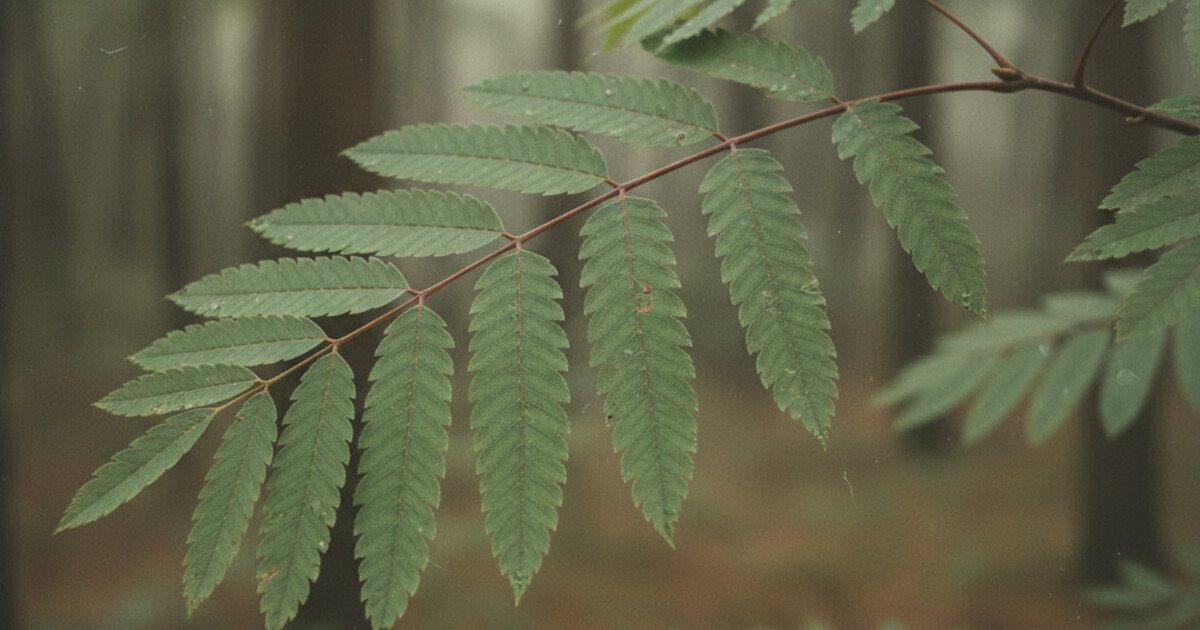
Trees with compound leaves have multiple leaflets attached to a single central stalk, which then connects to the twig. Common North American species include black walnut (15-23 leaflets), white ash (5-9 leaflets, opposite), hickory (5-9), black locust (7-21), honey locust, elderberry, Ohio buckeye, horsechestnut, and Kentucky coffeetree. Pinnate types have leaflets along the stalk; palmate types fan out from one point.
Standing in front of one? Identify it from a photo in seconds — free, no sign-up needed.
What Makes a Leaf Compound
A simple leaf is a single blade attached directly to the twig. A compound leaf is a group of smaller leaflets all attached to one shared stalk (the rachis), which then connects to the twig.
Here’s the fastest test: look for the bud. Buds form only at the base of true leaves, right where the leaf stalk meets the twig. If you’re holding a leaflet and there’s no bud where it attaches, it’s not a leaf on its own. It’s part of a larger compound leaf.
Compound leaves fall into 2 main types:
- Pinnate: Leaflets run in pairs along both sides of the central stalk, like a feather. Most compound-leaf trees in North America are pinnate.
- Palmate: Leaflets all radiate from a single point at the tip of the stalk, like fingers spread from a palm.
Sorting these 2 types first cuts the candidate list roughly in half before you look at anything else.
Compound leaf trees are among the most useful groups to master for field identification in eastern North America. Pinnately compound trees include black walnut, white ash, hickory, pecan, black and honey locust, and elderberry. Each species has a distinct leaflet count and branch arrangement: black walnut typically carries 15-23 leaflets on a 12-to-24-inch stalk, hickory has 5-9 leaflets, and ash has 5-9 in opposite pairs along the branch. Black locust has 7-21 small oval leaflets with smooth edges, while honey locust often has even smaller leaflets in greater numbers. Palmate compound trees, including Ohio buckeye and horsechestnut, have 5-7 leaflets fanning from a single point. Most compound-leaf trees have alternate arrangement on the branch, with each leaf staggered on either side. The 2 major exceptions are white ash and buckeye, both of which are opposite. Pairing leaflet count with branch arrangement narrows an unidentified compound-leaf tree to 1 or 2 candidates in most field situations.
Pinnate Compound Leaf Trees
This is the larger group. Most compound-leaf trees you encounter will be pinnate.
Black Walnut
Black walnut (Juglans nigra) has leaves 12 to 24 inches long with 11 to 23 leaflets arranged in pairs. The leaflets are lance-shaped with toothed edges and a pointed tip. The terminal leaflet at the very tip is often absent or noticeably smaller than the rest, which is a useful clue in fall when some leaflets have already dropped.
Crush a leaflet and you’ll get a sharp, spicy-citrus smell. That scent is one of the best field IDs for this species.
Black walnut grows across the eastern US, often along roadsides and at woodland edges. For a full look at bark, fruit, and regional look-alikes, see our black walnut tree identification guide.
Hickory and Pecan
Hickory trees (Carya species) typically have 5 to 9 leaflets, with the larger leaflets toward the tip. Shagbark hickory carries 5 leaflets; bitternut and pignut hickory usually have 7 to 9.
Pecan (Carya illinoinensis) is a hickory with 9 to 17 slender, slightly curved leaflets. The leaflets are longer and narrower than most other hickory species.
Both genera have alternate branch arrangement. The hickory tree identification guide and pecan tree identification guide break down the species-level differences, including bark and nut characteristics.
White Ash
White ash (Fraxinus americana) carries 5 to 9 leaflets, most commonly 7, with a single terminal leaflet at the tip. The leaflets are oval to lance-shaped with slightly toothed or smooth margins, dark green on top and paler below.
The key thing that separates ash from most other compound-leaf trees: it’s opposite. Each pair of leaves on the branch directly faces the other, rather than alternating. If you’re looking at a compound-leaf tree with opposite arrangement, ash is the first species to check.
White ash turns deep burgundy or yellow in fall. It’s also a species worth knowing because emerald ash borer has killed hundreds of millions of ash trees since arriving in North America in the early 2000s. Knowing what ash looks like helps you spot affected trees. Full details in our ash tree identification guide.
Black Locust
Black locust (Robinia pseudoacacia) has 7 to 21 small, oval, smooth-edged leaflets on a gracefully arching stalk. The leaflets are rounded at the tip, almost blunt, and a soft blue-green color on top.
Young trees have pairs of sharp thorns at each leaf base. The bark on mature trees is deeply furrowed, almost rope-like in texture. In late spring, black locust produces hanging clusters of fragrant white flowers that smell similar to orange blossoms.
Black locust grows fast and spreads aggressively. It’s found across most of North America and can take over open areas quickly.
Honey Locust
Honey locust (Gleditsia triacanthos) can be pinnate or bipinnate (meaning the leaflets themselves have smaller sub-leaflets). In either form, the individual leaflets are small: 0.5 to 1.5 inches long, bright green, and numerous, sometimes 30 or more per leaf.
Older honey locusts often develop large, branching thorns directly on the trunk and main branches. Those thorns can reach 4 to 8 inches long. Combined with the finely divided leaf, they make this species hard to confuse with anything else.
The locust tree identification guide walks through the full comparison between honey locust and black locust side by side.
Elderberry
Common elderberry (Sambucus canadensis) has 5 to 11 leaflets with sharply toothed edges. The leaflets are oval, slightly asymmetrical at the base, and have a faintly unpleasant smell when crushed.
Elderberry grows as a large shrub or small tree, rarely topping 20 feet. It tends to colonize moist ground near streams and damp woodland edges. In early summer it produces flat-topped clusters of tiny white flowers; by late summer those become small, purple-black berries on red stems.
This is one of the easier compound-leaf plants to identify in midsummer, when the fruit clusters are visible from a distance.
Palmate Compound Leaf Trees
Palmate compound leaves are less common, but you’ll recognize them instantly once you’ve seen one.
Ohio Buckeye
Ohio buckeye (Aesculus glabra) has 5 leaflets fanning out from a single point at the top of the stalk. Each leaflet is 3 to 6 inches long, pointed, and finely toothed along the edge. The arrangement looks exactly like a hand with 5 fingers spread wide.
Buckeye is opposite on the branch. It leafs out earlier in spring than almost any other tree, and the leaves turn a vivid orange in early fall, often before September ends.
In late summer the tree drops round, leathery-husked fruits containing the shiny brown buckeye nuts. Our buckeye tree identification guide covers the full species profile, including how to separate Ohio buckeye from yellow buckeye.
Horsechestnut
Horsechestnut (Aesculus hippocastanum) has 7 leaflets and looks structurally similar to Ohio buckeye, just bigger. Trees can reach 60 to 75 feet tall, and the leaflets are larger and coarser than buckeye’s.
It’s a European species planted widely in North American parks and streets. In May it produces tall, candle-like flower clusters that are hard to miss. The fruit is a spiny green husk containing 1 to 2 conkers, which look like buckeyes but are inedible.
Kentucky Coffeetree
Kentucky coffeetree (Gymnocladus dioicus) is the largest compound leaf on this list. Each leaf can reach 3 feet long and is technically bipinnate, meaning the main leaf is divided into sections, and each section has its own leaflets.
The overall look is a very large, feathery leaf with 6 to 14 primary divisions and dozens of small leaflets. The bark is distinctive: gray-brown with narrow, curling, scaly ridges that peel up at the edges.
Kentucky coffeetree is native to the Midwest and upper South. It’s now planted as an ornamental and street tree across North America because of its tolerance for urban conditions.
How Tree Identifier Helps With Compound Leaves
Counting leaflets and checking branch arrangement gets you close, but sometimes a photo is faster.
Tree Identifier’s AI works from photos of leaves, bark, flowers, and whole-tree shape. Snap a photo of the leaf cluster and you’ll get species identification with confidence scores in seconds. The database covers thousands of species, including all 9 on this list and many more regional varieties.
The app runs offline too, so it works on remote hikes where you don’t have cell service. There are 2 free identifications per day with no subscription needed, so it’s easy to try on your next walk. Download Tree Identifier on iOS or Android to put it to use.
Frequently Asked Questions
What trees have compound leaves? Common North American trees with compound leaves include black walnut, white ash, hickory, pecan, black locust, honey locust, elderberry, Ohio buckeye, horsechestnut, and Kentucky coffeetree. Most are pinnate (leaflets in rows); buckeye and horsechestnut are palmate (leaflets fanning from one point).
How do I know if I’m looking at a compound leaf or several simple leaves? Find the bud. Buds only form at the base of true leaves, where the stalk meets the twig. If the structure you’re holding has no bud at its base, it’s a leaflet rather than a full leaf. Compound leaflets also don’t have their own buds or stipules.
Which trees have opposite compound leaves? White ash and buckeye are the main opposite compound-leaf trees in eastern North America. Most other compound-leaf species, including black walnut, hickory, pecan, and locust, are alternate.
What’s the difference between pinnate and palmate compound leaves? Pinnate compound leaves have leaflets running in pairs along a central stalk, like a feather. Palmate compound leaves have leaflets all attached at the same point, fanning outward like fingers. Ohio buckeye and horsechestnut are the most common palmate examples.
Can a tree have both pinnate and bipinnate leaves? Yes. Honey locust often produces both on the same tree. Bipinnate means the leaflets themselves are further divided into smaller sub-leaflets, giving the leaf a very fine, feathery texture.
Conclusion
Compound leaves narrow your identification choices fast. Start with pinnate vs palmate, then check leaflet count and whether the leaves on the branch are opposite or alternate. Those 3 clues together will point you to the right species in most cases.
If you want a faster ID in the field, Tree Identifier can read a compound leaf from a photo and return the species in seconds, with detailed information on characteristics, habitat, and uses.
Elena Torres
Tree Identifier Team