California's Iconic Trees
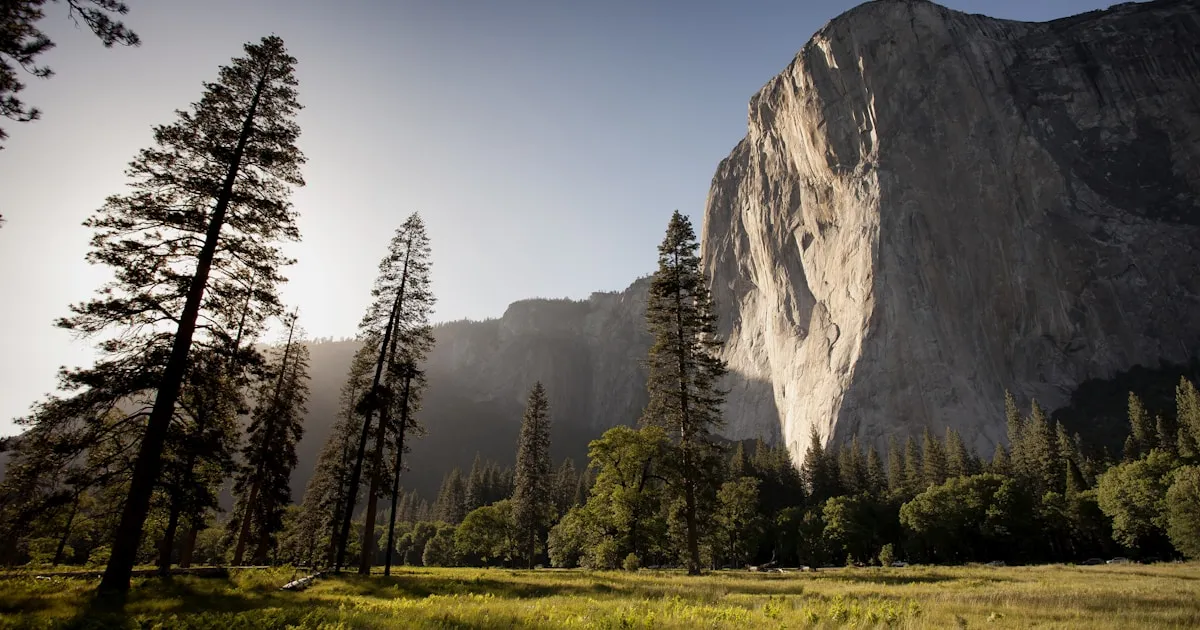
California is a botanical wonderland. The state stretches 800 miles from Oregon to Mexico, ranges from sea level to 14,505 feet, and contains deserts, rainforests, and everything between.
This diversity creates homes for trees found nowhere else on Earth. The world’s tallest trees, largest trees, and oldest trees all grow in California. So do some of the strangest.
The Giants
Coast Redwood (Sequoia sempervirens)
The tallest trees on Earth, growing in the fog belt from southern Oregon to Big Sur.
Height: Regularly exceeds 300 feet. The tallest is 380 feet.
Needles: Flat, dark green, arranged in two rows along twigs. Similar to yew or hemlock foliage.
Bark: Thick (up to 12 inches), fibrous, reddish-brown, fire-resistant.
Cones: Small (about 1 inch), woody, egg-shaped.
Where to see them: Redwood National and State Parks (north coast), Muir Woods National Monument (Marin County), Big Basin Redwoods State Park (Santa Cruz Mountains).
Coast redwoods need fog. They grow only where summer fog rolls in from the Pacific, providing moisture during California’s dry season. The trees can absorb water directly through their needles.
Giant Sequoia (Sequoiadendron giganteum)
Not as tall as coast redwoods, but much more massive. The largest living things on Earth by volume.
Size: The General Sherman tree has a trunk volume of over 52,000 cubic feet. It weighs an estimated 2.7 million pounds.
Height: Typically 250-280 feet, occasionally over 300 feet.
Bark: Cinnamon-red, spongy, up to 3 feet thick on old trees. You can punch it without hurting your hand.
Foliage: Scale-like needles pressed against twigs, giving branches a rope-like appearance. Very different from coast redwood foliage.
Cones: 2-3 inches long, woody, requiring fire to open and release seeds.
Where to see them: Yosemite National Park (Mariposa Grove), Sequoia and Kings Canyon National Parks, Calaveras Big Trees State Park.
Giant sequoias grow only on the western slope of the Sierra Nevada, at elevations between 5,000 and 7,000 feet. Their entire natural range is about 260 miles long and never more than 15 miles wide.
Telling Them Apart
People often confuse coast redwood and giant sequoia. They’re related but distinct:
| Feature | Coast Redwood | Giant Sequoia |
|---|---|---|
| Habitat | Coastal fog zone | Sierra Nevada mountains |
| Height | Taller (to 380 ft) | Shorter (to 310 ft) |
| Trunk width | Narrower | Massively wider |
| Foliage | Flat needles in rows | Scale-like, rope-like |
| Bark | Fibrous, 12 inches | Spongy, up to 36 inches |
| Cone | About 1 inch | 2-3 inches |
The Ancient Ones
Bristlecone Pine (Pinus longaeva)
The oldest known individual trees on Earth, growing at high elevations in California’s White Mountains.
Age: The oldest, named Methuselah, is over 4,850 years old. It germinated when the Egyptian pyramids were new.
Appearance: Twisted, sculpted by wind and ice, with more dead wood than living. Ancient bristlecones look like driftwood sculptures with a few green branches.
Needles: In bundles of five, densely packed, persisting on branches for 30-40 years.
Cones: About 3 inches long with bristle-tipped scales (hence “bristlecone”).
Where to see them: Ancient Bristlecone Pine Forest in the White Mountains (eastern California). Methuselah’s location is secret, but you can hike among trees nearly as old.
Bristlecones survive in conditions that would kill most trees—cold, wind, poor soil, almost no moisture. They grow incredibly slowly, adding a few inches per century. The dense, resinous wood resists decay for thousands of years after death.
Giant Sequoias (again)
While bristlecones are the oldest individuals, giant sequoias are also ancient. The oldest giant sequoias are over 3,000 years old, making them the oldest trees with such massive size.
The Desert Specialists
Joshua Tree (Yucca brevifolia)
Not technically a tree (it’s a giant yucca), but too iconic to skip.
Appearance: Shaggy, branching, alien-looking. Branches twist in unpredictable directions. Dead leaves hang in brown clumps below living crowns.
Height: Typically 15-40 feet.
Leaves: Stiff, dagger-like, clustered at branch ends.
Flowers: Cream-colored, in large clusters, blooming February to April.
Where to see them: Joshua Tree National Park, Mojave National Preserve, scattered across the Mojave Desert.
Joshua trees depend on a single species of moth for pollination. The moth lays eggs in Joshua tree flowers, and the larvae eat some seeds. Neither species can reproduce without the other.
California Fan Palm (Washingtonia filifera)
California’s only native palm, growing in desert oases.
Appearance: Gray trunk topped with a crown of large fan-shaped leaves. Dead leaves often form a thick “skirt” below the living crown.
Height: 30-60 feet, occasionally taller.
Leaves: Large fans (3-6 feet across) on long stems, with thread-like fibers hanging from the margins.
Where to see them: Palm canyons in Anza-Borrego Desert State Park, Joshua Tree National Park (Oasis of Mara), Indian Canyons near Palm Springs.
California fan palms grow where underground water reaches the surface in desert canyons. These oases were essential to Indigenous peoples and early travelers crossing the desert.
Mountain Specialists
Foxtail Pine (Pinus balfouriana)
A close relative of bristlecone pine, found only in California.
Needles: In bundles of five, densely packed along branches like foxtails.
Distribution: Two separate populations—one in the Klamath Mountains of northwest California, another in the southern Sierra Nevada. The populations have been separated for millions of years.
Habitat: High elevations, rocky exposed sites.
Like bristlecones, foxtail pines are very old—some exceed 2,000 years.
Whitebark Pine (Pinus albicaulis)
A high-elevation pine crucial to mountain ecosystems.
Needles: In bundles of five, 1-3 inches long.
Cones: Purple when young, not opening on the tree. Seeds depend on Clark’s nutcrackers (birds) for dispersal—the birds cache seeds, and forgotten caches sprout.
Habitat: Timberline. Often the last tree before alpine tundra.
Threats: White pine blister rust and mountain pine beetles have killed many whitebark pines across their range.
Mountain Hemlock (Tsuga mertensiana)
The hemlock of high Sierra slopes.
Needles: Short, crowded around twigs, bluish-green.
Form: Distinctively drooping branch tips.
Habitat: Subalpine zone, often in snow until July.
Oak Woodlands
California has more oak species than any other state—learning how to identify oak trees is particularly rewarding here given the variety on offer.
Valley Oak (Quercus lobata)
The largest oak in North America.
Size: Can exceed 100 feet tall with spreading crowns 150 feet across.
Leaves: Deeply lobed with rounded lobes.
Bark: Gray-brown, thick, deeply checked.
Habitat: Valley floors and gentle slopes, especially in the Central Valley.
Conservation: Valley oaks don’t regenerate well when grazed by cattle. Many remaining large trees are isolated in agricultural fields, without seedlings to replace them.
Coast Live Oak (Quercus agrifolia)
The evergreen oak of coastal California.
Leaves: Oval, cupped, with spiny margins. Evergreen—persistent year-round.
Form: Often multi-trunked, with broad spreading crowns.
Habitat: Coastal hills and valleys.
Appearance: The gnarled, spreading oaks in stereotypical California pastoral scenes are usually coast live oaks.
Blue Oak (Quercus douglasii)
A drought-tolerant oak of dry foothills.
Leaves: Blue-green, shallowly lobed.
Bark: Light gray, scaly.
Drought strategy: Drops leaves in severe drought, resuming growth when rains return.
Habitat: Hot, dry foothills of the Coast Ranges and Sierra Nevada foothills.
Using the Tree Identifier App
California’s diverse trees offer good identification challenges:
Redwoods: Coast redwood’s flat needles vs. giant sequoia’s scale-like foliage. Location helps—fog coast means coast redwood, Sierra means giant sequoia.
Oaks: Many species with overlapping ranges. Leaf shape, whether evergreen or deciduous, and acorn characteristics all help.
Pines: Needle count is key. Bristlecone and foxtail have five needles; so do sugar pine and western white pine. Cone size and habitat distinguish them.
Yuccas: Joshua tree is distinctive enough that confusion is rare.
Photograph bark, foliage, and cones when available. California’s unique species usually yield confident matches—there’s nothing quite like them anywhere else.
California’s trees tell the story of a state with exceptional range. From foggy coast to scorching desert, from sea level to timberline, each zone has its specialists. Learning them is learning California’s landscape.
Identify a tree from your photo — free
Upload a leaf, bark, or whole-tree photo and get the species in seconds. No signup.
Confidence:
Unlock the full species profile
Free in the app — with unlimited identifications.


AI result for guidance — the app gives full species details and works offline.
Want unlimited identifications?
Get the full species profile, photos and details — free in the app, with unlimited scans.
- Unlimited identifications
- Full species profiles & details
- Works offline, anywhere
- Save and revisit your finds
Rachel Nguyen
Tree Identifier Team