The Tallest Trees on Earth
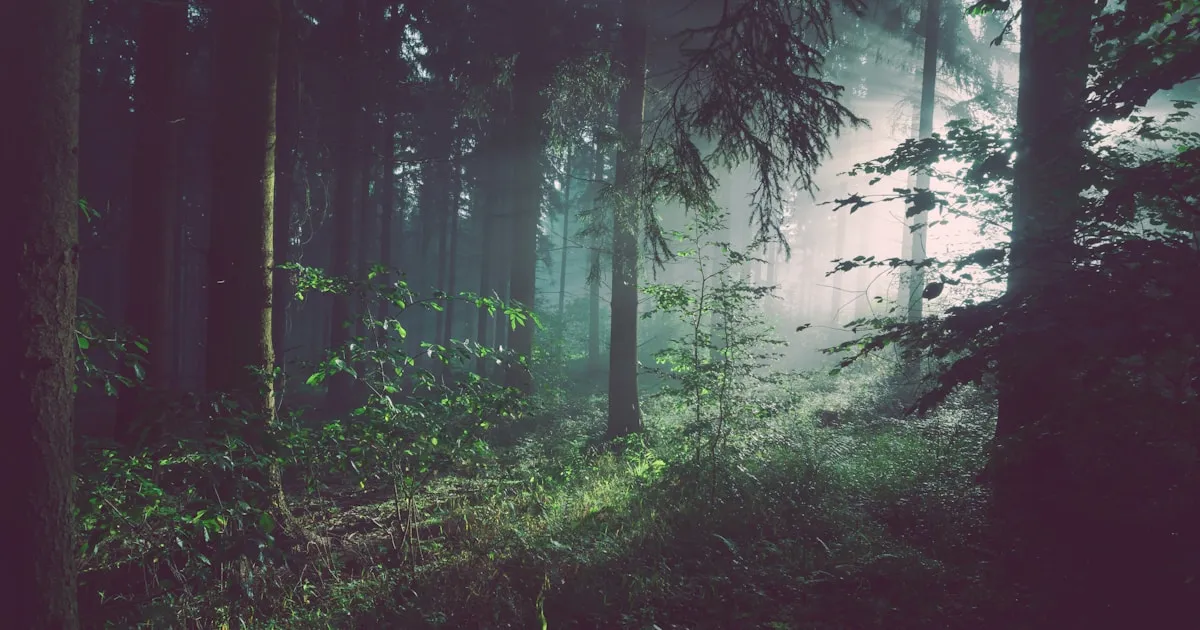
The tallest known tree on Earth stands 380.3 feet—taller than a 35-story building. It’s a coast redwood named Hyperion, growing in a California canyon, and it wasn’t discovered until 2006.
There’s something about tree height that captures human attention. We measure it, record it, compete over it. But height in trees isn’t just a number. It represents a battle against physics, solved through millions of years of evolution.
The Height Champions
Coast Redwood (Sequoia sempervirens)
Coast redwoods hold virtually every height record. They are also among California’s most iconic trees, growing in a fog belt found nowhere else on Earth. The top 20 tallest trees in the world are all coast redwoods.
Current record holder: Hyperion, at 380.3 feet (115.92 meters). Located in Redwood National Park, its exact location is kept secret to prevent damage from visitors.
Second place: Helios, at 374.3 feet, also a coast redwood.
Average height: Most coast redwoods reach 200-300 feet. Trees over 350 feet are exceptional.
Where they grow: A narrow fog belt along the Pacific coast from southern Oregon to central California. They need fog—it provides summer moisture that rainfall doesn’t.
Why they’re tall: Coast redwoods grow fast, live long (over 2,000 years), and thrive in conditions that few other trees tolerate. The fog belt provides year-round moisture and moderate temperatures.
Australian Mountain Ash (Eucalyptus regnans)
The tallest flowering plants in the world and the only trees that seriously compete with redwoods.
Tallest living specimen: Centurion, in Tasmania, at 330.7 feet.
Historical records: Trees measured in the 1800s may have exceeded 400 feet, though measurements were less precise. A tree called the Ferguson Tree was reportedly 435 feet, but that measurement is disputed.
Where they grow: Cool, moist forests of southeastern Australia and Tasmania.
Why they’re notable: Unlike redwoods, mountain ash are flowering plants (angiosperms), not conifers. They’ve achieved similar heights through completely different biology.
Douglas Fir (Pseudotsuga menziesii)
The tallest trees in the Pacific Northwest.
Tallest living specimen: Doerner Fir in Oregon, at 327 feet.
Historical heights: Old-growth Douglas firs commonly exceeded 300 feet before extensive logging.
Where they grow: From British Columbia to northern California, and inland through the Rocky Mountains (though inland trees are shorter).
What makes them tall: Douglas firs grow quickly in the Pacific Northwest’s mild, wet climate. They can add a foot or more of height per year when young.
Sitka Spruce (Picea sitchensis)
The tallest spruce species, growing along the Pacific coast.
Tallest specimen: The Raven Tree in California’s Prairie Creek Redwoods, at 317 feet.
Where they grow: Coastal fog zone from Alaska to northern California. Need constant moisture.
Special features: Sitka spruce has the highest strength-to-weight ratio of any tree, which may help it support extreme height without excessive trunk diameter.
Giant Sequoia (Sequoiadendron giganteum)
Often confused with coast redwoods, but giant sequoias are different—they’re not the tallest, but they’re the most massive.
Tallest specimen: Around 310 feet.
What makes them notable: Giant sequoias are shorter than coast redwoods but much larger in total volume. The oldest trees in the world include giant sequoias, which can live over 3,000 years. The General Sherman tree is the largest tree by volume on Earth.
Where they grow: A limited range on the western slopes of California’s Sierra Nevada, at elevations of 5,000-7,000 feet.
Why Trees Can’t Grow Taller
Height isn’t unlimited. Physics eventually wins.
The Water Problem
Trees move water from roots to leaves through xylem—hollow tubes that conduct water upward. Water in xylem is under tension, pulled up by evaporation from leaves.
At extreme heights, this tension becomes so great that air bubbles can form in the water column (cavitation), breaking the chain. Leaves at the top of very tall trees experience drought stress even when roots have plenty of water.
Coast redwoods solve this partly by absorbing moisture directly through their leaves from fog. This reduces dependence on root-supplied water.
The Physics Limit
Calculations suggest the theoretical maximum height for a tree is around 400-430 feet. Above that, the water delivery system fails regardless of other factors.
Hyperion, at 380 feet, may be approaching this limit. Its growth has slowed significantly. The top of the tree shows signs of moisture stress.
Competition vs. Conditions
Trees grow tall mainly to compete for light. In a forest, the tallest trees get the most sun. But this creates an arms race—each generation grows taller to overtop its neighbors.
Only certain conditions allow this race to continue:
Long growing seasons: More time to add height each year.
Abundant moisture: Tall trees need lots of water.
Mild temperatures: Extreme cold or heat limits height.
Freedom from fire: Tall trees take centuries to grow. Frequent fire resets the competition.
Freedom from wind: Very tall trees in windy areas blow down.
The fog belt of coastal California provides all of these conditions. So do the wet forests of Tasmania. Most of the world doesn’t.
Historical Giants
The trees we see today may not be the tallest that ever lived.
Before European settlement, North America and Australia had forests of untouched old-growth. Many of the largest trees were cut in the 1800s and early 1900s without accurate measurement.
Anecdotal accounts describe coast redwoods over 400 feet. A Douglas fir reportedly reached 415 feet. These numbers can’t be verified, but they’re not implausible—we know trees of these species can get very close to these heights.
What we see now is mostly second-growth. The trees that survived logging were often in remote canyons or on steep slopes where logging wasn’t profitable. Hyperion is a survivor, not necessarily the tallest tree that ever grew.
Where to See Tall Trees
Redwood National and State Parks, California
The best place to see coast redwoods, including many of the world’s tallest trees. The Tall Trees Trail reaches a grove of giants, though Hyperion’s exact location isn’t disclosed.
Humboldt Redwoods State Park, California
Home to the Rockefeller Forest, the largest remaining old-growth redwood forest. Average tree heights here exceed almost anywhere else.
Muir Woods National Monument, California
Accessible from San Francisco. The trees are smaller than those farther north (the southernmost redwoods don’t get as tall), but it’s still a genuine old-growth redwood forest.
Olympic National Park, Washington
Old-growth Sitka spruce and Douglas fir in the Hoh Rain Forest—two of the defining species in common trees of the Pacific Northwest. Not redwood-tall, but impressive temperate rainforest giants.
Tasmania, Australia
Styx Valley and other protected areas contain the tallest mountain ash. More remote than California’s redwoods, but extraordinary forests.
Identifying Tall Trees
Coast Redwood vs. Giant Sequoia
People often confuse these two species. Here’s how to tell them apart:
Bark: Coast redwood bark is fibrous and reddish-brown. Giant sequoia bark is thicker, more spongy, and more cinnamon-colored.
Foliage: Coast redwood has flat, yew-like needles. Giant sequoia has scale-like, awl-shaped needles.
Cones: Coast redwood cones are about an inch long. Giant sequoia cones are 2-3 inches long.
Location: Coast redwoods grow near the coast in fog. Giant sequoias grow inland in the Sierra Nevada mountains at higher elevations. If you’re near the ocean, it’s coast redwood. If you’re in the mountains, it’s giant sequoia.
Measuring Height
How do you measure a 380-foot tree? You can’t climb it with a tape measure—redwoods have no branches for the first 100+ feet, and the wood is too soft for safe climbing.
Modern measurements use laser rangefinders and trigonometry. The measurer stands at a known distance from the tree and measures angles to the base and top. Mathematics does the rest.
Before lasers, measurements were less accurate. Historical height records may be overstated, or they may be real—we’ll never know for certain.
Why Height Matters
Tall trees fascinate us, but they’re also ecologically important.
Tall trees are old trees. Old trees store massive amounts of carbon. A single coast redwood stores more carbon than hundreds of smaller trees.
The crowns of tall trees create unique habitats. Soil accumulates in branch crotches hundreds of feet up. Ferns, huckleberries, and even other trees grow on this “canopy soil.” Scientists have found salamanders living their entire lives in redwood crowns, never descending to ground level.
Height is an outcome of centuries of stability. When you see a 350-foot tree, you’re seeing a place where conditions have remained favorable for 500 or 1,000 years. That’s increasingly rare.
The Tree Identifier app can help distinguish coast redwoods from other conifers. The distinctive bark and flat needle arrangement are good diagnostic features. But identifying these trees is usually easy—when you’re in a redwood forest, you know it. There’s nothing else like it on Earth.
Identify a tree from your photo — free
Upload a leaf, bark, or whole-tree photo and get the species in seconds. No signup.
Confidence:
Unlock the full species profile
Free in the app — with unlimited identifications.


AI result for guidance — the app gives full species details and works offline.
Want unlimited identifications?
Get the full species profile, photos and details — free in the app, with unlimited scans.
- Unlimited identifications
- Full species profiles & details
- Works offline, anywhere
- Save and revisit your finds
Rachel Nguyen
Tree Identifier Team