Hawthorn Tree Identification: 5 Species Field Guide
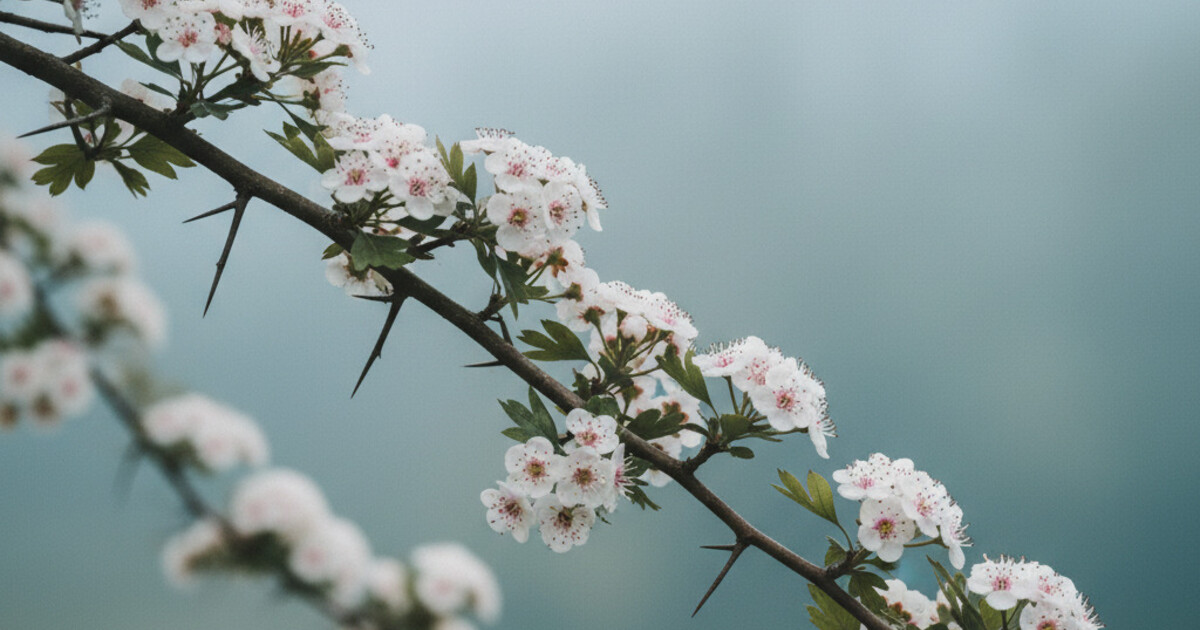
Every spring, hedgerows and forest edges erupt in white flower clusters that most people mistake for wild cherries or crabapples. Look closer and you’ll find inch-long thorns that give away the actual tree: hawthorn. Hawthorn tree identification trips people up because the genus Crataegus includes over 200 species in North America alone, and they’re everywhere: suburban parks, roadsides, creek banks, old pastures. This guide covers the 5 species you’re most likely to encounter, with field marks that work in every season.
Hawthorn trees are identified by sharp woody thorns (1-4 inches long), clusters of 5-petaled white or pink flowers blooming April through June, and small round berries called haws ripening red or orange by fall. Leaves are lobed, similar to a small oak or maple leaf. Most hawthorns stay under 30 feet with dense, twiggy branching.
What Makes a Hawthorn a Hawthorn
Hawthorns belong to the rose family (Rosaceae), which means they’re close relatives of apples, pears, and cherries. That explains a lot about them — the flowers look like apple blossoms, the fruit looks like tiny apples, and in fall the color display rivals ornamental crabapples.
But hawthorns have one defining feature their relatives mostly lack: thorns. These aren’t the flexible prickles on a rose cane. They’re stiff, woody spines growing straight from the branches, sharp enough to puncture leather gloves. On some species they reach 4 inches.
The full set of ID features to look for:
- Thorns: Woody, 1-4 inches, growing from the branches (not the bark)
- Flowers: White (occasionally pink), 5 petals, in flat-topped clusters, April-June
- Fruit (haws): Round, 1/4 to 3/4 inch, red to orange or dark purple, ripening by late summer
- Leaves: Lobed or deeply toothed, 1-4 inches long, turning orange-red in fall
- Size: Typically 15-30 feet tall, often multi-stemmed, wide-spreading crown
Hawthorns thrive in a wide range of conditions: full sun to part shade, wet to dry soil. They’re common along forest edges, old fence lines, roadsides, stream banks, and in parks. Birds plant them constantly by eating the haws and depositing seeds wherever they land.
The biggest challenge with hawthorns is that species hybridize freely. Regional variants blur the lines even botanists argue about. Focus on the genus-level features first. Species ID comes after.
Hawthorns are among the most ecologically valuable small trees in North America. The dense thorny branching gives nesting birds protection from predators, and over 84 species of birds eat the haws from fall through winter. Cedar waxwings, American robins, and hermit thrushes are the most visible visitors. The flowers provide early-season nectar for bees and native pollinators, sometimes weeks before other trees bloom. Because hawthorns often grow along habitat edges, where forest meets field, they serve as critical corridors connecting fragmented woodlands. Older hawthorn trees in hedgerows can support several hundred invertebrate species in their bark, leaves, and soil. This combination of structural complexity, food production, and habitat function makes hawthorns disproportionately important relative to their modest size. More than 200 Crataegus species grow in North America, and many hybridize freely, making species-level identification challenging even for botanists.
5 Common Hawthorn Species
Washington Hawthorn (Crataegus phaenopyrum)
If you see a hawthorn in a park or suburban planting, this is the most likely candidate. It’s the most widely planted hawthorn in North American landscapes, chosen for its showy fall color and reliable winter interest.
Key features:
- Thorns: 1-3 inches, very sharp, numerous
- Leaves: Triangular with 3-5 pointed lobes, resembling a small maple leaf
- Flowers: White, blooming late May to early June, later than most hawthorns
- Haws: Small (about 1/4 inch), bright red, staying on branches through January or later
- Fall color: Orange to scarlet, one of the most vivid of any hawthorn
That late bloom time sets it apart from similar species. If you’re seeing white hawthorn flowers in late May after most spring bloomers have finished, it’s probably Washington hawthorn.
Cockspur Hawthorn (Crataegus crus-galli)
Named for its dramatically long thorns, which can reach 4 inches on mature branches. A well-grown cockspur looks nearly impenetrable.
Key features:
- Thorns: 2-4 inches, often slightly curved, horizontal
- Leaves: Glossy, oval to spatula-shaped, finely toothed with almost no lobes — very different from most hawthorns
- Flowers: White, blooming in May
- Haws: Dull red to greenish-red, about 1/2 inch, persisting through winter
- Bark: Gray-brown, becoming rough and scaly with age
The combination of very long thorns and unlobed, glossy leaves makes cockspur one of the easier hawthorns to identify. The leaves look almost like elongated cherry leaves on a thorny tree.
English Hawthorn (Crataegus monogyna)
Originally from Europe and western Asia, English hawthorn has naturalized across much of North America. It’s common in the Pacific Northwest, Northeast, and Great Lakes region, where it spreads aggressively along roadsides and disturbed areas.
Key features:
- Thorns: Shorter, 1/2 to 1 inch, densely packed
- Leaves: Deeply lobed with narrow sinuses between the lobes, more deeply cut than Washington hawthorn
- Flowers: White or pale pink, heavily fragrant, blooming in May
- Haws: Deep red, containing a single seed (the species name monogyna means “one-seeded”)
- Habitat: Roadsides, hedgerows, forest edges, and disturbed ground
In Britain, English hawthorn is the traditional hedgerow plant, trained into dense livestock barriers for centuries. In North America it’s considered invasive in several states. Birds distribute seeds widely, and seedlings establish quickly in disturbed soil.
Mayhaw (Crataegus aestivalis and related species)
This southeastern native is more famous for its fruit than for its visual appearance. Mayhaw jelly is a Gulf Coast tradition, harvested across Georgia, Mississippi, Louisiana, and eastern Texas in late spring.
Key features:
- Thorns: Short, 1/2 to 1 inch
- Leaves: Small, oval, unlobed or only slightly lobed
- Flowers: White, blooming very early — February to March, often before leaves appear
- Haws: Red to orange, ripening by late April to May, larger than most hawthorn species (up to 3/4 inch)
- Habitat: Bottomlands, swamps, and stream banks, a distinctly wet-soil species
If you’re in the South and find a thorny tree producing red berries in late April along a flood-prone creek bank, mayhaw is the most likely answer. The early bloom and wet-soil preference distinguish it from other southeastern hawthorns.
Downy Hawthorn (Crataegus mollis)
One of the larger hawthorns, native to the central US and Great Plains. The “downy” comes from soft white hairs covering the leaves and young twigs.
Key features:
- Thorns: 1-2 inches
- Leaves: Large for a hawthorn, up to 4 inches wide, shallowly lobed, covered with soft hairs when young
- Flowers: White, large (up to 1 inch across), blooming in April-May
- Haws: Red, about 3/4 inch, softly hairy when young, ripening August-September
- Bark: Gray, breaking into loose scales on older trees
Run a finger across a leaf in early summer. If it feels distinctly fuzzy, you’re probably looking at downy hawthorn. The leaf size and texture separate it from other central-US hawthorns.
How to Identify Hawthorns by Season
Hawthorns give you something to work with year-round.
Spring (April-May): The easiest time. White flower clusters appear before or alongside the emerging leaves. Thorns are clearly visible against bare or leafing branches. Check the leaf shape as it develops, since lobed or unlobed tells you a lot about which species you’re looking at.
Summer (June-August): The thorns and developing haws are your main clues. Leaves are fully open — compare lobe depth and glossiness between species. Small green haws form where flowers were.
Fall (September-November): Haws ripen to red or orange. Combined with orange-red fall foliage on most species, hawthorns are highly visible. Flocks of birds working through the berries are a reliable pointer to the tree.
Winter (December-March): The bare thorny silhouette and persistent haws. Washington hawthorn keeps its red berries through January or later, a bright spot in bare winter landscapes. The dense, zigzag branching pattern is distinctive even without leaves.
Hawthorn vs. Similar Trees
Hawthorn vs. Crabapple: Both bloom with similar flowers in spring. The difference: crabapples have no thorns. If the tree has thorns plus apple-like flowers, it’s a hawthorn. Crabapple leaves are also oval and unlobed; hawthorn leaves are lobed. See: Crabapple Tree Identification
Hawthorn vs. Cherry: Cherry trees bloom in white or pink but have no thorns. Cherry bark has distinctive horizontal lines (lenticels) that look like dashes. Cherries don’t produce haws. See: Cherry Tree Identification
Hawthorn vs. Pyracantha (Firethorn): Very similar — both have thorns and clusters of red berries. Pyracantha is typically an evergreen shrub, not a tree, and its berries are smaller and more numerous. Hawthorn fruit has a clear apple-like structure; pyracantha fruit is denser and more berry-like.
Hawthorn vs. Honey Locust: Both are thorny, but honey locust thorns grow in branching clusters from the trunk and main branches, often 6-8 inches long. Honey locust has compound leaves with many small leaflets. No similarity in fruit or flowers. See: Locust Tree Identification
How Tree Identifier Helps with Hawthorns
Hawthorns are genuinely hard to identify to species level. The genus hybridizes freely, and regional variations blur the lines even for botanists. What looks like a pure Washington hawthorn in your yard may carry genes from two or three other species.
The Tree Identifier app handles this well. Photograph the leaves, flowers, haws, or bark — it processes all of those features separately and returns an identification with a confidence score. The species database covers native and introduced hawthorns across North America, including the less common regional species that field guides sometimes skip.
The app also works offline, which matters on hikes and forest edges where cell service is unreliable. With 2 free identifications per day, you can check any uncertain tree without a subscription.
Download Tree Identifier on iOS or Android at treeidentifier.app and start identifying the hawthorns in your neighborhood this spring.
Frequently Asked Questions
How do I tell a hawthorn from a crabapple? Look for thorns. Crabapples don’t have them. Both bloom white or pink in spring and produce small round fruits, but hawthorns have sharp woody thorns on their branches. Hawthorn leaves are also lobed, while crabapple leaves are oval and unlobed.
Are hawthorn berries (haws) safe to eat? Most haws are edible but not especially tasty raw — they’re mealy and mildly sweet. They’re commonly used for jelly, wine, and herbal preparations in traditional medicine. The seeds contain compounds similar to apple seeds; avoid eating large quantities of them. Confirm species before consuming any wild fruit.
Do all hawthorn trees have thorns? Almost all wild hawthorns do. Thornless cultivars have been bred for landscaping, but you’re unlikely to encounter them outside of intentional plantings. In the wild, thorns are a reliable ID feature — if a tree matches hawthorn in every other way but has no thorns, it may be a cultivated variety or a different genus.
When do hawthorns bloom? Most North American hawthorns bloom April through June. Mayhaw blooms earliest, sometimes February to March in the South. Washington hawthorn blooms latest, typically late May to early June. If you see white hawthorn-type flowers after most spring trees have finished, Washington hawthorn is a strong candidate.
How tall do hawthorn trees get? Most hawthorns reach 15-30 feet at maturity, often as wide as they are tall. Downy hawthorn can push toward 35 feet. English hawthorn, when grown as a single-stemmed tree, sometimes reaches 40 feet under ideal conditions. Most landscape specimens stay in the 15-25 foot range.
Hawthorns are one of those trees that blend into the background until you learn what to look for. Once you’ve spotted the thorns, the white spring flowers, and the red fall berries together, you’ll start seeing them everywhere: hedgerows, creek banks, old farm fields, park edges. They’ve been here all along.
If you want a faster ID next time you’re in the field, Tree Identifier can identify hawthorn species from a single photo of the leaves, flowers, or bark — and it works without cell service. Start with 2 free identifications per day at treeidentifier.app.
Identify a tree from your photo — free
Upload a leaf, bark, or whole-tree photo and get the species in seconds. No signup.
Confidence:
Unlock the full species profile
Free in the app — with unlimited identifications.


AI result for guidance — the app gives full species details and works offline.
Want unlimited identifications?
Get the full species profile, photos and details — free in the app, with unlimited scans.
- Unlimited identifications
- Full species profiles & details
- Works offline, anywhere
- Save and revisit your finds
Elena Torres
Tree Identifier Team