Trees With Opposite Leaves: 8 Species to Know
You’re standing in the woods, leaf in hand, trying to figure out what tree it came from. You’ve already looked at the shape and the size. Now here’s a question most beginners skip entirely: do these leaves grow in opposite pairs, or do they alternate along the branch?
That one detail cuts your list of suspects in half. Most North American trees have alternate leaf arrangement. Only about 10-15% have opposite leaves. Knowing which trees fall into that group is one of the fastest shortcuts in tree identification. Learning to spot trees with opposite leaves takes about 30 seconds in the field, and it’ll save you from chasing the wrong species every time.
Trees with opposite leaves grow their leaves in matching pairs directly across from each other on the stem. Common examples include maples, ash, dogwood, horse chestnut, and buckeye. The MAD Cap Horse mnemonic (Maple, Ash, Dogwood, Caprifoliaceae, Horse chestnut) covers the most common opposite-leaved tree families in North America, making it easy to remember which trees to check first.
What Does Opposite Leaf Arrangement Mean?
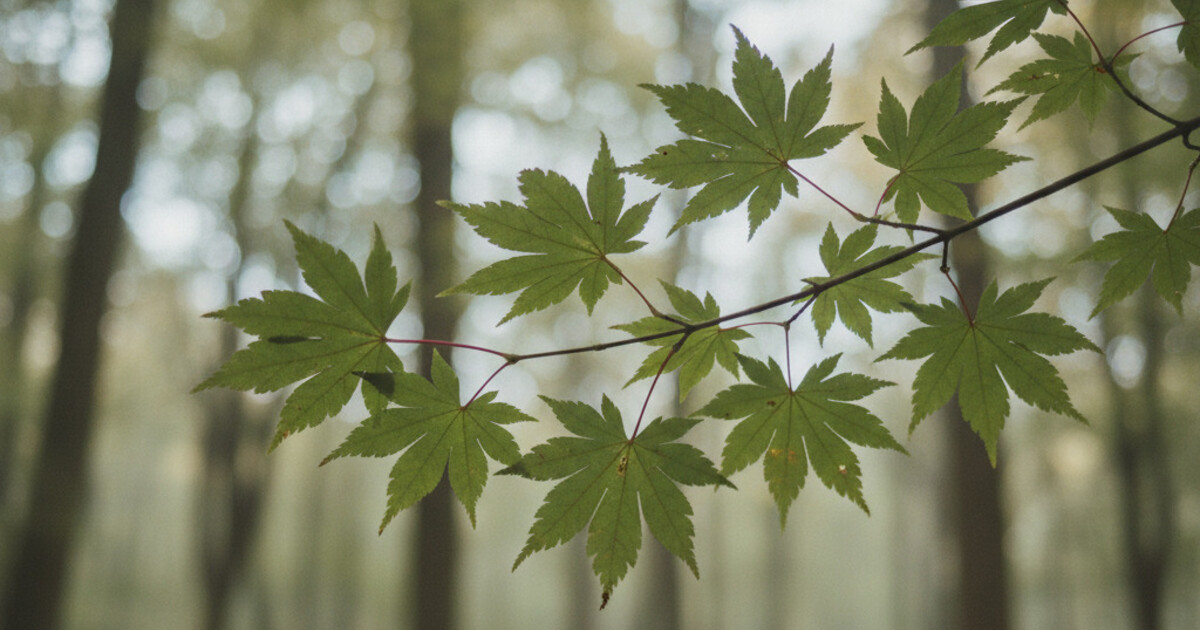
Trees fall into two main groups based on how their leaves attach to branches. In alternate arrangement, leaves stagger along the stem one at a time. In opposite arrangement, two leaves grow from the same point, mirroring each other across the branch.
Spotting this doesn’t require a field guide. Look at a twig and trace where the leaves attach. If they come in pairs (one on each side at the same level), you’re looking at an opposite-leaved tree. If they zigzag up the stem, one leaf at a time, it’s alternate.
Leaf arrangement is one of the most reliable features for narrowing down a tree’s identity. Roughly 85-90% of North American hardwood trees have alternate leaf arrangement, where leaves attach in a staggered, single-file pattern along the stem. The remaining 10-15% have opposite leaves, with pairs growing directly across from each other at each node. A smaller group has whorled arrangement, with 3 or more leaves radiating from a single point. Because so few trees have opposite leaves, confirming that pattern rules out the vast majority of species immediately. The practical field test is simple: pick a living twig and look at where the leaves emerge. If you see matching pairs at each node, check for opposite-leaved families. The most common ones in North America are maples, ashes, dogwoods, horse chestnuts, buckeyes, and the elderberry family. Recognizing this trait before examining leaf shape or bark color saves time and reduces false identifications significantly.
There’s also a winter bonus. After leaves drop, the opposite arrangement shows up in the paired leaf scars left on bare twigs. You can confirm opposite arrangement year-round without needing a single leaf.
8 Common Trees With Opposite Leaves
These are the trees you’re most likely to encounter in North American forests, yards, and parks. All have opposite leaf arrangement.
1. Sugar Maple (Acer saccharum)
The iconic fall-color tree. Sugar maple leaves are palmate with 5 lobes and V-shaped sinuses between them. In spring and summer, the opposite arrangement is easy to confirm by looking at the paired leaf stems along any twig.
Sugar maple is the source of maple syrup and turns blazing orange-red in fall. It grows throughout the eastern US and Canada, often in mixed hardwood forests. See the full guide to maple tree identification for distinguishing sugar from red, silver, and other species.
2. Red Maple (Acer rubrum)
One of the most common trees in eastern North America. Its leaves are smaller than sugar maple, with 3-5 shallower lobes and jagged teeth along the edges. The sinuses between lobes are U-shaped rather than V-shaped.
Red maple blooms before most trees leaf out. The earliest red haze on bare branches in late February or March is almost always red maple. It grows in a huge range of conditions, from dry ridges to swampy bottomlands.
3. Silver Maple (Acer saccharinum)
Silver maple’s deeply cut leaves, silvery-white on the underside, make it easy to pick out from below when the wind ruffles the branches. The sinuses between lobes are much deeper than on sugar or red maple, giving the leaf a more jagged, almost star-like outline.
It’s one of the fastest-growing native maples and a common street tree, though its brittle branches make it less popular in newer landscaping.
4. White Ash (Fraxinus americana)
Ash trees have compound leaves: 5 to 9 leaflets per stem, arranged opposite. That combination is unusual. Most compound-leaved trees (walnut, hickory, locust) are alternate. Finding compound leaves in opposite pairs points almost directly to ash or its relatives.
White ash has slightly paddle-shaped leaflets that are lighter green on the underside. It’s been heavily impacted by the emerald ash borer, so many large specimens in eastern forests are dead or dying. See the ash tree identification guide for distinguishing white, green, and black ash.
5. Flowering Dogwood (Cornus florida)
Dogwood leaves are simple and oval, with a distinctive feature: the veins curve along the leaf edge, arching toward the tip rather than running straight out to the margin. If you gently tear a dogwood leaf in half and pull the two pieces apart slowly, fine white threads stretch between them from the vascular tissue.
The opposite arrangement is clear on any healthy stem. Dogwood is a small understory tree, rarely topping 30 feet. Its spring flowers are actually large white bracts surrounding tiny true flowers. See the full dogwood tree identification guide for bark, flower, and fruit details.
6. Buckeye and Horse Chestnut (Aesculus spp.)
These close relatives both produce palmate compound leaves: 5 to 7 leaflets fanning out from a central stalk, arranged opposite on the branch. Ohio buckeye and yellow buckeye are native to North America. Horse chestnut was introduced from Europe and is common in parks and older neighborhoods.
The nut inside the spiny green husk is the giveaway. Buckeyes produce smooth, brown, slightly flattened seeds with a pale scar on one side (the “buckeye”). Horse chestnut seeds are similar but rounder. Both are mildly toxic if eaten.
7. Common Elder (Sambucus nigra)
Elder is a shrubby tree or large shrub with compound leaves arranged opposite. At a quick glance it can resemble ash, but the stems are different: elder stems are pithy inside and break easily, where ash stems are solid wood. Elder leaflets are also more sharply and evenly toothed.
Elder produces flat-topped clusters of white flowers in early summer, followed by dark purple-black berries that attract birds in fall.
8. Boxelder (Acer negundo)
Boxelder is technically a maple, but its leaves look nothing like the classic maple leaf shape. It has compound leaves with 3 to 5 leaflets, arranged opposite. Many people don’t recognize it as a maple until they spot that signature opposite arrangement and the winged samaras (helicopter seeds) it produces.
It grows fast along streams and disturbed areas and is often considered weedy. But it’s a maple, and a useful reminder that opposite compound leaves aren’t always ash.
The MAD Cap Horse Trick
Arborists and naturalists use a mnemonic to remember which tree families have opposite leaves: MAD Cap Horse.
- M: Maple (Sapindaceae)
- A: Ash (Oleaceae)
- D: Dogwood (Cornaceae)
- Cap: Caprifoliaceae (the honeysuckle family: viburnum, elder)
- Horse: Horse chestnut and buckeye (Sapindaceae)
If a tree doesn’t fit one of these families, it’s probably alternate-leaved. The mnemonic handles about 95% of opposite-leaved trees you’ll run into in North America.
For a deeper look at how leaf shape narrows identification beyond arrangement, the tree identification by leaf shape guide covers lobed, compound, and simple leaves in detail.
Telling Opposite-Leaved Species Apart in the Field
Once you’ve confirmed opposite arrangement, a few quick checks narrow it down further.
Leaf type: Simple or compound? Compound opposite leaves point to ash, elder, buckeye, or boxelder. Simple opposite leaves point to maple or dogwood.
Leaf shape: Maples have their distinctive lobed outline. Dogwood leaves are oval with curving veins. Ash and elder leaflets are lance-shaped with toothed edges.
Bark: Young red maple bark is smooth and gray. Ash bark develops a diamond-ridged pattern on mature trees. Dogwood bark breaks into small, blocky squares. Elder bark is corky and furrowed.
Fruit: Maples produce winged samaras in pairs. Ash has single-winged samaras in clusters. Dogwood makes bright red drupes in fall. Buckeye produces a spiny green husk with a shiny brown nut inside. For more on how seeds help with identification, see the trees with compound leaves guide for cross-referencing species.
Size: Dogwood and elder stay small (under 30 feet). Maples, ash, and horse chestnut can top 80-100 feet at maturity.
How Tree Identifier Helps
You can photograph a twig with its paired leaves and get an instant species match with Tree Identifier. The app works from leaves, bark, flowers, and fruit, so even if you’re unsure which feature to photograph first, you can try a few different shots.
It works offline too. If you’re deep in a forest without cell service, just download the species data before you head out. Results come back in seconds, with confidence scores and detailed species information for each match. For tips on getting the clearest photos, see how to identify a tree by photo.
Frequently Asked Questions
Are most trees opposite or alternate-leaved? Most trees are alternate-leaved. Only about 10-15% of North American hardwood species have opposite leaf arrangement. That makes opposite leaves a useful shortcut: if you confirm opposite arrangement, you’ve already ruled out the vast majority of species.
How do I check leaf arrangement in winter when there are no leaves? Look at the leaf scars on bare twigs. These small marks show where leaves attached before they dropped. On opposite-leaved trees, scars appear in matching pairs at each node. On alternate-leaved trees, scars stagger up the twig one at a time.
Is a whorled leaf arrangement the same as opposite? No. Whorled means 3 or more leaves grow from the same node, radiating outward. Opposite means exactly 2. Catalpa is one common tree that can have whorled leaves. It’s worth checking both possibilities if you see leaves grouped at nodes.
Why does boxelder look so different from other maples? Boxelder (Acer negundo) is a maple by genus, but it evolved compound leaves, something unusual in the maple family. Its opposite arrangement and paired samaras reveal its maple identity. The compound leaves are thought to be an adaptation that helps it thrive in disturbed, often-flooded sites along rivers.
Can weather or stress change a tree’s leaf arrangement? True leaf arrangement is genetic and consistent. What sometimes looks like irregular arrangement is usually just branches growing close together or leaves overlapping. Check several separate twigs on different parts of the crown for a reliable read.
Putting It Together
Trees with opposite leaves are the minority, and that’s exactly what makes them useful. Once you confirm opposite arrangement on a twig, you’ve carved down your choices to a handful of families. Work through MAD Cap Horse, check whether the leaves are simple or compound, and you’ll have a solid ID in most cases.
If you want to skip the guesswork, Tree Identifier can match any leaf photo to a species in seconds. It covers all the maples, ashes, dogwoods, and buckeyes in this guide, plus thousands more species. Download it free on iOS or Android and start with 2 identifications per day at no cost.
Elena Torres
Tree Identifier Team