Trees With Purple Flowers: 10 Species Identified
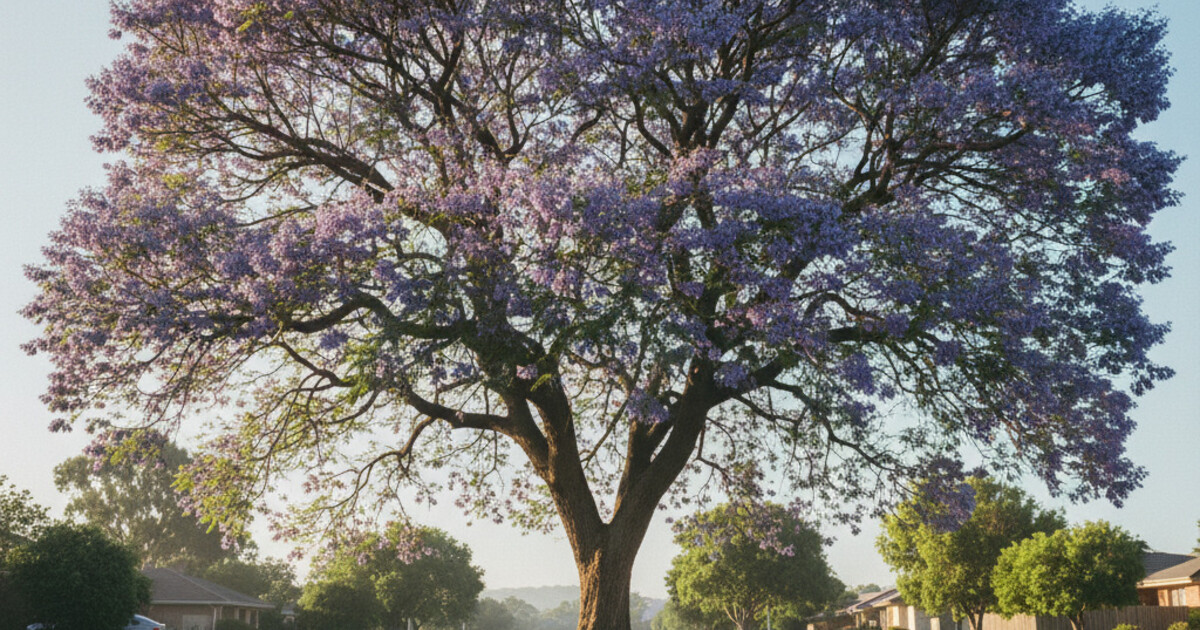
You spot a tree from across the street, its branches draped in purple. You can’t name it, but you want to. Purple-flowering trees are some of the most eye-catching in North America, and there are about a dozen species you’ll commonly encounter.
The catch: they bloom at very different times of year, in very different climates. A purple tree in April is almost certainly not the same species as a purple tree in July. This guide covers 10 trees with purple flowers, organized by when they bloom.
Common trees with purple flowers in North America include eastern redbud, princess tree, wisteria, lilac, and jacaranda. Bloom time is the most reliable clue for ID: redbud and princess tree peak in March and April, lilac and wisteria in May, while jacaranda and chaste tree carry color through summer.
How to Tell Purple-Flowering Trees Apart
Bloom time cuts the list before you look at anything else. But a few other clues help when timing overlaps.
Leaf shape: Compound leaves with many small leaflets (wisteria, purple robe locust, jacaranda) versus simple heart-shaped leaves (redbud, princess tree) versus simple narrow leaves (chaste tree, desert willow, lilac).
Flower structure: Pea-shaped flowers in hanging clusters point to the legume family: redbud, wisteria, purple robe locust. Tubular, trumpet-like blooms indicate princess tree or desert willow. Tight, dense clusters suggest lilac or chaste tree. Crinkled petals in upright panicles are crape myrtle. Smoke tree is different again: its flowers are tiny, and what looks purple is actually the feathery stalks that develop after flowering.
Climate zone: Jacaranda grows in USDA zones 9-11 (Florida, Southern California, Texas Gulf Coast). If you see a large purple-canopied tree in those zones in June, it’s almost certainly jacaranda. Desert willow is a Southwest native, zones 7-11.
Identifying a purple-flowering tree reliably means checking all 3 clues together: when it blooms, what the leaves look like, and how the flowers are arranged. Bloom timing is the single most useful starting point. Eastern redbud (Cercis canadensis) flowers in March and April, often directly from the branches and trunk before any leaves appear. Princess tree (Paulownia tomentosa) follows in April with large violet trumpet clusters. Wisteria and lilac peak in May. Jacaranda dominates warm climates from June to August. Leaf shape confirms the ID: redbud and princess tree both have large heart-shaped leaves, while wisteria and locust have compound pinnate leaves with multiple leaflets. Flower shape separates the rest: pea-family flowers (redbud, wisteria, locust) have a distinctive 2-lipped “banner and keel” structure. Tubular flowers (princess tree, desert willow) flare open at the tip like foxgloves. Lilac and chaste tree produce dense, upright spikes of tiny 4-petaled flowers. Using all 3 clues together, most purple-flowering trees resolve to 1 or 2 candidates within a few seconds.
Early Spring: Purple Flowers on Bare Branches (March–April)
Two trees commonly bloom purple in early spring, before their leaves fully open.
Eastern Redbud (Cercis canadensis)
Redbud is the most widely distributed purple-flowering tree in the eastern US. It blooms in March and April, covering the bare branches and sometimes the trunk itself with small magenta-purple flowers. The flowers look like tiny butterflies and appear before any leaves.
After the flowers drop, heart-shaped leaves emerge, 3 to 5 inches wide. The tree typically grows 20 to 30 feet tall and does well in zones 4 to 9.
For a full species breakdown, see our redbud tree identification guide.
Princess Tree / Empress Tree (Paulownia tomentosa)
Princess tree opens in April with large, showy clusters of violet, foxglove-shaped flowers. The blooms appear before the leaves, which can make the tree look dramatic.
The leaves that follow are enormous: heart-shaped and up to 2 feet wide on young trees. The seed capsules persist through winter as distinctive brown oval pods. It grows 40 to 60 feet tall, hardy in zones 5 to 9.
One thing to know upfront: princess tree is invasive across much of the eastern US. It spreads aggressively from seed and can crowd out native vegetation. Check your local regulations before planting.
Late Spring: Purple Blooms With Emerging Foliage (April–May)
Wisteria (Wisteria spp.)
Wisteria is technically a vine, but it’s often trained on a single trunk into a small tree form. The hanging flower clusters range from 8 to 24 inches long and are intensely fragrant.
Two Asian species (W. sinensis, W. floribunda) are widely planted but invasive in parts of the eastern US. American wisteria (W. frutescens) is native to the Southeast and less aggressive.
ID clues: twisted, rope-like trunk when mature; compound leaves with 13 to 19 leaflets; Chinese wisteria flowers open all at once, while Japanese wisteria opens sequentially from base to tip.
Lilac (Syringa vulgaris)
Lilac is the most familiar purple-flowering plant in North American gardens, growing from a large shrub to a small multi-stemmed tree around 15 to 20 feet tall. The fragrance is its most distinctive trait.
Flowers appear in May in dense, upright panicles, ranging from white to deep purple depending on the cultivar. Leaves are simple and oval, 2 to 4 inches long. Hardy in zones 3 to 7; it needs cold winters to set buds, which is why it doesn’t thrive in the South.
Purple Robe Locust (Robinia × ambigua ‘Purple Robe’)
A cultivar of black locust, Purple Robe produces hanging clusters of rose-purple pea flowers in May and June. From a distance it resembles wisteria, but the tree grows taller (30 to 40 feet) and has a straighter form.
ID clues: pinnate compound leaves similar to black locust; pairs of short thorns at each leaf node; fragrant flowers in drooping clusters 4 to 5 inches long. Hardy in zones 4 to 8.
Summer: Purple-Flowering Trees (June–September)
Jacaranda (Jacaranda mimosifolia)
Jacaranda is the most dramatic purple-flowering tree in warm climates. From May to July (sometimes with a second flush in fall), the entire canopy turns blue-purple with 2-inch trumpet-shaped blooms arranged in 8-inch clusters. Fallen flowers carpet the ground beneath.
ID clues: fern-like bipinnate leaves with many tiny leaflets; grows 25 to 50 feet; hardy in zones 9 to 11. Widely planted in Southern California, Florida, and coastal Texas.
Chaste Tree (Vitex agnus-castus)
Chaste tree produces upright spikes of small lavender-purple flowers from June through September. It grows 10 to 20 feet tall and is common in gardens across the Southeast and mid-Atlantic.
ID clues: palmate compound leaves with 5 to 7 lance-shaped leaflets that smell strongly spicy when crushed; silvery-green stems; gray-brown bark. Hardy in zones 6 to 9.
Crape Myrtle — Purple Cultivars (Lagerstroemia spp.)
Most crape myrtles come in pink or red, but purple cultivars exist. Look for ‘Delta Jazz’, ‘Purple Magic’, or ‘Centennial Spirit’ for true purple tones.
ID clues: smooth, peeling bark in patches of tan, gray, and cinnamon — one of the most distinctive bark textures of any landscape tree; crinkled petals in dense rounded clusters; red or orange fall color. Hardy in zones 6 to 10, blooming June through September.
Desert Willow (Chilopsis linearis)
Desert willow is native to the American Southwest and blooms from May through September with tubular flowers in shades from white to deep purple-pink. Individual flowers resemble foxgloves or orchids.
ID clues: long, narrow leaves up to 12 inches (resembles willow foliage); twisting, shaggy-barked trunk; long thin seed pods that persist into fall. Hardy in zones 7 to 11.
Smoke Tree (Cotinus coggygria)
Smoke tree earns its name from the feathery flower stalks (pedicels) that develop after flowering, creating a smoky cloud effect from June through August. The actual flowers are tiny; the purple drama comes from the thread-like stalks.
ID clues: round or oval leaves; ‘Royal Purple’ and ‘Grace’ are popular purple-foliage cultivars; grows 10 to 15 feet; excellent fall color. Hardy in zones 4 to 8.
How Tree Identifier Helps
Spotted a purple-flowering tree you can’t place? Tree Identifier can ID it from a single photo.
Photograph the flowers, a leaf, or a section of bark, then submit it in the app. The AI identifies the species in seconds and shows you the scientific name, native range, and key characteristics. It works from multiple input types: leaves, bark, flowers, and whole tree shape. So even after the flowers finish for the season, a photo of the leaves still gets you an answer.
The app offers 2 free identifications per day, and the offline mode works on hikes without cell service. Download it on iOS or Android at treeidentifier.app.
Frequently Asked Questions
What is the most common tree with purple flowers in spring? Eastern redbud is the most common purple-flowering native tree in the eastern US. It blooms in March and April with magenta-purple flowers appearing before the leaves open. Wisteria (trained as a tree) and lilac are also widespread spring bloomers. In warm climates like Florida and Southern California, jacaranda is dominant from May through July.
What is the large tree covered in purple flowers in Southern California? Almost certainly jacaranda. It’s widely planted across Southern California, Florida, and the Gulf Coast. Jacaranda blooms May through July with blue-purple canopy coverage, dropping flower carpets on the ground. It grows 25 to 50 feet tall with fern-like compound leaves and is hardy in zones 9 to 11.
What tree has purple flowers that smell like grapes? Wisteria. It produces long, hanging clusters of purple-lavender flowers in April and May with a sweet, grape-like fragrance. In tree form it grows on a single trained trunk, though it’s naturally a climbing vine. American wisteria (Wisteria frutescens) is a native, less invasive alternative to the Asian species.
Is redbud purple or pink? Redbud flowers sit between pink and purple: officially described as magenta. They read differently depending on light, cultivar, and how far along the bloom is. ‘Forest Pansy’ and ‘Covey’ tend toward deeper purple tones; standard eastern redbud leans pink-purple in most light.
What small tree has purple flower spikes in summer? Chaste tree (Vitex agnus-castus) produces upright purple spikes from June through September, reaching 10 to 20 feet tall. It’s common in gardens across the Southeast and mid-Atlantic. The leaves have a strong spicy smell when crushed, which helps confirm the ID.
Conclusion
Bloom time is the fastest separator. Purple flowers in March or April on bare branches point to redbud or princess tree. May brings lilac, wisteria, and purple robe locust. Jacaranda, chaste tree, crape myrtle, and desert willow carry color through summer.
Pair bloom timing with leaf shape and flower structure, and most of these species sort out quickly. For a broader look at flowering trees by color, see our guides on trees with pink flowers and trees with yellow flowers.
If you’d rather get a photo ID in seconds, Tree Identifier works from a single shot of a leaf, flower, or bark. Download it at treeidentifier.app.
Identify a tree from your photo — free
Upload a leaf, bark, or whole-tree photo and get the species in seconds. No signup.
Confidence:
Unlock the full species profile
Free in the app — with unlimited identifications.


AI result for guidance — the app gives full species details and works offline.
Want unlimited identifications?
Get the full species profile, photos and details — free in the app, with unlimited scans.
- Unlimited identifications
- Full species profiles & details
- Works offline, anywhere
- Save and revisit your finds
Elena Torres
Tree Identifier Team