Trees With Spiky Seed Balls: 7 Species Identified
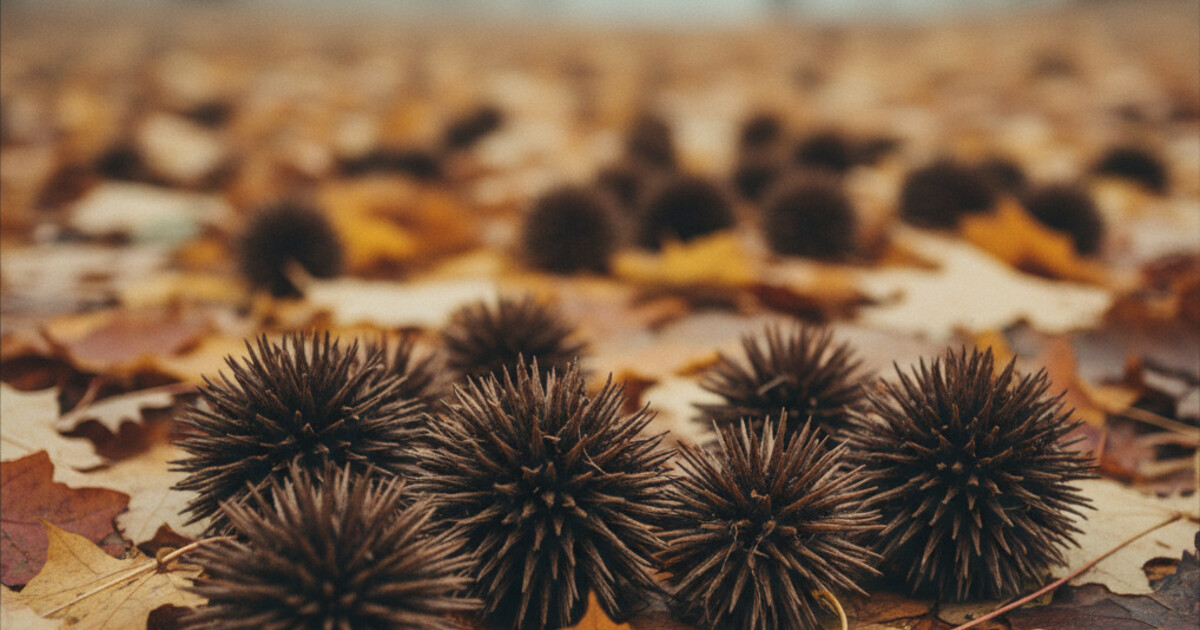
You’re walking through your backyard, and you step on something that punches right through your shoe. You look down. One of those brown spiky balls again, the kind that seem engineered to hurt.
Most people don’t search for “seed capsules” or “infructescences.” They type what they see: balls with spikes from trees, spiky balls from trees, or “the tree that drops spiky balls all over my lawn.” Whatever you call them, they’re more common than you’d think, and they belong to a surprisingly varied group of species. Some produce round, armored pods that roll across your lawn every fall. Others have fringed acorn caps or thick spiny husks. Knowing which tree you’re dealing with helps whether you want to ID it, plan a landscape, or just figure out why your yard turns into a minefield every October.
The most common trees with spiky seed balls are sweetgum, chestnut, horse chestnut, Ohio buckeye, bur oak, osage orange, and American sycamore. Sweetgum produces the most recognizable ball: a round, star-studded pod about 1.5 inches across with stiff woody spines. Chestnut burrs are the spikiest, with hundreds of needle-thin points covering each husk.
Standing in front of one? Identify it from a photo in seconds — free, no sign-up needed.
Which Trees Drop Spiky Balls?
If you’re trying to name the tree that dropped spiky balls in your yard, size and texture narrow it down fast:
- Small brown balls, 1-1.5 inches, hard woody spines: sweetgum. The classic backyard offender.
- Larger balls, 2-3 inches, hundreds of needle-thin spikes, painful to touch: chestnut burrs.
- Green husks with a few short blunt bumps: horse chestnut or Ohio buckeye.
- Bristly little “balls” that are really acorns with a shaggy fringed cap: bur oak.
- Round 1-inch balls on long stems that crumble into fluff: sycamore.
- Big green wrinkled balls, 4-5 inches, not actually spiky: osage orange.
The rest of this guide walks through each one so you can match the balls with spikes from your tree to the right species. If you also find pods rather than round balls, our guide to trees with long seed pods covers those.
What Makes a Spiky Seed Ball?
Trees don’t grow these structures for decoration. Every spine, hook, and husk protects the seed while it develops, and in many cases helps it travel.
Sweetgum balls act as containers, holding dozens of seeds until they dry out and the holes open to release them. Chestnut burrs are body armor for the nut inside, discouraging animals from eating the seed before it falls and germinates. Bur oak acorns use their fringed caps to catch on animal fur, hitching a ride somewhere new.
The spines serve another purpose: they make the seed ball heavy and irregular, so it rolls further from the parent tree when it falls. A smooth ball stops where it lands. A spiky one tumbles and catches.
Several tree families have independently evolved spiny seed pods as a survival strategy. In sweetgum trees (Liquidambar styraciflua), the round capsule starts green in summer, hanging on the tree through fall, then turns brown and woody as the seeds mature. Each ball holds up to 50 two-winged seeds that scatter on the wind when the holes open. Horse chestnut (Aesculus hippocastanum) produces a thick green husk studded with 4-6 blunt spines, cracking open in October to reveal 1-3 shiny brown seeds inside. Chestnut trees (Castanea species) take this further: each burr carries 200-300 needle-like spines and splits into 4 sections. These burrs can stay sharp for weeks after falling. Bur oak (Quercus macrocarpa) creates a fringed acorn cap covering more than half the nut, the most distinctive of any oak in North America, recognizable from 20 feet away once you know what to look for.
Sweetgum: The Most Common Spiky Ball Tree
Sweetgum (Liquidambar styraciflua) is the species most people are picturing when they think “spiky ball.” The balls, called gumballs or seed pods, drop from the tree in enormous quantities from October through spring. One mature sweetgum can shed hundreds of them in a single season.
You can identify sweetgum by its star-shaped leaves with 5-7 pointed lobes, similar to a maple but with a leathery texture and sweet smell when crushed. The bark is grayish-brown with interlocking corky ridges. Branches sometimes develop distinctive corky wings along their sides.
The balls start green in summer and turn brown by late fall. At that point they’re fully woody and sharp. Each spine runs 5-7mm long. Step on one barefoot and you won’t forget it.
For a full breakdown of how to distinguish sweetgum from maples and other look-alikes, see our sweetgum tree identification guide.
Chestnut Trees: The Spikiest Husks in the Forest
American chestnut (Castanea dentata) once covered the eastern United States, producing enormous crops of nuts inside viciously spiny burrs. The chestnut blight of the early 1900s wiped out nearly all of them. What you’re likely to find today is Chinese chestnut (Castanea mollissima), planted as an ornamental and for nut production.
Both produce similar burrs: round, 2-3 inches across, covered in hundreds of sharp spine-like bracts. They’re genuinely painful to pick up bare-handed. When mature, the burrs crack into 2-4 sections and release 2-3 glossy brown nuts.
Identify chestnut trees by their lance-shaped leaves with large, sharply curved teeth along the margins. The bark is gray and deeply furrowed in older trees. Our chestnut tree identification guide covers the full species comparison, including how to tell chestnut from horse chestnut.
Horse Chestnut and Buckeye: Two Cousins, Different Spines
Horse chestnut (Aesculus hippocastanum) is a European species planted widely across North America as a street and park tree. Its seed husks are green, thick-walled, and studded with 4-6 short, blunt spines — more like rounded bumps than needle points. The husk cracks open in October to reveal 1-3 large, glossy brown seeds called conkers.
Ohio buckeye (Aesculus glabra) is the American native cousin. Its husks are similar but thinner-walled, with even shorter, wartier projections. The seeds inside give the tree its name: smooth and brown, with a lighter tan circle that resembles a deer’s eye.
Both trees have distinctive palmate compound leaves with 5-7 leaflets spreading from a central point. In spring they produce showy upright flower spikes.
One distinction worth knowing: horse chestnut seeds are toxic to humans and most animals. Buckeye seeds are also toxic. Neither should be confused with edible sweet chestnuts, which come from Castanea species. Our buckeye tree identification guide shows the key differences in leaf shape, husk texture, and seed appearance.
Bur Oak: The Fringed Acorn That Looks Like a Ball
Bur oak (Quercus macrocarpa) doesn’t produce a true ball, but its acorns have a fringed cap that covers more than half the nut. On the ground, they look like small, bristly spheres. People pick them up all the time thinking they’ve found something unusual.
The cap is built from overlapping scales with long, pointed tips forming a shaggy fringe around the edge. This is the most distinctive acorn of any North American oak, sometimes called “mossy cup oak” for that reason.
The rest of the tree is readable once you know what to look for. Bur oak has large leaves with rounded lobes and a narrow “waist” about two-thirds of the way down. The bark is thick and deeply ridged with grayish-brown plates. It’s one of the most fire-resistant oaks in the eastern US, which is why it survives into open prairies where other oaks can’t.
Osage Orange: Big Green Bumpy Balls
Osage orange (Maclura pomifera) produces some of the largest seed clusters of any North American tree: green, wrinkled, brain-shaped balls up to 5 inches across. They’re not spiky. But they’re commonly listed alongside spiky ball trees because anyone searching “what is this weird ball in my yard” frequently has an osage orange.
The surface is bumpy and irregular, like a lumpy citrus fruit gone wrong. The balls are dense and heavy, dropping in fall with a thud. The milky white sap inside is sticky and mildly irritating to skin.
Osage orange trees are easy to pick out: orange-brown bark that peels into long shaggy strips, dense thorns at branch nodes, and bright orange heartwood if you cut into a branch. The leaves are oval with smooth edges that taper to a sharp tip.
Sycamore: Round Button Balls That Break Apart
American sycamore (Platanus occidentalis) produces round, 1-inch seed balls that dangle from the tree on long stems through winter. People often mistake them for spiky balls, but they’re bristly, not pointy. When they fall and dry out, they crumble into fluffy, cottony seeds that drift on the wind.
What makes sycamore unmistakable is the bark: it sheds in irregular patches to reveal white, cream, and greenish-gray beneath, creating a camouflage pattern no other tree matches. The leaves are large (up to a foot across) with 3-5 pointed lobes.
Sycamore balls hang singly on the tree. The related London plane tree, which you’ll find in most cities, produces balls in pairs or clusters. Both are worth knowing if you spend time in urban areas.
For more on identifying trees by their unusual fruits and seed structures, see our tree seed pod identification guide.
How Tree Identifier Helps With Spiky Ball Trees
If you’ve got a spiky ball in your hand but can’t figure out which tree dropped it, Tree Identifier can sort it out. Take a photo of a leaf, the bark, or the whole tree and the app gives you an AI identification in seconds.
The app works from multiple inputs: leaves, bark, flowers, and fruits or seed pods. So you can photograph the spiky ball directly, or add a leaf photo if you want a more confident result.
Tree Identifier works offline, which is useful when you’re finding these balls on a trail with spotty cell service. Download the species data before you go and you’ll get results without any internet connection.
Each identification includes detailed species information: habitat, characteristics, and notable features. You get 2 free identifications per day to start, no subscription required.
Download Tree Identifier at treeidentifier.app to identify the spiky ball tree in your yard, park, or trail.
Frequently Asked Questions
What tree drops small brown spiky balls?
Sweetgum (Liquidambar styraciflua) is the most common culprit. The balls are round, about 1-1.5 inches across, and covered in stiff woody spines. They drop in large quantities from fall through early spring. If the balls are larger (2-3 inches) and very painful to handle, you’re likely looking at a chestnut tree.
Are sweetgum balls poisonous or dangerous?
Sweetgum balls aren’t poisonous. The seeds inside are edible but not flavorful. The main hazard is the spines: sharp enough to poke through thin shoes and capable of causing skin irritation. They’re also a tripping and slipping hazard on hard surfaces. Raking them up while still slightly green (before they fully dry and harden) makes collection much easier.
What’s the difference between chestnut and horse chestnut spiky husks?
Chestnut husks (Castanea) are covered in hundreds of needle-thin spines and are painful to handle bare-handed. Horse chestnut husks (Aesculus hippocastanum) are thicker with just 4-6 short, blunt spikes, more like bumps than needles. Chestnut nuts are edible; horse chestnut seeds are toxic to humans and most animals.
Why do trees make spiky seed balls?
Spines protect the developing seed from animals and help with dispersal. A spiny husk is harder to get through, giving the seed more time to mature before being eaten. The irregular shape also helps the ball roll further from the parent tree when it drops. Some species, like sweetgum, release seeds through holes in the ball so they can catch the wind.
How do I get rid of sweetgum balls?
Rake them up while still slightly green in late fall, before they fully dry and harden. A gum ball rake (with tines spaced specifically for this purpose) works better than a standard rake. A lawn sweeper handles large quantities faster. Once they’re fully dried and brown, the spines catch on everything and collection gets harder. There’s no reliable prevention method short of removing the tree.
Spotted a spiky ball on your next hike or in your yard? Download Tree Identifier to identify the tree in seconds from a photo of its leaf, bark, or fruit.
Identify a tree from your photo — free
Upload a leaf, bark, or whole-tree photo and get the species in seconds. No signup.
Confidence:
Unlock the full species profile
Free in the app — with unlimited identifications.


AI result for guidance — the app gives full species details and works offline.
Want unlimited identifications?
Get the full species profile, photos and details — free in the app, with unlimited scans.
- Unlimited identifications
- Full species profiles & details
- Works offline, anywhere
- Save and revisit your finds
Elena Torres
Tree Identifier Team