Water Oak Tree Identification: 7 Reliable Signs
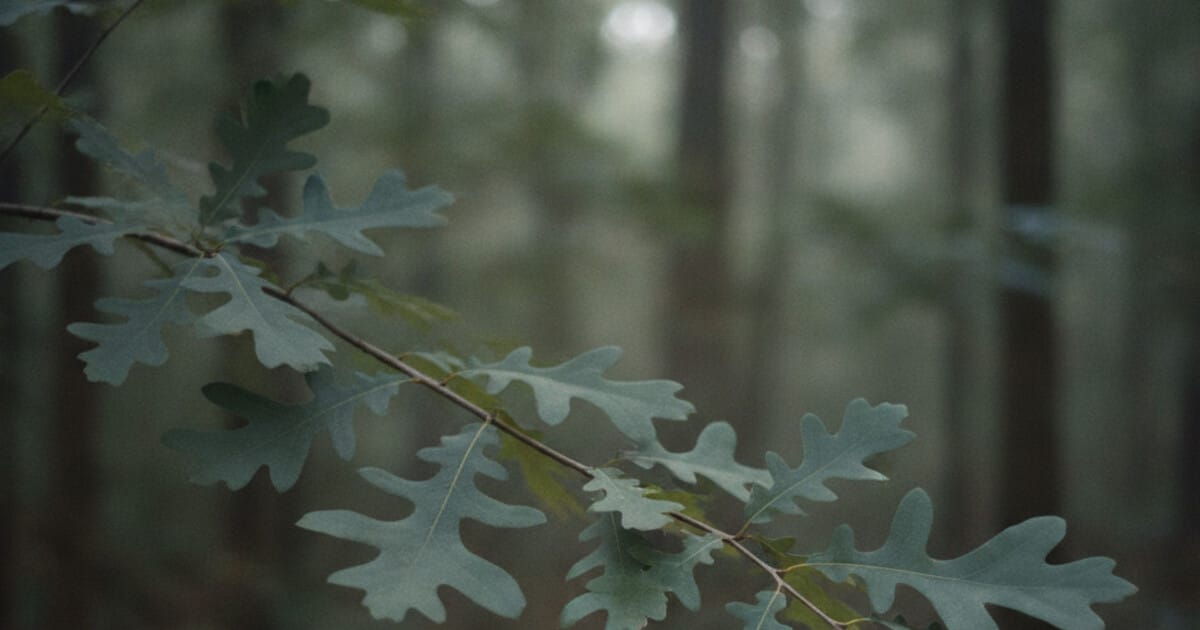
Walk through a bottomland forest in Georgia or Louisiana in January and you’ll find a tree that refuses to go bare. Water oak (Quercus nigra) is one of the few Southern oaks that holds its leaves through winter, dropping them only when the new spring flush pushes them off. That semi-evergreen habit is one clue, but the real giveaway is the leaves themselves: no two look the same.
Water oak carries 3 or more distinct leaf shapes on the same tree at the same time. Some are spoon-shaped, widest at the 3-lobed tip. Some are oblong and unlobed, like a tongue depressor. Some fall somewhere between. That variability is confusing at first, but once you know the pattern, it makes water oak identification unmistakable. This guide covers 7 consistent signs that confirm the ID.
Water oak (Quercus nigra) is identified by its variably shaped leaves (spoon-shaped, trilobed, or unlobed on the same tree), small bluish-green leaves 1.5-4 inches long, small nearly black acorns in a thin saucer cup, and bottomland habitat across the Southeast. It’s semi-evergreen in the Deep South, holding leaves through winter. Mature trees reach 50-80 feet on wet, low-lying soils.
What Is Water Oak?
Water oak belongs to the red oak group (section Lobatae), the same group as black oak, scarlet oak, and willow oak. Red oak group members share two traits: bristle tips on leaf lobes, and acorns that take 2 full years to mature.
Water oak (Quercus nigra) grows across the southeastern United States from New Jersey south through Florida and west to central Texas and Oklahoma, with outliers up the Mississippi River valley into southern Missouri and Illinois. It’s most abundant on the coastal plains and piedmont, filling bottomlands, stream banks, and seasonally flooded flats from sea level to about 1,000 feet elevation. Mature trees reach 50-80 feet with a rounded crown and trunks 1-2 feet in diameter. In the Deep South, water oak often grows in pure stands or mixed with sweetgum, loblolly pine, and overcup oak in low-lying areas that flood briefly after heavy rains. The species tolerates short-term flooding better than most oaks, which explains why you’ll consistently find it in those wet transition zones between stream channels and drier uplands. Acorns are small but produced in heavy quantities, making water oak a key mast source for wood ducks, wild turkey, deer, and squirrels throughout the Southeast.
Water oak also appears as a street and yard tree in Southern cities. It grows fast for an oak, tolerates compacted soil and periodic wet conditions better than most species, and builds a solid shade canopy within 20-30 years. That urban use means you’ll encounter it well outside natural forest settings.
For a broader introduction to the oak family, see our guide to how to identify oak trees.
Sign #1 and #2: Water Oak Leaf Identification
The leaves are the most reliable identifier, and the defining feature is their variability. Water oak produces multiple distinct leaf shapes on the same tree simultaneously, which confuses beginners but pins down the ID for anyone who knows the pattern.
Three shapes appear on a single tree:
- Spoon or paddle shape: Obovate, widest at the 3-lobed tip, narrowing to a straight base. This is the classic water oak leaf. The tip usually shows 3 shallow lobes with bristle tips.
- Oblong and unlobed: Elliptical, widest near the middle or tip, no distinct lobes. Looks like a small tongue depressor.
- Trilobed at tip only: A long, narrow blade with 3 distinct lobes only at the very end. In silhouette it resembles a duck’s foot.
All leaves share consistent features: small size (1.5-4 inches long, noticeably smaller than most other oaks), a smooth bluish-green surface above, and a pale, dull green underside. The texture is thin, not leathery. Bristle tips appear on the lobes of lobed leaves, confirming red oak group membership. On fully unlobed leaves, the tip ends in a single bristle point.
Leaves persist into December and January in Georgia, Alabama, and Florida, dropping only when new spring buds push them off. In the northern part of the range (Virginia, New Jersey), the tree drops leaves in late fall like other oaks.
Sign #3: Water Oak Bark
Bark changes considerably with tree age, so knowing both stages helps with field ID.
On young trees under 8-10 inches in diameter, the bark is smooth and grayish-brown, sometimes with a reddish-brown cast. The surface looks almost polished at this stage.
On mature trees, bark develops into dark gray to gray-brown scales with flat, irregular ridges separated by shallow furrows. The ridges are broader and flatter than black oak’s deeply carved texture. On very old specimens, the bark becomes almost plated, with thick scales that curl slightly at the edges.
Water oak bark is less diagnostic than leaf shape, but the shift from smooth gray on young trees to flat-ridged dark gray on mature ones is consistent enough to confirm a candidate tree when you’re already working the leaves.
Sign #4: Water Oak Acorns
Acorns appear in fall of the second year, the same timing as all red oak group members. Water oak acorns are:
- Very small, roughly 1/2 inch long (about the size of a large pea)
- Nearly round to broadly egg-shaped
- Dark brown to nearly black when fully ripe
- Set in a shallow, saucer-like cup that covers only 1/4 of the nut
The tiny, dark, nearly round acorns in a thin saucer cup are distinctive. Compare them to overcup oak, where the cup covers nearly the entire nut. Compare them to willow oak, where acorns look similar but the leaves are completely different. Water oak acorns accumulate in quantity under the tree from September through November because production in good mast years is heavy.
See our guide to overcup oak tree identification for a close look at that related bottomland species.
Sign #5: Habitat
Habitat is one of the most reliable confirming clues for water oak, especially in the Southeast.
Water oak grows almost exclusively on wet to moist, low-lying soils: bottomlands, stream banks, floodplain margins, and low spots in upland forests that collect water after rain. You’ll find it alongside sweetgum, loblolly pine, bald cypress at the wet edge, and overcup oak in periodically flooded flats.
Outside the Southeast, water oak extends along the Mississippi River drainage into Missouri and southern Illinois. In those northern areas, it sticks strictly to bottomland and riparian sites.
If you’re anywhere in the Deep South coastal plain, water oak is one of the most common bottomland oaks you’ll encounter. If you’re in the northeastern U.S. above Virginia, a tree showing water oak characteristics is at the edge of its range and worth confirming carefully.
Sign #6: Semi-Evergreen Behavior
In the Deep South, water oak holds its leaves through winter. This is unusual for an oak and worth noting as a field sign in states like Louisiana, Mississippi, Alabama, and Florida.
The old leaves don’t fall until the new spring buds swell and push them off. You’ll sometimes see both old dark leaves and fresh pale green new leaves on the same branch in March or April.
In the northern part of its range (Virginia, Tennessee, North Carolina), water oak behaves like a typical deciduous tree and drops leaves by November.
Sign #7: Growth Form
Water oak develops a rounded to oval crown, often fairly symmetrical when grown in the open. In dense forest settings, the crown narrows and sweeps upward.
One distinctive habit: water oak re-sprouts vigorously from the base after cutting or storm damage, producing multiple stems from a single root system. A cluster of 3-4 stems all rising from the same base, in a wet bottomland, points strongly to water oak.
Trunk diameter at maturity is typically 1-2 feet. Very old trees can reach 2.5-3 feet, but water oak is shorter-lived than white oak or bur oak.
Water Oak vs Willow Oak and Shingle Oak
These three species share similar range and some surface-level leaf resemblances. Here’s how to separate them:
Water oak vs willow oak: Willow oak leaves are narrow, linear, and willow-like with a single bristle tip. They don’t vary in shape the way water oak leaves do. Willow oak acorns are similar (small, round, thin saucer cup), so rely on leaf shape to separate them. Our willow oak tree identification guide covers willow oak in full.
Water oak vs shingle oak: Shingle oak has oblong, unlobed leaves with a single bristle tip, similar to some of the unlobed leaves on water oak. The key difference: shingle oak produces the same leaf shape consistently across the entire tree. Water oak mixes multiple shapes on a single individual. Shingle oak also favors drier, upland soils more often than water oak.
Water oak vs overcup oak: Overcup oak has deeply lobed, typical-looking oak leaves and an acorn where the cup covers nearly 100% of the nut. There’s minimal leaf confusion between these two, but they share bottomland habitat throughout the Southeast.
How Tree Identifier Helps Confirm Water Oak
Water oak’s variable leaf shape is its most distinctive feature, but it can trip up a single-photo ID. A leaf that happens to be unlobed could resemble several different species photographed in isolation.
Tree Identifier’s AI works best on water oak when you photograph multiple leaf types from the same tree. One shot of a spoon-shaped leaf, one of an unlobed leaf, and one of a leaf with the trilobed tip gives the app enough variation to work with. The combination of shapes, bluish-green color, and small leaf size produces a reliable confidence score.
The app also works offline, which matters in remote bottomland sites without cell service. You get 2 free identifications per day, and each result includes species details, habitat information, and characteristics you can cross-check against the signs in this guide. Download it at treeidentifier.app and test it on the next variable-leaved oak you find.
Frequently Asked Questions
How do I identify water oak leaves?
Water oak produces several distinct leaf shapes on the same tree simultaneously: spoon-shaped (obovate, widest at the 3-lobed tip), oblong and unlobed, and trilobed only at the tip. All leaves are small (1.5-4 inches), bluish-green above, and smooth. Finding multiple shapes on one tree is the most reliable field mark.
Where does water oak grow?
Water oak grows across the southeastern United States from New Jersey south to Florida and west to central Texas. It’s most abundant in bottomlands, stream banks, and low-lying floodplain soils that stay moist or flood periodically. You’ll find it mixed with sweetgum, bald cypress, and overcup oak in wet transition zones between stream channels and drier uplands.
Is water oak an evergreen tree?
In the Deep South (Louisiana, Mississippi, Alabama, Florida), water oak is semi-evergreen. It holds its leaves through winter and drops them in early spring when new leaves emerge. In the northern part of its range (Virginia, North Carolina, Tennessee), it drops leaves in fall like a typical deciduous oak.
What do water oak acorns look like?
Water oak acorns are very small (about 1/2 inch), nearly round, and dark brown to nearly black when ripe. The cup is shallow and saucer-like, covering only about 1/4 of the nut. They’re among the smallest acorns of any eastern oak. Heavy mast crops make them an important food source for wood ducks, deer, and squirrels.
Can water oak and willow oak grow in the same place?
Yes. Both species favor moist, low-lying soils in the Southeast and often grow side by side. Tell them apart by leaves: willow oak has narrow, linear, willow-like leaves that are uniform across the entire tree. Water oak produces highly variable leaf shapes including spoon-shaped, unlobed, and trilobed leaves on the same individual.
Identify a tree from your photo — free
Upload a leaf, bark, or whole-tree photo and get the species in seconds. No signup.
Confidence:
Unlock the full species profile
Free in the app — with unlimited identifications.


AI result for guidance — the app gives full species details and works offline.
Want unlimited identifications?
Get the full species profile, photos and details — free in the app, with unlimited scans.
- Unlimited identifications
- Full species profiles & details
- Works offline, anywhere
- Save and revisit your finds
Elena Torres
Tree Identifier Team