Willow Oak Tree Identification: 7 Reliable Signs
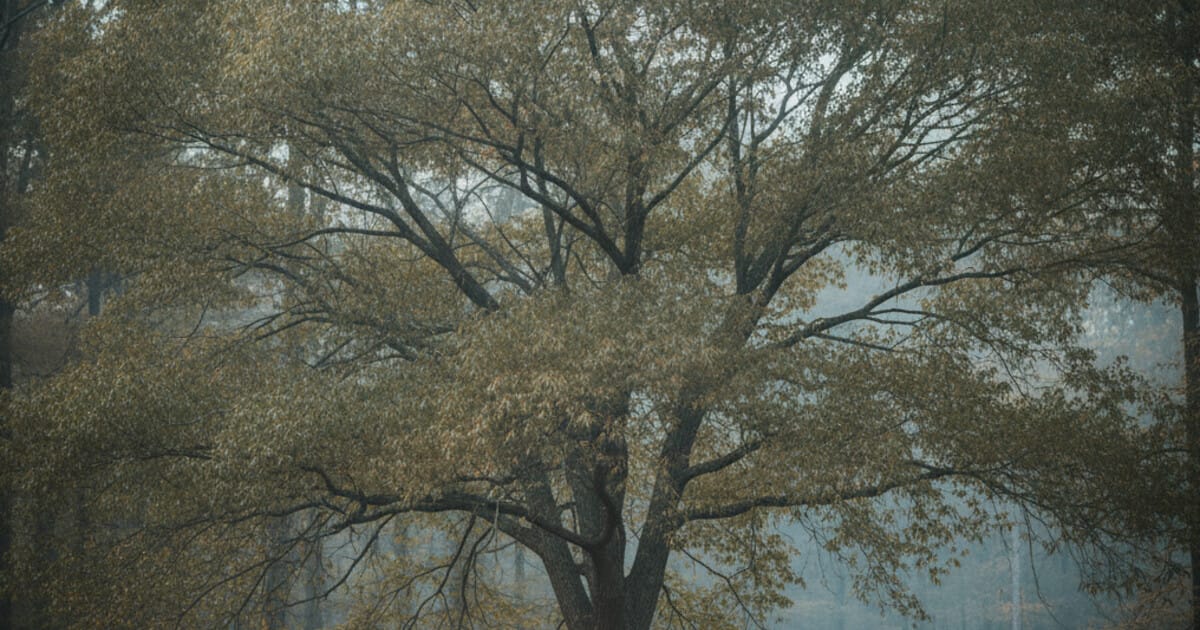
Willow oak (Quercus phellos) is one of the most frequently misidentified oaks in the eastern United States, and the reason is right there in its name. The leaves look nothing like a typical oak. They’re narrow, lance-shaped, and smooth-edged, more like a willow or a peach than any oak you’ve handled before. Willow oak tree identification trips up beginners precisely because the leaf is so unexpected, but once you know the handful of features that lock this species down, you’ll call it from across a parking lot.
The species grows across the Atlantic and Gulf Coastal Plains and up into the Mississippi embayment, and it’s planted so widely as a street and park tree that you’re likely to encounter it in any eastern city. That combination of native bottomland habitat and widespread urban planting makes it one of the more commonly encountered oaks in the Southeast.
Willow oak (Quercus phellos) is identified by its narrow lance-shaped leaves with no lobes and a single bristle tip at the apex, small round acorns with a thin saucer-like cap covering roughly 25% of the nut, and dark, finely furrowed bark. It belongs to the red oak group, so acorns take two growing seasons to ripen. Native range runs from southern New Jersey to northern Florida and west to eastern Texas.
7 Signs That Identify Willow Oak Trees
Willow oak is a large deciduous tree native to the Atlantic Coastal Plain and Piedmont of the eastern United States, with its core range running from southern New Jersey south through the Carolinas and Georgia, west to eastern Texas, and north through the Mississippi Valley to southern Illinois and Missouri. Mature trees commonly reach 60-80 feet tall with a 40-60 foot spread, developing a broad, symmetrically rounded crown that makes it a popular street and park tree throughout the Southeast. It belongs to the red oak group (section Lobatae), meaning its leaf margins carry bristle tips, its acorns take two full growing seasons to ripen, and the acorn meat is high in tannins. The tree thrives in bottomlands, floodplain forests, and moist to wet lowland sites in its native range, but tolerates a wide range of urban soils when planted. Wildlife value is high: the small acorns are a key food source for wood ducks, mallards, squirrels, and deer in bottomland forests. Mature trees in undisturbed stands commonly live 200-300 years.
1. Narrow, Lance-Shaped Leaves With No Lobes
The leaf is the most striking and most confusing feature. Willow oak leaves are 2-5 inches long and only 1/2 to 3/4 inch wide, narrow and lance-shaped, with smooth, untoothed edges. The tip ends in a single small bristle point, the signature of the red oak group.
Most people reaching for the leaf for the first time don’t believe it’s an oak. There are no lobes. No teeth along the edges. Just a slender, strap-like blade that looks borrowed from a willow or peach tree. That narrow, linear outline is unique among eastern oaks and makes willow oak identifiable at a glance once you know what you’re looking at.
The upper surface is bright to medium green and smooth. The underside is paler, mostly hairless except for small tufts of hair in the vein axils near the midrib.
2. Single Bristle Tip at the Leaf Apex
Every willow oak leaf ends in a tiny, sharp bristle tip at the apex. This is easy to miss without close inspection, but it’s definitive. The bristle tip classifies willow oak firmly in the red oak group, not the white oak group.
White oak group members have rounded leaf tips with no bristles and their acorns ripen in one year. Red oak group members, including willow oak, pin oak, and red oak, carry bristle tips and need two seasons to mature their acorns.
On a leaf with no lobes, that single bristle tip at the apex is one of the cleanest confirming details available. It also separates willow oak from shingle oak (Quercus imbricaria), whose leaves are broader and more oval in outline.
3. Small, Round Acorns With a Thin, Saucer-Like Cap
Willow oak acorns are small, round, and nearly spherical, typically 3/8 to 1/2 inch in diameter. The cap is shallow and saucer-shaped, covering about 25% of the nut, with thin, tightly pressed scales that give it a smooth look.
That thin, low cap on a very small round nut is different from most oaks sharing the same range. Red oak acorns are larger and more elongated with a broader flat cap. Pin oak acorns are similarly small, but the cap presses tighter and the nut is slightly flatter on top.
Because willow oak acorns ripen in their second season, you’ll find both immature green acorns (year one) and mature brown acorns (year two) on the tree at the same time in late summer. That two-year crop is another reliable red oak group sign.
4. Dark, Finely Furrowed Bark on Mature Trees
Bark on young willow oaks is smooth and dark gray. As the tree matures, it develops shallow, narrow ridges separated by fine furrows, gray to gray-brown overall. The texture is finer and less deeply furrowed than red oak, and noticeably different from the light, flat-plated gray bark of white oak.
On old trunks the bark becomes more prominently ridged and somewhat blocky, but stays dark throughout the tree’s life. It lacks the shaggy, peeling quality of shagbark hickory and the very deep, almost blackened furrows of black locust.
In bottomland forests where multiple oaks grow together, willow oak’s consistently dark, finely textured bark is a quick field mark even before you check the leaves.
5. Broad, Symmetrically Rounded Crown
Open-grown willow oaks develop a broad, round crown that looks nearly spherical from a distance. The branching is dense with somewhat drooping outer limbs, similar in silhouette to pin oak but with more even spread throughout the crown rather than pin oak’s distinctive downward-angled lower limbs.
Street trees and park specimens show this rounded form most clearly. The crown can reach 40-60 feet wide on mature trees, casting dense shade underneath. In forest settings the crown is more irregular, but the dense branching and fine-textured foliage still distinguish it from coarser oaks nearby.
In winter with leaves off, the fine, interlacing branch structure and the tendency to retain small dead lateral branches on the lower trunk are useful cold-season marks.
6. Bottomland and Floodplain Habitat in Native Range
Wild willow oaks grow almost exclusively in moist to wet lowland sites: river bottoms, floodplain forests, seasonally flooded swamps, and the margins of streams and sloughs across the Coastal Plains.
In these habitats, willow oak grows alongside pin oak, water oak, swamp chestnut oak, and bald cypress. The co-occurrence with those species in saturated soils is a useful field context. On dry upland sites in the wild, willow oak is rare or absent entirely.
Outside its native range, planted willow oaks are common in urban settings across the Southeast and Mid-Atlantic, where the fine-textured foliage and drought tolerance once established make it a popular street choice. On a city street in Raleigh or Richmond, habitat context is less useful, but the leaf and bark still work.
7. Yellow to Russet Fall Color
Willow oak’s fall color runs yellow to yellow-brown and russet, sometimes with orange tints on individual trees. The color is less vivid than the scarlet of red oak in fall and less consistent than the red-orange of pin oak. On urban street trees, yellow-gold is the most common tone.
One useful fall detail: the narrow leaves create a fine, feathery texture in autumn color that’s different from the broad, boldly lobed leaves of most other oaks. That fine-textured yellow-brown canopy combined with the rounded crown silhouette is a recognizable combination on trees you already know.
Willow oaks hold leaves later than many oaks and may show good color well into November in the southern part of the range.
Willow Oak vs. Similar Species: Quick Comparison
The species most often confused with willow oak are shingle oak, pin oak, and water oak. All four belong to the red oak group and share overlapping ranges.
| Feature | Willow Oak | Shingle Oak | Pin Oak | Water Oak |
|---|---|---|---|---|
| Leaf shape | Lance-shaped, very narrow | Wider, oval to oblong | Deeply lobed, 5-7 lobes | Spatula-shaped, wider |
| Leaf width | 1/2-3/4 in | 1-3 in | 2-5 in | 1-4 in |
| Bristle tips | Single tip at apex only | Single tip at apex | Tips on each lobe | Single or few tips |
| Acorn size | Small, round, 3/8-1/2 in | Medium, round, ~1/2 in | Small, round, ~1/2 in | Small, round, 3/8-1/2 in |
| Acorn cap | Shallow saucer, ~25% | Shallow-medium, ~40% | Very thin, shallow | Shallow, ~25-30% |
| Crown form | Broad, round | Broad, round | Pyramidal, lower limbs drooping | Broad, irregular |
The leaf is the fastest separator. Willow oak’s leaf is far narrower than shingle oak or water oak, and looks completely different from pin oak’s deeply lobed outline.
How Tree Identifier Helps with Willow Oak Identification
Willow oak’s narrow, unlobed leaf is distinctive once you’ve seen it. Before that, the leaf can send you searching through willow species or other smooth-edged trees for a long time. A photo-based second opinion saves that detour.
Tree Identifier lets you photograph a leaf, bark section, or the whole tree and returns a species ID with a confidence score in seconds. The app accepts multiple photo types, so you can cross-check by submitting a leaf photo and then a bark photo from the same visit. It works offline too, which helps in bottomland forests where cell coverage gets patchy.
Download Tree Identifier on iOS or Android for your next walk in a floodplain forest or city park. You get 2 free identifications every day, no subscription required.
Frequently Asked Questions
What do willow oak leaves look like?
Willow oak leaves are narrow and lance-shaped, 2-5 inches long and only 1/2 to 3/4 inch wide. They have smooth, untoothed edges and a single small bristle tip at the apex. The upper surface is medium to bright green; the underside is paler with small hair tufts in the vein axils. The leaf looks like a willow or peach leaf, not a typical lobed oak.
Is willow oak in the red oak or white oak group?
Willow oak belongs to the red oak group (Quercus section Lobatae). The single bristle tip at the leaf apex confirms this. Red oak group members have bristle-tipped leaves and acorns that take two growing seasons to ripen. White oak group members, like white oak and chinkapin oak, have rounded leaf tips with no bristle and one-year acorns.
What is willow oak used for?
Willow oak is widely planted as a street and park tree throughout the southeastern United States for its shade, symmetrical rounded crown, and fine-textured foliage. In bottomland forests, the small acorns feed wood ducks, mallards, squirrels, and deer. The wood is sold with other red oak lumber for flooring, furniture, and construction, though rarely marketed separately.
Where does willow oak grow naturally?
Willow oak’s native range runs along the Atlantic Coastal Plain from southern New Jersey south to northern Florida, then west through the Gulf states to eastern Texas, and north through the Mississippi embayment to southern Illinois. It grows in bottomlands, river floodplain forests, and moist lowland sites. It’s also widely planted as a street tree throughout the Southeast and Mid-Atlantic well beyond its native range.
How big does willow oak get?
Mature willow oaks commonly reach 60-80 feet tall with a crown spread of 40-60 feet. Large specimens on good soils can hit 100 feet. Most trees in undisturbed bottomland stands live 200-300 years.
Willow oak is worth knowing whether you’re walking a floodplain trail or a city block in any southeastern city. Once the narrow lance-shaped leaf clicks, you’ll spot this species on every street where it grows. Tree Identifier can confirm an ID in seconds from a leaf or bark photo, with offline support for remote bottomland spots.
Identify a tree from your photo — free
Upload a leaf, bark, or whole-tree photo and get the species in seconds. No signup.
Confidence:
Unlock the full species profile
Free in the app — with unlimited identifications.


AI result for guidance — the app gives full species details and works offline.
Want unlimited identifications?
Get the full species profile, photos and details — free in the app, with unlimited scans.
- Unlimited identifications
- Full species profiles & details
- Works offline, anywhere
- Save and revisit your finds
Elena Torres
Tree Identifier Team