Chinkapin Oak Tree Identification: 7 Reliable Signs
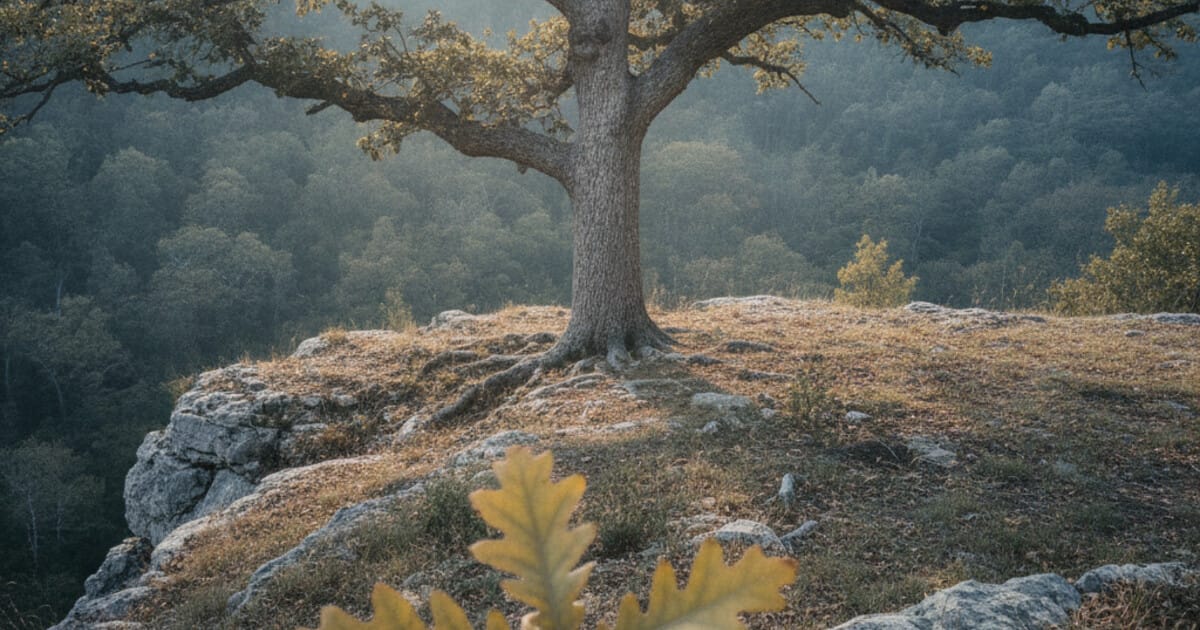
Chinkapin oak (Quercus muehlenbergii) grows across the eastern United States and Midwest, yet most people walk past it without a second look. Chinkapin oak tree identification catches beginners off guard because the leaf looks wrong for an oak: narrow, oblong, and edged with coarse rounded teeth rather than the lobes you’d expect. That toothed outline is the first key, and once you know it, you’ll spot chinkapin oak on limestone bluffs and dry rocky ridges from a trail away.
The species has a sharp preference for calcareous soils, and that habitat clue alone narrows the field considerably. Where you find dry limestone outcroppings in the Midwest or Appalachians, chinkapin oak is usually in the mix.
Chinkapin oak is identified by its narrow, oblong leaves with large coarsely rounded teeth, light gray flaky bark, and medium-sized rounded acorns with warty-scaled caps covering about half the nut. It grows primarily on limestone ridges and bluffs. As a white oak group member, its acorns ripen in a single growing season.
7 Signs That Identify Chinkapin Oak Trees
Chinkapin oak (Quercus muehlenbergii) is a medium to large deciduous tree native to the eastern United States and southern Ontario. Mature trees reach 40-70 feet tall, occasionally hitting 80 feet on better soils. The species belongs to the white oak group (section Quercus), meaning its leaf edges lack bristle tips and its acorns ripen in a single season rather than two. Its common name comes from the resemblance of its leaves to the chinkapin shrub (Castanea pumila), a beech-family plant with similarly toothed leaves. Chinkapin oak is concentrated in the Midwest and Appalachian foothills, with strong populations across Illinois, Indiana, Ohio, Kentucky, Tennessee, and the Ozarks region of Missouri and Arkansas. It thrives on thin, dry limestone soils where few other oaks persist, making habitat one of the fastest field clues available. Bark on mature trunks is light gray and finely scaly, noticeably lighter than the dark, deeply ridged bark of chestnut oak on nearby sandstone slopes.
1. Coarsely Toothed Leaves With No Lobes
Chinkapin oak’s leaf is the feature that throws people off. Instead of the lobed outline you’d expect from an oak, the leaf is narrow and oblong, 4-9 inches long, with coarse rounded teeth along both edges. Each tooth is large and curved at the tip with no bristle point.
Most chinkapin oak leaves carry 8-13 tooth pairs per side. The teeth are spaced fairly far apart, giving the leaf a bold, clean-edged look compared to the fine serrations of shingle oak or the lobes of most other oaks in the same range.
The resemblance to chinkapin and chestnut leaves is strong enough that beginners sometimes assume they’ve found a chestnut sprout. The giveaway is the twig: clustered, reddish-brown terminal buds mark it unmistakably as an oak.
2. Yellowish-Green Upper Surface, Pale and Hairy Below
The upper leaf surface is a distinctive yellowish-green, brighter than the dark, glossy leaves of many other oaks. The underside is paler, soft gray-green, and covered with fine hairs that give it a slightly velvety feel.
Run a finger from leaf tip toward the stem on the underside and you’ll notice soft fuzz rather than the rough sandpaper of post oak or the nearly bare underside of white oak. That texture is a quick tactile confirmation when the leaf shape alone isn’t enough.
In summer sun, the yellowish cast to the upper surface makes chinkapin oak stand out against the deeper green of red oaks or maples sharing the same hillside.
3. Light Gray, Flaky Bark
Chinkapin oak bark is among the lightest-colored of any oak in the eastern United States. Mature trunks are ash-gray to light gray, broken into thin plates that flake and peel at the edges. The overall impression is noticeably lighter and finer-scaled than neighboring oaks.
On bluffs where chestnut oak and chinkapin oak both grow, the bark difference is immediate. Chestnut oak carries dark, nearly black bark with broad, deeply rounded ridges. Chinkapin oak looks pale by comparison, with a flakier, thinner texture.
That light bark also separates it cleanly from the blocky gray-brown plates of post oak. On a limestone outcrop, pale flaky bark on a toothed-leaf oak is a reliable chinkapin oak call.
4. Medium Acorns With Thick, Warty-Scaled Caps
Chinkapin oak produces medium-sized acorns, typically 1/2 to 3/4 inch long and nearly round. The cap covers roughly half the nut’s length and carries thick, knobby scales pressed tightly together, giving it a warty or bumpy look.
As a white oak group member, the acorns ripen in a single growing season and drop in September through October. They’re relatively low in tannins, which is why squirrels, deer, and turkeys clean them up quickly after they fall.
Chestnut oak acorns look similar but run larger, more cylindrical, and have a deeper, more coarsely scaled cap. Combined with leaf shape and bark, the acorn details lock the chinkapin oak ID firmly in season.
5. Limestone and Calcareous Rocky Habitat
Chinkapin oak’s habitat preference is one of the most consistent field clues for the species. It gravitates to calcareous soils: dry rocky bluffs, cliff edges, ridges over limestone or dolomite, and slopes where thin soil drains fast after rain.
Across the Midwest and Appalachians, look for it on exposed limestone outcrops, along river bluffs, and on south-facing hillsides where bedrock sits close to the surface. It shows up on talus slopes too, where other oaks can’t get started.
Where the underlying rock shifts to sandstone or shale, chinkapin oak gives way to chestnut oak. That limestone-chinkapin / sandstone-chestnut association holds consistently through the central Appalachians and Ozarks, and it’s useful when you’re trying to sort two toothed-leaf oaks on a mixed ridge.
6. Straight Trunk With Open, Irregular Crown
Open-grown chinkapin oaks develop a fairly straight central trunk with a broad, irregular crown. Branches spread widely, and mature trees carry an open, rounded canopy with visible sky between major limbs.
In closed-canopy forest, the trunk grows taller before branching, but the overall form stays relatively upright. Trees reach 40-70 feet at maturity, with occasional specimens on better soils approaching 80 feet.
Chinkapin oak is moderately long-lived. Many trees in undisturbed stands reach 200-300 years. Documented old-growth specimens in the Ozarks and central Appalachians exceed 400 years old.
7. Yellow to Orange-Brown Fall Color
Chinkapin oak turns yellow, orange, and orange-brown in October through early November. The color ranges from golden-yellow to deep orange on individual trees and is brighter than the dull brown of chestnut oak in fall, though less vivid than the scarlet of scarlet oak on nearby ridges.
The narrow toothed leaves in warm fall colors combined with the pale bark make this a useful ID season even after the leaves start to drop.
Like other white oak group oaks, chinkapin oak sometimes holds dried leaves on smaller branches into early winter, a trait called marcescence. Those clinging russet leaves alongside the distinctive light gray bark are a solid cold-season clue.
Chinkapin Oak vs. Similar Species: Quick Comparison
The species most often confused with chinkapin oak are chestnut oak, white oak, and bur oak. All four belong to the white oak group. Here’s how to separate them quickly.
| Feature | Chinkapin Oak | Chestnut Oak | White Oak | Post Oak |
|---|---|---|---|---|
| Leaf type | Narrow, coarsely toothed | Wider, coarsely toothed | 7-9 rounded lobes | Cross-shaped, 5 lobes |
| Bark | Light gray, flaky | Very dark, deeply ridged | Light gray, flat plates | Gray-brown, blocky |
| Acorn size | Medium, ~1/2-3/4 in | Large, ~1 in | Medium, ~3/4 in | Small-medium, ~1/2-3/4 in |
| Acorn cap | ~50%, warty scales | ~50%, coarse deep scales | ~25%, thin flat scales | 40-50%, tightly scaled |
| Habitat | Limestone ridges/bluffs | Sandstone ridges | Broad upland range | Dry rocky/sandy sites |
The bark is the fastest separator from chestnut oak. Pale flaky gray versus nearly black, deeply ridged: stand the two trees side by side and there’s no ambiguity.
How Tree Identifier Helps with Chinkapin Oak Identification
Chinkapin oak is a confident ID in summer with narrow toothed leaves and pale bark in view. Outside leaf season, bark and habitat narrow things down, but a second opinion helps when you’re not certain between chinkapin and chestnut oak from bark alone.
Tree Identifier lets you photograph a leaf, bark section, acorn, or the full tree and returns a species ID with a confidence score in seconds. The app accepts multiple input types, so you can cross-check your chinkapin oak ID using both leaf and bark photos from the same visit. It works offline, which matters on remote limestone bluffs and ridges where cell service is unreliable.
Download Tree Identifier on iOS or Android for your next trail walk. 2 identifications are free every day, no subscription needed to get started.
Frequently Asked Questions
What do chinkapin oak leaves look like?
Chinkapin oak leaves are 4-9 inches long, narrow and oblong, with coarse rounded teeth along both edges. The upper surface is yellowish-green, the underside is paler with fine hairs that feel velvety. Most leaves carry 8-13 tooth pairs per side. The toothed outline with no lobes is the most distinctive visual feature.
Is chinkapin oak a white oak or red oak?
Chinkapin oak is in the white oak group (Quercus section Quercus), alongside white oak, chestnut oak, bur oak, and post oak. Its leaf teeth are rounded with no bristle tips, and its acorns ripen in a single growing season rather than two. Red oak group members have bristle-tipped leaf edges and two-year acorns.
How do I tell chinkapin oak from chestnut oak?
The bark is the fastest separator. Chinkapin oak has light gray, finely flaky bark. Chestnut oak has very dark, deeply ridged bark with broad rounded ridges. The leaves look similar but chinkapin oak leaves are narrower. Habitat also helps: chinkapin oak strongly prefers limestone and dolomite sites, while chestnut oak favors sandstone and quartzite ridges.
Where does chinkapin oak grow?
Chinkapin oak grows across the eastern United States and southern Ontario, from Nebraska east to Vermont and south to Alabama and Georgia. It’s most common in the Midwest, Appalachian foothills, and Ozarks. The species strongly prefers calcareous soils, particularly dry limestone bluffs, rocky ridges, and south-facing slopes over dolomite bedrock.
How tall does chinkapin oak get?
Most chinkapin oaks reach 40-70 feet at maturity. Specimens on better soils can approach 80 feet. The trees are moderately long-lived: most reach 200-300 years in healthy stands, and documented old-growth trees in the Ozarks and Appalachians exceed 400 years.
Chinkapin oak is one of the more satisfying oaks to learn once you’ve locked in the combination of pale flaky bark and narrow toothed leaves. If you want a quick ID confirmation out on the bluff, Tree Identifier lets you photograph the leaf or bark and get a species result in seconds, with offline support for remote ridges and rocky sites.
Identify a tree from your photo — free
Upload a leaf, bark, or whole-tree photo and get the species in seconds. No signup.
Confidence:
Unlock the full species profile
Free in the app — with unlimited identifications.


AI result for guidance — the app gives full species details and works offline.
Want unlimited identifications?
Get the full species profile, photos and details — free in the app, with unlimited scans.
- Unlimited identifications
- Full species profiles & details
- Works offline, anywhere
- Save and revisit your finds
Elena Torres
Tree Identifier Team