Oregon Ash Tree Identification: 7 Reliable Signs
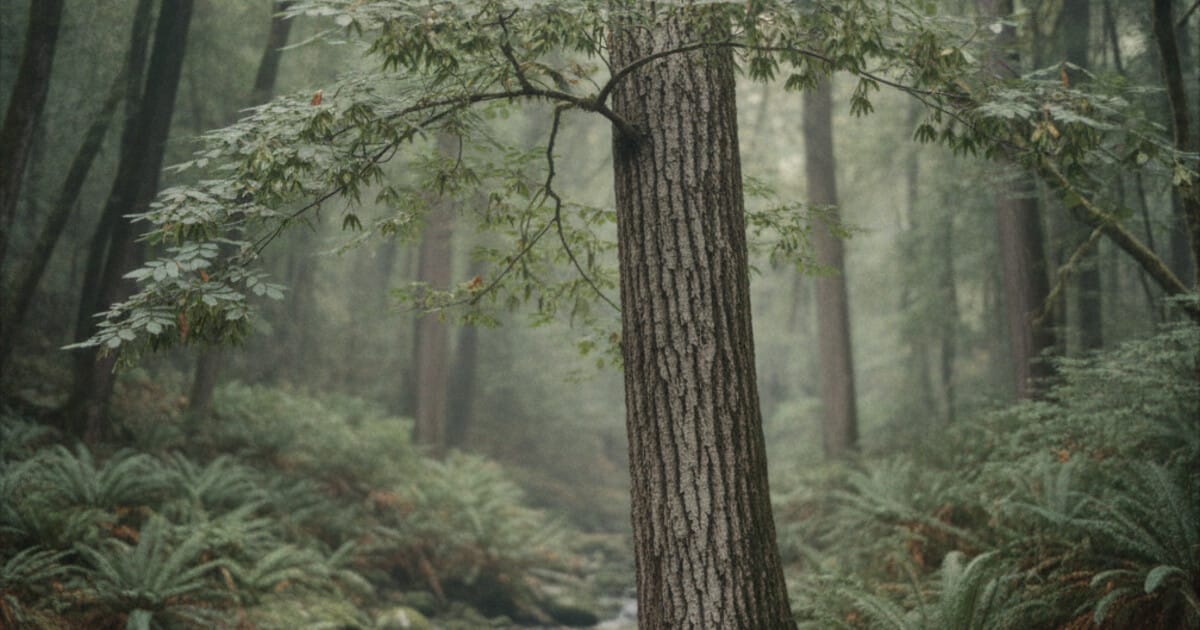
Oregon ash (Fraxinus latifolia) is the only native ash tree in the Pacific Northwest, and the only ash species native to the entire western side of North America. For most of its range, it shows up in one specific place: along streams, river banks, and seasonal wetlands west of the Cascades, where its roots can reach water through most of the year.
That habitat restriction is your first clue. If you’re walking a creek corridor through a wet Pacific Northwest lowland and spot a mid-sized tree with compound opposite leaves, Oregon ash is the likely answer. Once you know the handful of field marks that confirm it, oregon ash tree identification moves fast. Here are 7 signs that lock it in.
Oregon ash (Fraxinus latifolia) is identified by opposite compound leaves with 7 (usually) oval leaflets, hairy twigs and leaflet undersides, gray interlocking-ridged bark, and single paddle-shaped samaras. It grows strictly in riparian zones west of the Cascades and is the only native ash in the Pacific Northwest.
Oregon Ash Range, Habitat, and Conservation Status
Oregon ash is a mid-sized riparian tree reaching 40 to 80 feet tall at maturity, with trunks typically 1 to 2 feet in diameter in older stands. Its range runs from southern British Columbia south through western Washington and Oregon, into California’s Central Valley as far south as Fresno County, almost always west of the Cascades. A scattered inland population occurs in northeastern Oregon’s Blue Mountains. No other ash species is native anywhere in this region.
Oregon ash (Fraxinus latifolia) is the only ash species native to western North America, with a range from southern British Columbia south through western Washington, Oregon, and into California’s Central Valley. EAB was first confirmed in Oregon in 2022 in Clackamas and Washington counties by USDA APHIS and the Oregon Department of Agriculture. Like eastern ash species, Oregon ash has no known natural resistance to EAB. USFS data from eastern infestations show 99% mortality in untreated trees within 3 to 5 years. Oregon ash’s entire range represents the first western exposure of any native ash to this pest. NatureServe ranks the species as G4 (Apparently Secure) rangewide, but Oregon wildlife agencies and the USFS are actively monitoring spread and prioritizing treatment in high-value riparian stands. Oregon ash supports floodplain stabilization, streambank structure, and habitat for neotropical migratory birds, ecological functions no other native Pacific Northwest tree fully replaces.
Oregon ash has significant cultural history in the region. Kalapuya people of the Willamette Valley used the hard, springy wood for paddles, digging tools, and utensils. Coast Salish groups similarly relied on it for implements and basketry materials. The wood compares closely to eastern white ash in working properties.
Oregon Ash Leaves: Opposite, Compound, Hairy on the Underside
The leaves are the fastest field mark. Oregon ash produces opposite, pinnately compound leaves 6 to 14 inches long, each holding 5 to 9 leaflets along a central rachis. Seven leaflets is the most common count.
Each leaflet is oval to elliptic, 2 to 5 inches long, with a pointed tip and finely toothed or nearly smooth margins. The upper surface is dark green. Flip a leaflet and look at the underside: soft white to pale hairs run along the midrib and often across the surface, especially on young growth. The rachis (the central stalk of the compound leaf) is also hairy. These hairy surfaces stay consistent through the growing season and separate Oregon ash from boxelder (Acer negundo), which shares the riparian habitat and the opposite compound leaf structure but has smooth leaflets.
The leaflets are petiolulate, meaning each has its own short stalk attaching it to the rachis. This matters when reading botanical keys. Black ash has sessile leaflets that attach directly without a stalk; Oregon ash leaflets are clearly stalked. (Black ash doesn’t come close to Oregon’s range, but knowing the distinction helps you use the keys correctly.)
Fall color in Oregon ash is yellow to pale yellow, sometimes dull bronze. A stand of Oregon ash in an October creek corridor is a recognizable landmark, even if not the fiery spectacle of a sugar maple.
Oregon Ash Bark and Twigs: Ridged Gray, Hairy on Young Growth
Young Oregon ash bark is smooth to lightly furrowed and gray. As the tree matures, it develops the interlocking diamond-shaped ridges and furrows typical of most ash species: gray on the surface, tan to brown in the furrows. Mature trunks have a firm, blocky look with moderate-depth furrows. Bark alone won’t separate Oregon ash from planted green ash or white ash, but in the Pacific Northwest, no native ash exists to compare against.
The twigs are stout and grayish-brown. New-season growth is noticeably hairy, a trait that carries through to the leaf rachises and bud surfaces. Older twigs from prior seasons become smoother. In cross-section, Oregon ash twigs are round, which matters when distinguishing it from blue ash in botanical literature: blue ash has distinctively 4-angled or slightly winged twigs. Oregon ash twigs are round in cross-section like most other ashes.
Buds are gray-brown, ovoid, and covered with fine short hair. They sit opposite on the twig, matching the opposite leaf arrangement. Terminal buds are slightly larger than the lateral buds beside them. The gray-hairy opposite bud is a useful winter mark in riparian PNW habitats: red alder has stalked buds, black cottonwood has large resinous buds, and willows have single-scaled elongated buds. None of these are opposite.
Oregon Ash Samaras: Single-Winged Paddles, Female Trees Only
Oregon ash samaras are the paddle-shaped, single-winged fruits typical of the ash genus. Each samara runs about 1 to 1.5 inches long, with the wing extending down around much of the seed body. They ripen in late summer and drop through fall, hanging in loose clusters from branch tips.
This samara shape quickly separates Oregon ash from boxelder, which is the other opposite-compound-leaved tree common in the same riparian zones. Boxelder samaras are paired and joined in a V-shape with wings on both sides: the classic maple key. Oregon ash samaras are single, paddle-shaped, and hang in clusters from a shared stalk.
Oregon ash is dioecious: individual trees are either male or female. Only female trees produce samaras; males don’t fruit. In late summer and fall, a fruiting female with clusters of paddle-shaped samaras and compound opposite leaves in a Pacific Northwest creek bottom is Oregon ash. Males require the leaf, bark, and twig marks to confirm.
Oregon Ash Habitat: Riparian Zones and Seasonal Wetlands Only
Habitat narrows the ID faster than any single morphological feature. Oregon ash is a strict riparian and seasonal wetland species. It doesn’t grow on dry slopes, upland ridges, or well-drained terraces. It needs consistent soil moisture: river floodplains, creek margins, seasonal wetlands, and lake margins where water sits for weeks in winter and spring.
In the Willamette Valley, Oregon ash forms gallery forests along stream corridors and colonizes former floodplain land where the water table stays high year-round. Typical riparian company includes red alder, black cottonwood, bigleaf maple, and several willows, in the zone that floods through winter rains and dries back by midsummer.
The trees of the Pacific Northwest include several species that share riparian habitats with Oregon ash, but none are easily confused once you know the compound opposite leaf. Red alder has simple alternate leaves with rolled-under margins. Black cottonwood has simple alternate leaves on a long petiole. Bigleaf maple has opposite simple palmate leaves, not compound ones.
Oregon ash can grow as a wet-edge upland tree in the fog belt of the Coast Range where soil moisture stays high year-round, but this is less common. On any dry Pacific Northwest site, it won’t be there.
How Oregon Ash Compares to Common Riparian Neighbors
A few targeted comparisons close the ID when you’re uncertain.
Oregon ash vs. boxelder (Acer negundo): Both grow in riparian zones and have opposite compound leaves. Boxelder leaflets are coarser-toothed and usually 3 to 5, often asymmetric. Its twigs and rachises are smooth, not hairy. The decisive mark is the fruit: boxelder produces paired winged keys (classic maple samaras); Oregon ash produces single paddle-shaped samaras in clusters. Boxelder branch tips also tend to droop in a way Oregon ash doesn’t.
Oregon ash vs. bigleaf maple (Acer macrophyllum): Bigleaf maple is common in the same riparian forests and also has opposite leaves, but its leaves are simple with 5 deep palmate lobes, not pinnately compound. Once you know the difference between simple and compound leaves, these two don’t look alike. Bigleaf maple also has paired winged samaras.
Oregon ash vs. green ash (Fraxinus pennsylvanica): Green ash is native to the eastern United States but planted widely as a street and park tree across North America, including the Pacific Northwest. Planted green ash leaflets are similar in shape, but the undersides are typically smoother and the twigs less hairy. In the wild, range settles it: green ash doesn’t naturally occur west of the Rockies.
Oregon ash vs. red alder (Alnus rubra): Red alder is Oregon ash’s most common riparian neighbor and similar in stature and bark color. Simple alternate serrated leaves with slightly rolled margins distinguish alder from ash immediately. Alder also produces woody catkin cones rather than paddle-shaped samaras.
For the full family context, the ash tree identification guide covers the shared traits that run across all North American ash species: opposite compound leaves, paddle-shaped samaras, interlocking-ridged bark on mature trees.
Frequently Asked Questions
What does Oregon ash look like?
Oregon ash is a mid-sized riparian tree (40-80 feet tall) with opposite pinnately compound leaves holding 5-9 (usually 7) oval leaflets. The leaflets have hairy undersides and finely toothed margins. Mature bark is gray with interlocking ridges and furrows. Samaras are single paddle-shaped fruits that ripen in late summer. The tree grows strictly in wet riparian habitats in the Pacific Northwest.
Is Oregon ash the only native ash in the Pacific Northwest?
Yes. Oregon ash (Fraxinus latifolia) is the only ash species native to the Pacific Northwest and all of western North America. No eastern ash species naturally occurs west of the Rocky Mountains. Ash trees you encounter in Pacific Northwest urban plantings are almost always planted green ash or white ash, not Oregon ash.
Why is Oregon ash threatened?
The emerald ash borer (EAB) was confirmed in Clackamas and Washington counties, Oregon, in 2022. EAB kills virtually all untreated ash trees within 3 to 5 years by destroying the cambium layer under the bark. Oregon ash has no known natural resistance. Its restricted range in Pacific Northwest riparian corridors makes population losses serious as EAB spreads.
What grows alongside Oregon ash?
Oregon ash commonly grows with red alder, black cottonwood, bigleaf maple, willows (Salix spp.), and occasionally western red cedar in riparian corridors of western Oregon and Washington. In the Willamette Valley, it forms gallery forests along streams and occupies seasonally flooded floodplain zones. Understory shrubs often include Indian plum (Oemleria cerasiformis), red-osier dogwood, and ninebark.
How do I identify Oregon ash in winter?
In winter, Oregon ash shows gray interlocking-ridged bark, stout round gray-brown twigs, opposite gray-hairy buds, and (on female trees) persistent paddle-shaped samaras on the ground beneath. The opposite bud arrangement is the key winter mark: two buds per node means opposite (ash, boxelder, maple); one bud per node means alternate (alder, cottonwood, willow).
If you’re in a Pacific Northwest creek corridor trying to confirm a large ash tree, Tree Identifier handles it well. Photograph the compound leaf laid flat so the leaflet count and attachment points are visible, plus the bark, and any samaras if the tree is fruiting. The app works offline in remote riparian habitat where cell signal drops out. Two free identifications are available daily.
Identify a tree from your photo — free
Upload a leaf, bark, or whole-tree photo and get the species in seconds. No signup.
Confidence:
Unlock the full species profile
Free in the app — with unlimited identifications.


AI result for guidance — the app gives full species details and works offline.
Want unlimited identifications?
Get the full species profile, photos and details — free in the app, with unlimited scans.
- Unlimited identifications
- Full species profiles & details
- Works offline, anywhere
- Save and revisit your finds
Elena Torres
Tree Identifier Team