Sweetbay vs Southern Magnolia Tree: Identification Guide
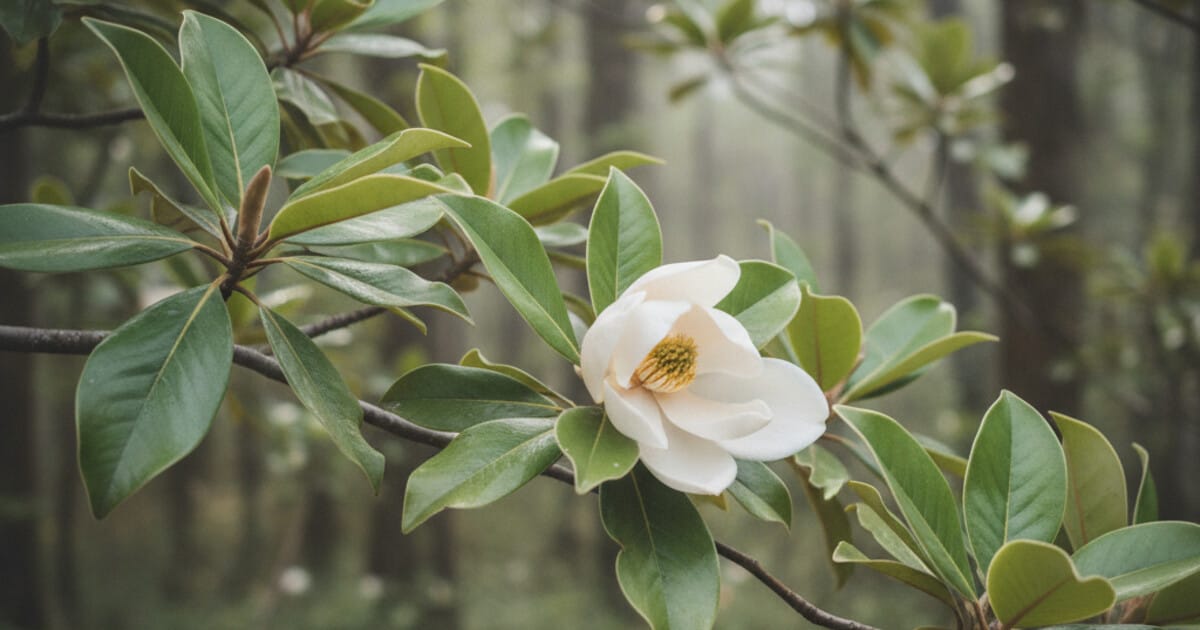
If you’ve spotted a small tree near a swamp or stream bank with creamy white flowers and a faint lemon scent, there’s a good chance you’re looking at a sweetbay magnolia. This native species grows along the eastern coastal plain from Massachusetts to Texas, hugging wet edges where few other trees thrive.
Sweetbay magnolia (Magnolia virginiana) is one of the easier magnolias to identify once you know what to look for. The combination of silvery leaf undersides, fragrant blooms, and a preference for soggy ground sets it apart from other trees in its range.
To identify a sweetbay magnolia, look for elliptical leaves that are bright green on top and silvery-white underneath. The tree produces creamy white, lemon-scented flowers from May through July. It grows in wetland edges and stream margins, usually reaching 10 to 35 feet tall. The silvery leaf reverse is the single most reliable field mark.
Southern magnolia (Magnolia grandiflora) reaches 60 to 80 feet tall, native to the Southeast from North Carolina to Texas. Spot it by thick, dark-green leaves with rusty-tan undersides, white flowers up to 12 inches across, and cone-shaped fruit 3 to 5 inches long. Sweetbay magnolia is shorter, with silvery-white leaf undersides and smaller 2- to 3-inch flowers.
What Is the Sweetbay Magnolia?
Sweetbay magnolia is a native North American tree in the Magnoliaceae family. It grows across the coastal plain from southern Massachusetts down to Florida and west to Texas, favoring swamp margins, pocosins, stream banks, and bogs. In the Deep South it tends to stay semi-evergreen, holding its leaves through mild winters. Further north it drops them entirely by December.
The tree typically grows 10 to 35 feet tall across most of its range, though in sheltered southeastern swamps it can push toward 60 feet. It often grows with multiple stems rising from the base, giving it a shrubby silhouette in younger stages.
Sweetbay magnolia belongs to one of the oldest flowering plant lineages on earth. Magnolias evolved before bees and are pollinated primarily by beetles, which is one reason the flowers are so robust and fragrant. The lemon-bay scent comes from compounds in the leaves and bark, not just the flowers, so even in winter the twigs smell faintly spicy when you snap one.
Sweetbay magnolia (Magnolia virginiana) grows natively across the eastern U.S. coastal plain, from southern New England south to Florida and west along the Gulf Coast to Texas. It occupies wetland edges: swamp margins, stream banks, pocosins, and bogs. The tree reaches 10 to 35 feet in most of its range, occasionally taller in southern swamps. Its most recognizable feature is the leaf undersides: bright silvery-white against dark green upper surfaces, visible from 20 feet away when the wind catches them. It’s semi-evergreen in USDA hardiness zones 8-9 and deciduous in zones 5-7. The creamy white flowers are 2 to 3 inches across and bloom May through July, followed by a cone-like cluster of red seeds in late summer. Bark is gray-brown and smooth on young trees, developing shallow furrows with age. Twigs carry a distinctive lemon-bay fragrance when broken. Closely related to Southern magnolia (M. grandiflora), sweetbay is easily separated by its smaller stature, smaller flowers, and silvery rather than rusty-brown leaf undersides.
Sweetbay Magnolia Identification: Leaves and Bark
Four of the seven signs come from features you can check any time of year.
Sign 1: Silvery-white leaf undersides. This is the definitive field mark. The top surface of each leaf is deep green and somewhat glossy. Flip it over and you’ll find a pale silvery-white surface. On a breezy day, even a mature tree seems to shimmer as the wind turns leaves to show their undersides. You can spot this from 30 feet away.
Sign 2: Elliptical leaf shape, 3 to 5 inches long. The leaves are simple and alternate, with smooth margins and no lobes or teeth. Each leaf is roughly oblong to elliptical, widest near the middle and tapering at both ends. The base is often slightly rounded.
Sign 3: Aromatic leaves and twigs. Crush a leaf or break a small twig. You’ll get a spicy, lemon-bay scent. Most tree leaves smell like nothing when crushed. Sweetbay’s scent is strong and distinctive, making winter identification (when flowers are gone) much easier.
Sign 4: Smooth gray-brown bark on young trees. Young sweetbay bark is smooth and gray-brown, similar to several other understory species. As the tree matures it develops shallow furrows and a slightly scaly texture. Bark alone won’t confirm sweetbay, but paired with leaf features it helps narrow things down.
For a broader look at how bark helps with species ID, see our tree bark identification guide.
Flowers, Fruit, and Seasonal Clues
Sign 5: Creamy white flowers with lemon fragrance (May through July). The flowers are 2 to 3 inches across, with 9 to 12 waxy white tepals arranged in a cup shape. They appear singly at the tips of branches, not in clusters. The scent is strong enough to catch from several feet away, often described as lemon mixed with bay leaf.
Blooming typically starts in May in the south and early June further north, continuing sporadically through July. This extended bloom period means you might catch flowers over several months on a single tree.
Sign 6: Cone-like red seed clusters in late summer. After the flowers fade, a cone-shaped aggregate fruit forms, about 1 to 2 inches long. As it matures through late summer and fall, bright red seeds push out from the surface, each dangling on a thin thread before dropping. These red seed clusters are hard to miss and confirm the ID from August through October.
The bright red seeds attract birds, which are sweetbay’s primary dispersers. A tree draped in red seed cones in September is an easy identification.
Sweetbay Magnolia Identification: Habitat and Range
Sign 7: Wetland-edge habitat. Sweetbay magnolia almost always grows near water. Swamp margins, stream banks, beaver pond edges, bog openings, and wet pine flatwoods are its preferred spots. If you’re on dry upland ground with well-drained soil, you’ve probably found a different species.
Range is strictly eastern: coastal plain from Massachusetts south to Florida and west along the Gulf to Texas. It’s common in New Jersey, Virginia, the Carolinas, Georgia, and Florida. Further inland it becomes rare and patchy.
Sweetbay often grows alongside other wetland specialists. In the Atlantic coastal plain you’ll frequently find it near water tupelo, bald cypress, and swamp white oak, three species with similarly restricted wet-ground habits. Knowing the plant community around a tree helps confirm your identification.
The species can also turn up in slightly drier conditions at the edges of its range, particularly in the mid-Atlantic states, where it occupies moist slopes and stream banks rather than true swamps.
What Does a Southern Magnolia Tree Look Like?
Southern magnolia (Magnolia grandiflora) has a pyramidal to rounded crown with dense, low-hanging branches. Open-grown specimens sometimes sweep branches nearly to the ground, giving the tree a formal, imposing silhouette. It’s one of the most planted ornamental trees from Virginia to California, and its large leaves make it recognizable from a distance.
Southern magnolia (Magnolia grandiflora) is a native evergreen of the southeastern U.S. coastal plain, from southern North Carolina south through Florida and west to eastern Texas. It grows 60 to 80 feet tall with a 30- to 40-foot crown spread. Leaves are 5 to 8 inches long, oval to elliptical, with a thick leathery texture and a dark, glossy upper surface. Undersides range from rusty-brown to nearly hairless depending on the cultivar. Flowers are white, 6 to 12 inches across, appearing singly from late May through July with a strong sweet fragrance. The fruit is a cylindrical aggregate cone, 3 to 5 inches long, turning from green to reddish-brown, with bright red seeds each half an inch long, maturing September through November. Bark on young trees is smooth and gray, developing scaly plates with age. The tree is hardy in USDA zones 7 to 9 and typically lives 80 to 120 years.
The bark alone doesn’t clinch the ID. Stick to the leaves: that thick, leathery texture with rusty-tan undersides is unlike anything else in its range.
Sweetbay Magnolia vs. Southern Magnolia
Southern magnolia (Magnolia grandiflora) is the most common source of confusion. Both produce waxy white flowers and have semi-evergreen tendencies. Here’s how to tell them apart:
- Size: Southern magnolia is a large tree, 60 to 80 feet tall. Sweetbay stays small to medium, typically under 35 feet.
- Flowers: Southern magnolia flowers are massive, 6 to 12 inches across. Sweetbay flowers are 2 to 3 inches.
- Leaf undersides: Silvery-white on sweetbay, rusty-brown or tan on Southern magnolia. This single feature settles most IDs instantly.
- Leaf size: Southern magnolia leaves are 5 to 10 inches long. Sweetbay leaves are 3 to 5 inches.
- Bark: Southern magnolia develops thick, deeply furrowed gray bark. Sweetbay bark stays relatively smooth for longer.
- Habitat: Southern magnolia tolerates drier soils and is commonly planted as an ornamental. Sweetbay sticks close to wet or moist sites.
Also compare with cucumbertree magnolia (a deciduous Appalachian species with larger leaves) and umbrella magnolia (very large leaves, upland habitat). Our broader magnolia tree identification guide covers all common native magnolias with side-by-side comparisons.
How Tree Identifier Helps You Confirm the ID
Field identification gets tricky when a sweetbay is young, leafless, or growing alongside similar species. The Tree Identifier app handles this directly: photograph a leaf (especially the silvery underside), a flower, or the bark, and the AI matches it against thousands of species in its database.
Snap a photo of those silvery undersides and the app returns a confident match within seconds. Working through a coastal swamp with no cell service? The offline mode keeps the full identification database available without cellular data. You get 2 free identifications per day with no subscription needed to start.
Download Tree Identifier on iOS or Android at treeidentifier.app and confirm your next sweetbay magnolia sighting on the spot.
Frequently Asked Questions
Is sweetbay magnolia evergreen or deciduous? It depends on climate. In USDA zones 8 and 9 (Florida, Gulf Coast states), sweetbay is semi-evergreen, holding most of its leaves through winter. In zones 5 through 7 (Virginia north to Massachusetts) it’s fully deciduous, dropping leaves by late fall. This dual behavior is why it’s often described as “semi-evergreen” across its full range.
What does sweetbay magnolia smell like? The flowers smell like lemon mixed with a hint of bay leaf, which is where the common name “sweetbay” comes from. Crushed leaves and broken twigs carry the same spicy-lemon scent. The fragrance is strongest on warm, humid days and fades as flowers age past peak bloom.
How do I tell sweetbay magnolia from Southern magnolia? Leaf undersides are the fastest field mark. Sweetbay has silvery-white undersides; Southern magnolia has rusty-brown or tan undersides. Flower size separates them just as cleanly: sweetbay flowers are 2 to 3 inches across, Southern magnolia flowers can reach 12 inches. Sweetbay also stays much smaller overall and almost always grows near water.
Where does sweetbay magnolia grow? Sweetbay magnolia is native to the eastern U.S. coastal plain, from southern Massachusetts to Florida and west along the Gulf Coast to Texas. It grows in wetland edges: swamp margins, stream banks, bogs, and wet pine flatwoods. It’s rare far inland from the coast.
When does sweetbay magnolia bloom? Bloom time runs May through July, with peak flowering in May and June across most of its range. Southern populations start earlier, sometimes in late April. A single tree can carry flowers over several weeks, making late spring and early summer the easiest time to confirm identification by flower.
Identify a tree from your photo — free
Upload a leaf, bark, or whole-tree photo and get the species in seconds. No signup.
Confidence:
Unlock the full species profile
Free in the app — with unlimited identifications.


AI result for guidance — the app gives full species details and works offline.
Want unlimited identifications?
Get the full species profile, photos and details — free in the app, with unlimited scans.
- Unlimited identifications
- Full species profiles & details
- Works offline, anywhere
- Save and revisit your finds
Elena Torres
Tree Identifier Team