Is Lilly Pilly Native to Australia? Origins and Species
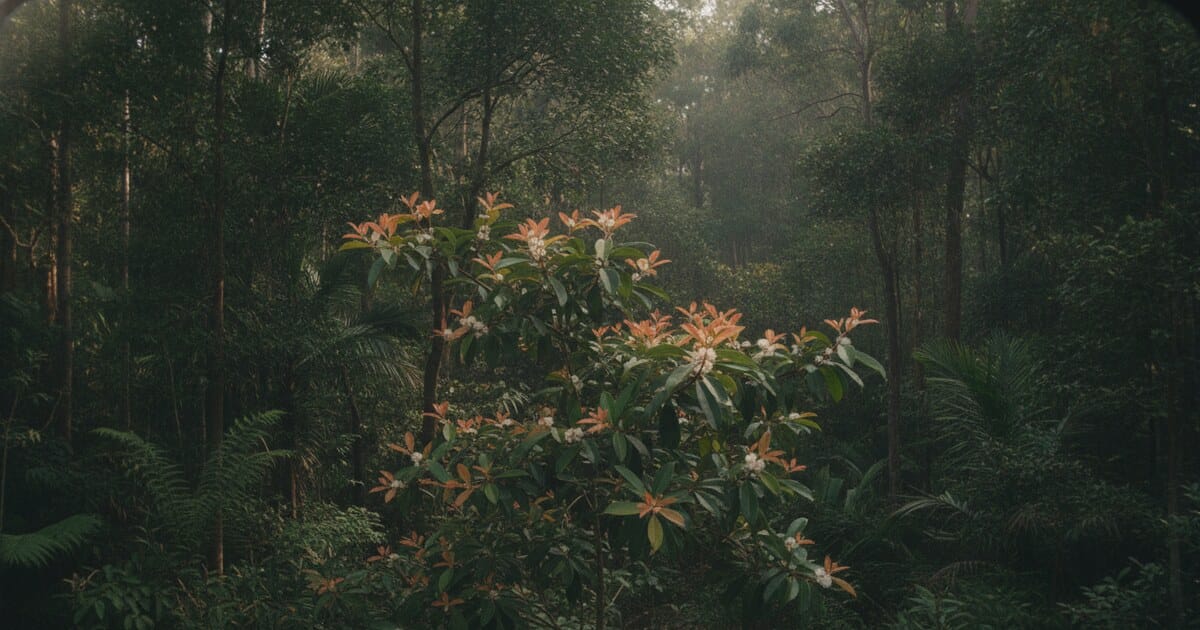
Lilly pilly trees are everywhere on the Australian east coast. They line suburban streets, grow in sculpted hedges across front gardens, and fill the shelves at every native plant nursery. All of this cultivation makes them look like domesticated plants that arrived from somewhere else.
They didn’t. Lilly pilly is genuinely native to Australia, and the east coast holds more than 60 species spread across three separate genera. This article covers where these trees actually come from, what their natural habitat looks like, and how they moved from rainforest to suburban garden.
Yes, lilly pilly is native to Australia. The genus group spans the east coast from Queensland through New South Wales into Victoria, growing naturally in subtropical and warm temperate rainforest. Over 60 species from three genera (Syzygium, Acmena, and Waterhousea) are native to Australia, with most diversity concentrated in Queensland’s coastal ranges and the Wet Tropics region.
Lilly Pilly’s Natural Habitat on Australia’s East Coast
Wild lilly pilly grows along Australia’s east coast, from Cape York Peninsula in far north Queensland down through coastal NSW to the ranges of northeastern Victoria. The trees don’t form a continuous belt. They cluster in specific habitats: subtropical rainforest, warm temperate rainforest, littoral rainforest patches along the coast, and creek-side margins where soil moisture stays higher than the surrounding bush.
The 60+ species native to Australia fall into three genera within the Myrtaceae family: Syzygium, Acmena, and Waterhousea. Syzygium is the largest group, containing around 50 species native to Australia and extending north into Papua New Guinea and Southeast Asia. Acmena includes roughly 10 Australian species confined to the east coast, while Waterhousea is the smallest genus, with a handful of species in coastal Queensland and New South Wales.
All three genera produce evergreen glossy leaves, small white fluffy flowers from late spring through summer, and round berries that ripen from white through pink to red or deep purple depending on species. Natural stands grow in subtropical, warm temperate, and littoral rainforest from sea level to around 1,000 meters elevation. Species diversity peaks in Queensland’s Wet Tropics, while Acmena smithii, the most cold-tolerant species, extends the range south to northeastern Victoria.
Altitude shapes which species you encounter on a walk through native bush. In the Wet Tropics, you can find a dozen lilly pilly species within a few kilometers. By the time you reach the ranges of northeastern Victoria, you’re mostly dealing with Acmena smithii on creek banks and cool gully floors.
The Three Genera: Syzygium, Acmena, and Waterhousea
The lilly pilly name gets applied loosely across all three genera, which creates confusion when you try to match a plant to a species.
Syzygium is the heavyweight of the group. Around 50 species are native to Australia, plus hundreds more in tropical Africa, Southeast Asia, and the Pacific. The easiest field marker is the berry: look for a small crown at the tip, formed by the persistent calyx lobes left behind when the flower drops. Syzygium australe (brush cherry) produces pink to red berries, while Syzygium luehmannii (riberry) has small pear-shaped red fruits with a distinctive clove-spice flavor.
Acmena contains roughly 10 Australian species. The most widespread is Acmena smithii (common lilly pilly), which grows from southeastern Queensland to Victoria along creek banks and rainforest margins. Acmena berries tend to be rounder and don’t have the same prominent calyx crown, though older taxonomy systems listed some Acmena species under Syzygium.
Waterhousea is a small genus with a few species in coastal and highland Queensland and NSW. Waterhousea floribunda (weeping lilly pilly) is familiar in gardens for its drooping foliage. In the wild, it grows in subtropical rainforest gullies and along creek lines where water collects after rain.
Native Lilly Pilly Species Across the East Coast
Five species account for most lilly pilly encounters in native bush.
Syzygium australe (brush cherry) grows along the NSW and QLD coast in littoral and subtropical rainforest from the Illawarra region north toward Cairns. It reaches 5-15 m in natural conditions, though garden forms stay much smaller.
Syzygium luehmannii (riberry) grows in coastal and highland rainforests from southeastern Queensland to northern NSW. The riberry is now cultivated commercially as a native food ingredient, prized for its clove-spiced, pear-shaped berries.
Acmena smithii (common lilly pilly) is the most geographically widespread, growing from southeastern QLD along the coast and ranges to northeastern Victoria. It’s often the species found along creek lines where rainforest gives way to more open bush.
Syzygium oleosum (blue lilly pilly) produces blue-purple berries when ripe, making it straightforward to separate from other species in the field. Its range covers coastal QLD and NSW.
Waterhousea floribunda (weeping lilly pilly) concentrates in subtropical rainforest gullies in QLD and northern NSW. The pendulous branch tips are distinctive both in the wild and in cultivation.
Lilly Pilly in Indigenous Australian Culture
Lilly pilly berries have been part of Aboriginal Australian diets for thousands of years. Multiple species were gathered as bush tucker, eaten fresh from the tree or processed into foods. The riberry (Syzygium luehmannii) is among the best-documented species used by communities in Queensland and NSW. Its flavor sits somewhere between cranberry and clove, sharper than what most garden varieties produce.
Acmena smithii was also gathered across its range. The purple-black berries are mildly sweet and water-rich, useful food in coastal and highland rainforest country. This traditional knowledge sits behind a growing native food industry: riberry syrup, lilly pilly jam, and native fruit products now appear in specialty food stores, drawing on the same species Aboriginal Australians have known far longer than any nursery catalogue.
How Lilly Pilly Moved from Rainforest to Garden
The lilly pilly’s move into suburban gardens picked up in the mid-20th century as interest in Australian native plants grew. The appeal was straightforward: fast growth, dense foliage, edible berries, and tolerance for a range of soils.
The main obstacle was psyllid insects, which cause the distinctive warty or pimpled growth on new foliage that ruins the smooth, glossy look. Nurseries spent decades selecting for psyllid resistance and compact habit.
Varieties like Syzygium australe ‘Backyard Bliss’ and Acmena smithii ‘Allyn Magic’ were pared down from wild native stock into hedge-ready forms. Other Australian east coast natives, like the banksia and waratah, went through similar domestication processes. Most lilly pillies in Australian gardens are cultivars of native species, bred and pruned into compact forms.
The key point is that garden varieties haven’t been imported or hybridized with foreign species. When you plant a lilly pilly hedge, you’re planting a shaped version of a tree that grew naturally along the east coast long before the first nursery opened.
How to Identify Native Lilly Pilly in the Wild
Wild lilly pilly trees are bigger than their garden versions. In rainforest conditions, Syzygium australe can reach 15 m with a broad canopy. Acmena smithii grows larger still in sheltered creek gullies. The branching is more open and irregular than the dense, clipped forms you see in garden hedges.
The identification features are the same in both settings: glossy oval leaves with coppery or pink new growth, small white fluffy flowers from late spring through summer, and round berries that change color as they ripen. Bark on older wild trees tends to be rougher and more furrowed than nursery stock. For detailed species-level identification including leaves, bark, flowers, and berries across all three native genera, the lilly pilly identification guide covers every field marker.
If you’re trying to narrow down which species you’re looking at from a photo, the berry tip is the fastest separator: a persistent calyx crown points to Syzygium, a smooth tip usually points to Acmena. Berry color (pink-red vs blue-purple vs white) narrows it further.
Frequently Asked Questions
Is lilly pilly an Australian native plant?
Yes, lilly pilly is native to Australia. All 60+ species across the Syzygium, Acmena, and Waterhousea genera originate from Australia’s east coast rainforests. The plant grows naturally from Queensland’s Wet Tropics south to northeastern Victoria.
What part of Australia is lilly pilly native to?
Lilly pilly is native to the east coast of Australia, primarily Queensland and New South Wales. Its natural habitat is subtropical and warm temperate rainforest, including coastal rainforest patches, creek margins, and highland ranges from sea level to around 1,000 meters elevation.
How many lilly pilly species are native to Australia?
Over 60 species native to Australia span three genera: Syzygium (the largest group, around 50 species), Acmena (roughly 10 species), and Waterhousea (a small genus with a few coastal species). Species diversity is highest in Queensland’s Wet Tropics.
Are lilly pilly berries from wild trees safe to eat?
Yes, lilly pilly berries from wild Australian trees are edible. Aboriginal Australians have gathered them as bush tucker for thousands of years. Flavor varies by species: riberry tastes tart and clove-like, while common lilly pilly produces milder, sweeter berries. Garden cultivars are also edible.
Are nursery lilly pillies the same as wild species?
Most garden lilly pillies are cultivars selected from native species, particularly Syzygium australe, Acmena smithii, and Waterhousea floribunda. They’re the same botanical species, bred for compact growth and psyllid resistance. The difference is size and growth habit, not species origin.
The next time you spot lilly pilly in the bush or in a garden hedge, you’re looking at a native east coast rainforest tree that Aboriginal Australians have used for thousands of years. If you want to identify which species you’re looking at from a photo of the leaf, bark, or fruit, Tree Identifier covers all three native genera and can match your photo in seconds. Try a free scan at treeidentifier.app/tools/tree-identifier, or download the app on iOS or Android.
Identify a tree from your photo — free
Upload a leaf, bark, or whole-tree photo and get the species in seconds. No signup.
Confidence:
Unlock the full species profile
Free in the app — with unlimited identifications.


AI result for guidance — the app gives full species details and works offline.
Want unlimited identifications?
Get the full species profile, photos and details — free in the app, with unlimited scans.
- Unlimited identifications
- Full species profiles & details
- Works offline, anywhere
- Save and revisit your finds

Elena Torres
Tree Identifier Team