Poplar vs Pine Wood: Hardness, Uses, and Which to Choose
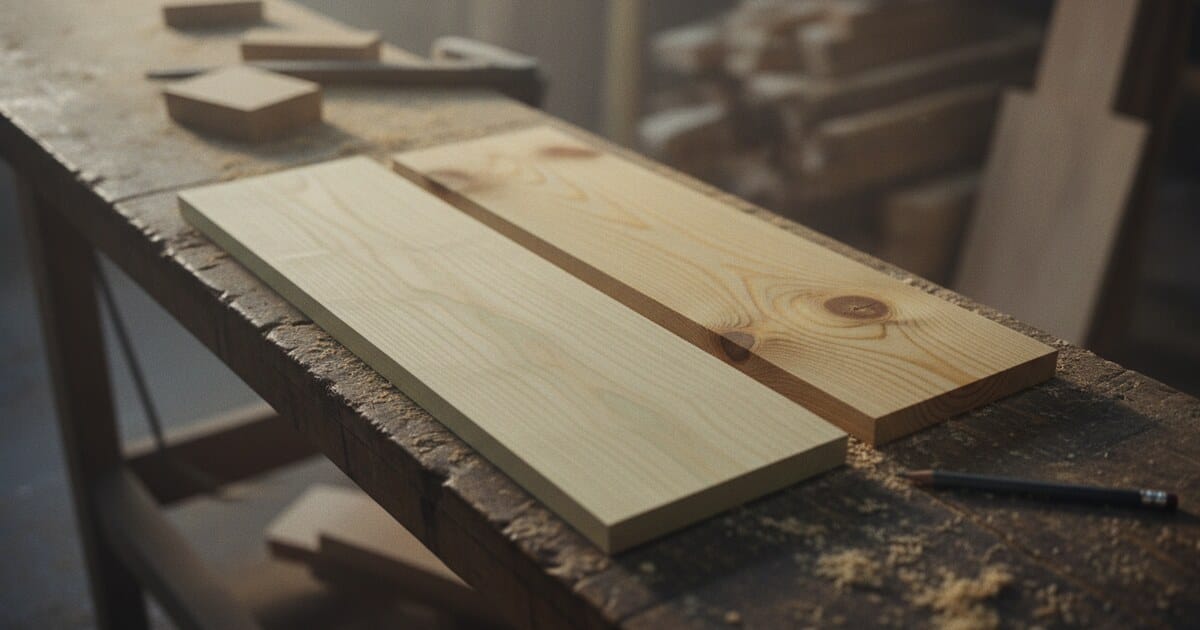
You’re at the lumber yard comparing two affordable options: poplar vs pine wood. Both cut cleanly, work with basic shop tools, and cost a fraction of hardwoods like oak or walnut. The choice between them trips up a lot of beginners, and even experienced woodworkers get burned by wrong assumptions about hardness, finishing behavior, and resin bleed.
Poplar is a hardwood (Janka 540 lbf) with fine, straight grain and no resin, so it paints cleanly. Pine ranges from Eastern white pine (380 lbf) to Southern yellow pine (1,225 lbf), with resin pockets that need sealing before paint. For painted furniture, choose poplar. For stained wood or rustic character, pine fits better.
For painted furniture, cabinet frames, and indoor shelving, poplar is the cleaner pick. It takes paint without bleeding, gives a smoother surface than pine, and doesn’t require shellac priming. Pine wins for rustic and stained pieces, structural framing, and anywhere the natural character of the wood is part of the design. If you’re working with salvaged lumber and want to confirm which species you have before committing to a finish, the Tree Identifier app identifies wood from a grain photo in seconds. 2 free scans per day, no subscription required.
What Is Poplar Wood?
Yellow poplar (Liriodendron tulipifera), also called tulip poplar, grows across the eastern United States from the Gulf Coast up through New England. Despite its name, it’s classified as a hardwood: it comes from a flowering tree (angiosperm) rather than a conifer, not a density measurement.
That surprises a lot of people who’ve worked with it, because poplar feels soft compared to most hardwoods.
Janka hardness sits at 540 lbf. That puts it well below oak (1,290 lbf) and maple (1,450 lbf), and roughly in the middle of the budget-wood spectrum. It’s harder than Eastern white pine (380 lbf) but softer than Southern yellow pine (1,225 lbf). Think of it as sitting at a boundary: tougher than typical softwoods, but not suited for tabletops that take daily abuse.
The grain is fine, straight, and unusually consistent. Poplar’s sapwood runs creamy white; the heartwood shifts to yellowish-green or olive with brownish-gray streaks.
Those streaks are why poplar isn’t a staining wood. The heartwood absorbs stain unevenly, producing a blotchy result without a pre-stain conditioner.
For painted pieces, that doesn’t matter. Poplar paints beautifully: the grain doesn’t telegraph through topcoats the way pine grain does, and it holds paint long-term without resin-bleed problems.
Yellow poplar (Liriodendron tulipifera) is the primary commercial poplar species in North America, classified as a hardwood by the USDA despite a Janka hardness of only 540 lbf. It grows throughout the eastern US, reaching 60 to 90 feet tall with straight trunks that yield long, clear boards. Density averages around 28 lbs per cubic foot when dry, lighter than most hardwoods.
The wood is diffuse-porous, with fine, straight grain and uniform texture. Sapwood is creamy white; heartwood ranges from yellowish-green to olive with gray or brown streaks. The greenish color fades after exposure to light and air.
Poplar dries fast, shrinks minimally, and stays stable once seasoned. It’s used in furniture frames, cabinet interiors, drawer boxes, wooden toys, and painted millwork. Paintability is its standout quality: the smooth, consistent surface takes primer and topcoats better than most budget wood options, and it holds paint without the resin-bleed issues that affect pine surfaces.
Poplar is fast-growing and abundant, which keeps prices low. It machines cleanly, takes nails, screws, and glue without trouble, and has no pitch pockets.
Boards come large and clear because the trees grow tall with straight trunks. In furniture shops, it’s the go-to for drawer sides, cabinet frames, interior shelving, and any painted component that needs to stay light and stable.
What Is Pine Wood?
Pine covers dozens of species, and they’re not interchangeable. The “pine” at most lumber yards in the US is Eastern white pine, sugar pine, or Southern yellow pine. Each has a different hardness profile, and that distinction matters more than most people expect.
Eastern white pine hits 380 lbf on the Janka scale. It’s the softest commonly available lumber in North American yards, noticeably lighter and easier to cut than poplar. Southern yellow pine runs 1,225 lbf, harder than many woods sold as hardwoods, used for flooring, decking, and structural framing. If your lumber yard in the South labels something “pine,” confirm the species before assuming it’ll be easy to work.
All pine species are softwoods (conifers). They have visible growth rings with distinct contrast between early and latewood, knotty character in lower grades, and resin or pitch pockets.
Those pockets are the main finishing problem. Resin bleeds through paint, especially on warm days or in direct sun. A shellac-based primer seals the surface and stops the bleed before topcoating; skipping it on pine is how you end up with yellow stains showing through white paint after a few months.
The pronounced grain and knotty character can be a design asset. Pine’s rustic look is a deliberate style choice in farmhouse furniture and paneling. Understanding the types of wood grain patterns in pine versus poplar also helps when buying or inheriting old pieces: pine’s annual ring contrast is one of the easier grain signatures to spot by eye.
Pine is cheaper than poplar in most markets. A 1x6 Eastern white pine board typically runs 10 to 30% less than comparable poplar. It’s also available everywhere, including big-box stores in standard dimensional sizes.
Poplar vs Pine: Key Differences
Here’s how the two woods compare on the factors that matter most for shop decisions:
| Property | Poplar | Eastern White Pine | Southern Yellow Pine |
|---|---|---|---|
| Janka hardness | 540 lbf | 380 lbf | 1,225 lbf |
| Wood type | Hardwood | Softwood | Softwood |
| Grain | Fine, straight, uniform | Pronounced rings, knotty | Tight grain, dense |
| Color | Creamy white / greenish | Pale yellow to tan | Yellow-tan to reddish-brown |
| Resin/pitch | None | Moderate | High |
| Paintability | Excellent | Fair (bleeds without shellac primer) | Poor (bleeds heavily) |
| Stainability | Poor (blotchy heartwood) | Good | Good |
| Cost | Moderate | Lower | Lower |
| Availability | Good | Excellent | Excellent (South US) |
The most common misconception: poplar is softer than pine. That’s only true for Southern yellow pine, which is more than twice as hard as poplar. Eastern white pine is softer. When someone says “pine” without specifying, you don’t know which hardness you’re getting.
For more on how pine species compare structurally to each other, the pine vs fir wood breakdown covers how resin content and grain density differ across those two common softwoods.
Which Wood Should You Choose?
The right choice comes down to what you’re building and how you’re finishing it.
Choose poplar when:
- The piece gets painted (poplar’s smooth surface holds paint without resin bleed)
- You need cabinet boxes, drawer sides, or furniture frames
- You want a wood that machines cleanly without pitch pockets
- The piece should be light but stronger than Eastern white pine
Choose pine when:
- You want visible wood character: knots, grain, natural color
- The project is rustic or farmhouse-style furniture
- Cost is the main driver (pine is cheaper per board foot in most markets)
- You’re doing structural framing, decking, or exterior work
- You want a wood that takes stain evenly (pine absorbs oil-based stains better than poplar)
One practical note on staining: pine takes oil-based stain more predictably than poplar. If you want a walnut or oak tone on a budget piece, pine is the safer bet. Apply a wood conditioner first to reduce blotchiness in the latewood bands.
For shop furniture, jigs, and workbenches, both work fine. Poplar is slightly better for jig reference faces because the finer, more consistent grain gives a flatter, more precise surface. Pine is perfectly adequate for structural shop work where appearance doesn’t matter.
How Tree Identifier Helps with Wood ID
When you’re working with reclaimed lumber, salvaged material, or an old piece of furniture, knowing the species before you start saves rework. Poplar and pine have different finishing requirements, and choosing the wrong primer or stain for an unknown board can waste hours.
Open the Tree Identifier app, photograph the end grain or a freshly planed face in good lighting, and get an instant identification with species details including typical uses and characteristics. The app’s wood recognition feature is built specifically for this: you don’t need to find leaves or bark. A clean photo of the grain surface is enough.
Poplar and pine are visually distinct on end grain: poplar is diffuse-porous (pores scattered uniformly), while pine shows clear early-latewood ring banding. That structural difference is what the app uses to distinguish them. Available on iOS and Android with 2 free identifications per day. Or try the web tool at treeidentifier.app/tools/wood for one free browser scan without installing anything.
The full wood identification guide on the site covers end grain reading, smell tests, and density checks for the most common species you’ll encounter in the shop.
Frequently Asked Questions
Is poplar the same as pine?
Poplar and pine are different species and different wood types. Poplar (Liriodendron tulipifera) is a hardwood from a flowering tree; pine is a softwood from a conifer. Their hardness overlaps depending on the pine species: poplar (540 lbf) is harder than Eastern white pine (380 lbf) but softer than Southern yellow pine (1,225 lbf). The grain patterns, color, and finishing behavior are clearly different once you know what to look for.
What is a disadvantage of pine wood?
Pine’s main drawback is resin and pitch pockets, which bleed through paint if the surface isn’t sealed with a shellac-based primer first. The pronounced growth ring pattern also shows through painted surfaces more than poplar does. Eastern white pine is soft enough to dent and scratch in furniture that gets regular use. Southern yellow pine is very dense, which makes it challenging to work with hand tools and requires sharp blades.
Does poplar make good 2x4 lumber?
Poplar isn’t stocked as dimensional 2x4 lumber at most yards. It’s sold as finished boards for furniture and millwork. Structural framing uses pine, fir, and spruce because those species are cheaper and available in standardized dimensional sizes. Poplar’s light weight and moderate hardness make it less suitable for load-bearing framing, though it works well for interior cabinet frames and furniture structures where the loads are low.
What are the disadvantages of poplar wood?
Poplar’s heartwood has greenish, streaky coloring that stains unevenly without a pre-stain conditioner, making it a poor choice for natural or stained finishes. It dents more easily than true hardwoods (540 lbf Janka) in high-traffic pieces. Unfinished poplar darkens and shifts color over time. The greenish cast can also show through paint on the first coat, requiring solid primer coverage before topcoating.
Picking between poplar and pine wood comes down to your finish plan. Paint the piece? Poplar gives a cleaner surface, holds paint longer, and skips the resin problems entirely. Stain it or leave it natural? Pine’s grain and character are worth the extra surface prep. If you’re working with unknown wood and want to confirm the species before committing to a finish, Tree Identifier identifies wood from a grain photo in seconds.
Identify a tree from your photo — free
Upload a leaf, bark, or whole-tree photo and get the species in seconds. No signup.
Confidence:
Unlock the full species profile
Free in the app — with unlimited identifications.


AI result for guidance — the app gives full species details and works offline.
Want unlimited identifications?
Get the full species profile, photos and details — free in the app, with unlimited scans.
- Unlimited identifications
- Full species profiles & details
- Works offline, anywhere
- Save and revisit your finds
Elena Torres
Tree Identifier Team